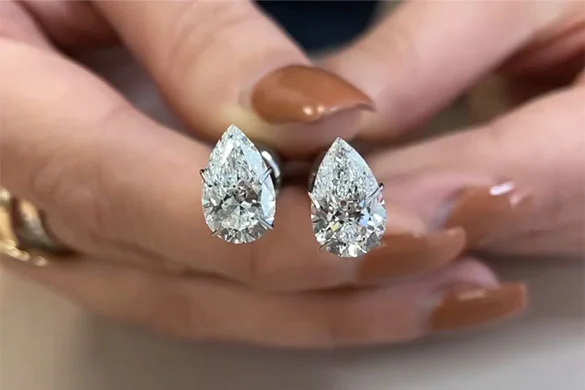
Lab Grown Diamonds Vs. Moissanite

Lab-Grown Diamonds vs. Moissanite: A Comprehensive Comparison of Properties and Pricing
In short: Lab-grown diamond is harder (Mohs 10) and more authentic-looking than moissanite (Mohs 9.25), while moissanite is more dispersive (refractive index 2.65 vs. 2.42) and roughly 70-80% cheaper still. A 1.00ct lab-grown ring runs $1,200-$2,500 in 14k white gold; a 1.00ct moissanite equivalent runs $400-$800. Pick diamond for traditional brilliance, moissanite for budget sparkle.
In the world of gemstones, the allure of diamonds has been unmatched for centuries. However, recent advancements in technology have given rise to lab-grown diamonds and moissanite, two alternatives that have gained significant popularity. This article aims to delve deep into the main differences between lab-grown diamonds and moissanite, examining their physical properties and the significant price disparities that set them apart.
Lab-Grown Diamonds: Nature Replicated in a Lab
Lab-grown diamonds, as the name suggests, are diamonds that are created in a controlled laboratory environment. Despite being man-made, they possess the same physical, chemical, and optical properties as natural diamonds. These gems are grown using advanced technological processes that mimic the high pressure and high temperature (HPHT) conditions present deep within the Earth's mantle where natural diamonds form.

Physical Properties of Lab-Grown Diamonds
Composition: Lab-grown diamonds are composed of carbon atoms arranged in a crystalline structure known as a diamond cubic lattice. This gives them the same chemical composition as natural diamonds.
Hardness: Diamonds are renowned for their exceptional hardness, scoring 10 on the Mohs scale of mineral hardness. This property makes them ideal for use in jewelry as they are highly resistant to scratches and damage.
Optical Properties: Lab-grown diamonds exhibit the same brilliance, fire, and sparkle as natural diamonds due to their identical crystal structure. They possess the ability to refract light in a way that creates the striking play of colors that diamonds are famous for.
Color: Lab-grown diamonds are available in a wide range of colors, including colorless, near-colorless, and fancy colors. Just like natural diamonds, the presence of trace elements can impart different hues to lab-grown diamonds.
Clarity: Lab-grown diamonds can have varying levels of clarity, just like natural diamonds. They can be internally flawless or contain inclusions, which are tiny imperfections within the stone.