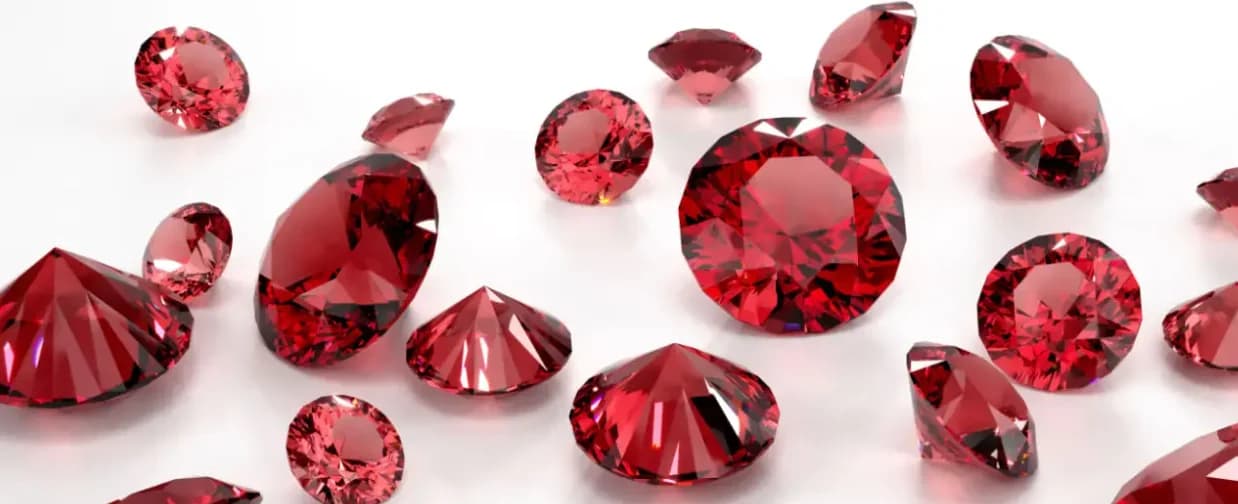
July, a month of warmth and vibrant energy, is crowned with a birthstone that embodies passion and power—ruby. This striking red gem has captivated civilizations for millennia, symbolizing love, courage, and vitality.
Ruby is the July birthstone — corundum colored by chromium at Mohs 9 hardness, second only to diamond. Top untreated Burmese pigeon's-blood 1.00ct+ stones run $5,000-$15,000 per carat at New York retail; Mozambique and Thai stones $200-$3,000 per carat. Ruby also marks the 40th wedding anniversary. Insist on a GIA, AGL, or SSEF report for high-value purchases.
In this comprehensive guide, we'll explore ruby's rich history, remarkable properties, and enduring symbolism as the jewel of July.
Ruby's History and Origins
A Stone of Kings
Rubies have been treasured since antiquity, with mentions in ancient Sanskrit texts calling them "ratnaraj" (king of gems). Burmese warriors believed rubies made them invincible in battle, while medieval Europeans associated them with divine power and protection.
Royal Connections
The British Crown Jewels feature several notable rubies, including the Black Prince's Ruby (actually a spinel) in the Imperial State Crown. Historically, rubies were more valuable than diamonds among Asian royalty.
Modern Sources
Today, the finest rubies come from:
- Myanmar (Burma) – Produces the coveted "pigeon's blood" rubies
- Mozambique – Source of high-quality stones with vivid color
- Thailand – Known for darker, more affordable rubies
Ruby's Unique Characteristics
The Color Spectrum
Rubies range from pinkish-red to deep crimson, with the most prized being a pure, intense red with a hint of blue (called "pigeon's blood").
Exceptional Hardness
With a 9 on the Mohs scale, rubies are second only to diamonds in hardness, making them ideal for everyday jewelry.
Natural Phenomena
Some rare rubies exhibit:
- Asterism (star rubies) – Caused by needle-like inclusions
- Fluorescence – Enhances their red glow in sunlight
Ruby Symbolism and Meaning
Birthstone of July
Rubies represent vitality, passion, and success – perfect for summer's peak month.
Love and Protection
Ancient cultures believed rubies could:
- Kindle romance and strengthen relationships
- Ward off danger and negative energy
- Promote wealth and good fortune
Healing Properties
In crystal healing, rubies are said to:
- Stimulate energy and motivation
- Supports heart health and circulation
- Enhance confidence and leadership
Ruby Varieties: A World of Red
Type | Origin | Color Characteristics | Key Features
Burmese Ruby | Myanmar | Vivid "pigeon's blood" | Most valuable, intense fluorescence
Thai Ruby | Thailand | Deep red with brown tones | Excellent clarity
African Ruby | Mozambique | Bright red | Increasingly important source
Star Ruby | Various | Red with a star pattern | Rare and collectible
Ruby Care and Maintenance
Cleaning Your Ruby
- Use warm soapy water and a soft brush
- Avoid harsh chemicals and ultrasonic cleaners
- Polish with a microfiber cloth to maintain shine
Storage Tips
- Store separately to prevent scratching softer gems
- Keep away from extreme heat, which may affect color
- Have settings checked annually for prong wear
The Eternal Flame of Rubies
From Elizabeth Taylor's legendary collection to modern high jewelry creations, rubies continue to symbolize:
- Unquenchable passion
- Royal elegance
- Timeless sophistication
Whether set in vintage-inspired rings or contemporary pendant designs, rubies make a bold statement while maintaining classic appeal.
Did You Know? The Sunrise Ruby, a 25.59-carat Burmese stone, sold for $30 million – the most expensive ruby per carat ever auctioned!
As July's birthstone, the ruby is more than just a beautiful gem—it's a symbol of life's fiery spirit.
Whether you're a July baby or simply drawn to its radiant energy, a ruby makes a meaningful addition to any jewelry collection.
Styling Tip: Pair rubies with gold settings to enhance their warmth or diamonds for dazzling contrast.