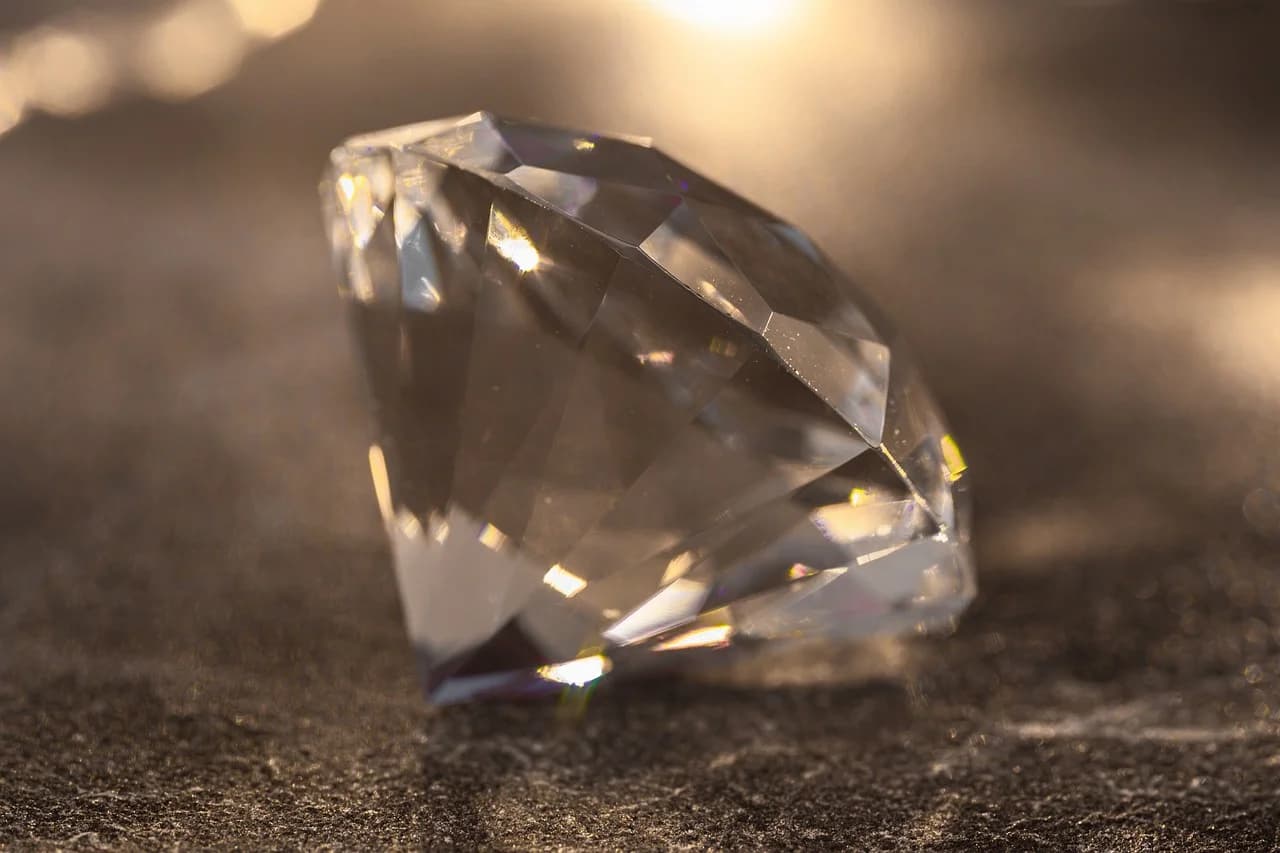
One of the most common questions about lab-grown diamonds is also the most important: are they chemically the same as natural diamonds? The short answer is yes. Understanding why helps explain why they look identical, test as real, and are graded by the same laboratories.
Lab-grown and natural diamonds are both pure crystallized carbon with the identical cubic crystal structure, the same 10 on the Mohs hardness scale, and the same optical properties. The only difference is how they formed — one in the Earth over billions of years, the other in a controlled facility over weeks. They are so identical that only specialized equipment can distinguish them, and both are certified by GIA and IGI.
Same element, same structure
A diamond is simply carbon atoms arranged in a rigid, repeating lattice. That arrangement is what gives diamond its hardness and its brilliance. Lab-grown diamonds are built from the same carbon in the same lattice, so their density, refractive index, dispersion (fire) and hardness are indistinguishable from mined stones.
How lab-grown diamonds are made
- HPHT (High Pressure High Temperature): mimics the intense heat and pressure of the Earth's mantle, encouraging carbon to crystallize around a seed.
- CVD (Chemical Vapor Deposition): uses a carbon-rich gas in a vacuum chamber so carbon atoms settle layer by layer onto a diamond seed.
- Both methods produce fully crystallized diamond — not a simulant like cubic zirconia or moissanite, which have different chemistry entirely.
How they differ from simulants
It is worth stressing the distinction: a lab-grown diamond IS a diamond. A simulant such as cubic zirconia or moissanite only looks like one and has different physical and chemical properties. You can compare all of these in our diamond education hub and see certified stones in our lab-grown diamond collection.
If they are identical, why do they cost less?
Price comes down to supply and production, not quality. Because they can be grown reliably and quickly, lab-grown diamonds cost 60–80% less than mined stones of the same grade. See the full breakdown in our guide to lab-grown affordability and our price comparison. The savings let many couples choose a larger or finer stone for their engagement ring.
Frequently asked questions
Are lab-grown diamonds real diamonds? Yes. They are chemically, physically and optically identical to mined diamonds — pure crystallized carbon.
Can a jeweler tell the difference? Not by eye. Distinguishing origin requires specialized laboratory equipment that detects tiny differences in trace elements and growth patterns.
Do lab-grown diamonds get certified? Yes, by the same independent laboratories that grade mined diamonds, including GIA and IGI.


