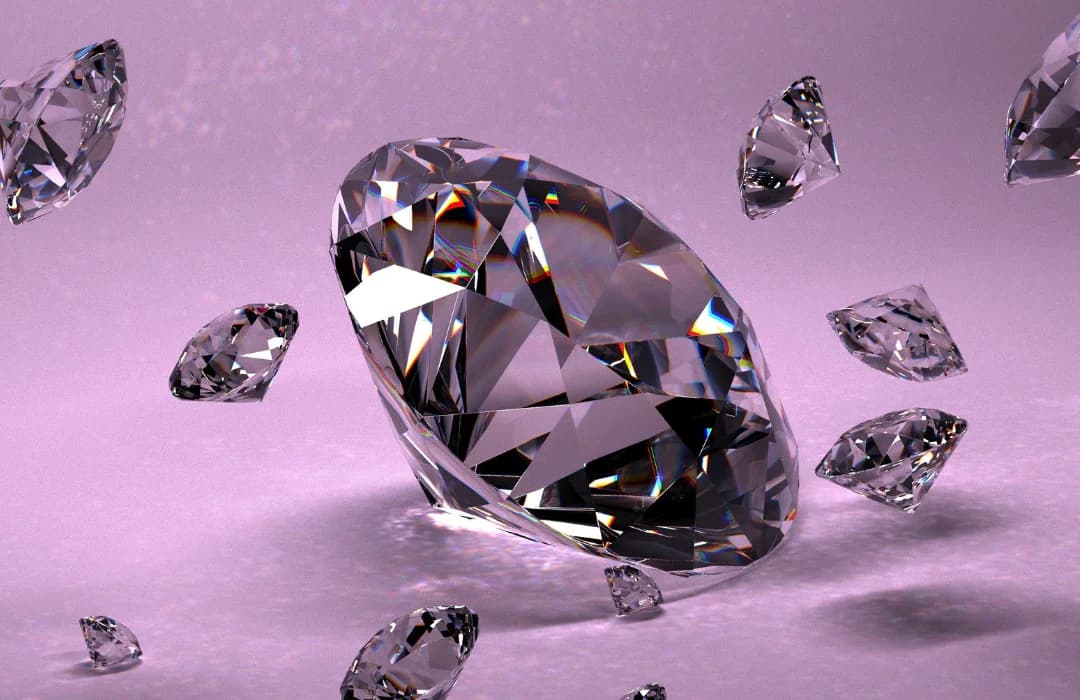
In recent years, the demand for ethical and sustainable jewelry has surged, driven by an increasing awareness of the environmental and social impacts of traditional diamond mining. Lab grown diamonds have emerged as a brilliant alternative, appealing to those who value luxury without compromising their ethical beliefs. If you’re on the lookout for a, responsible choice for your next piece of jewelry, lab grown diamonds could be just what you need.
Lab-grown diamonds are the most rigorous ethical alternative to mined stones — no mining-community labor risk, roughly 80% less land use per carat, IGI or GIA grading, and 60-80% lower cost. A 1.50ct G/VS1 round in 14k recycled white gold runs $2,000-$3,500 versus $9,000+ mined. Most New York jewelers ship lab-grown ethical builds in 4-6 weeks.
Understanding Lab Grown Diamonds
Lab grown diamonds are real diamonds that are created in controlled laboratory environments. These diamonds undergo processes that replicate the natural conditions under which diamonds form deep within the Earth. Unlike imitations or synthetic stones, lab grown diamonds are chemically, physically, and optically identical to their mined counterparts.
Two primary methods are employed in the creation of lab grown diamonds: High Pressure High Temperature (HPHT) and Chemical Vapor Deposition (CVD). The HPHT method mimics the extreme pressure and temperature found in the Earth, while CVD uses a gas to deposit carbon atoms onto a diamond seed. Both processes yield beautiful diamonds that carry the same brilliance and durability as their mined counterparts.
For those interested in exploring your options, check out lab grown diamonds to find high-quality selections that suit your taste.
Ethical Sourcing: A Conflict-Free Choice
One of the most compelling reasons to choose lab grown diamonds is their ethical sourcing. Traditional diamond mining has long been associated with serious ethical concerns, including conflict diamonds—gems mined in war zones and sold to fund violence and human rights abuses. mining practices can often exploit local communities and workers.
Lab grown diamonds provide a conflict-free alternative. They are guaranteed to be produced without causing harm to people or communities. The transparency of the lab grown diamond supply chain is a major advantage for consumers seeking ethically responsible purchases. When you choose a lab grown diamond, you can feel confident knowing your gem is sourced responsibly. If you're looking for ethically sourced options, explore fancy colored lab grown diamonds for unique and beautiful choices that make a statement.
Environmental Impact: A Greener Option
The environmental impact of traditional diamond mining cannot be overstated. It often results in habitat destruction, deforestation, and severe ecological damage. The extraction process consumes vast amounts of water and energy, contributing to environmental degradation.
Lab grown diamonds, on the other hand, are produced in controlled environments that minimize their ecological footprint. They require fewer natural resources and generate significantly less waste, making them a far more sustainable choice for eco-conscious buyers. By opting for lab grown diamonds, you’re not only selecting a beautiful gem but also making a positive impact on the planet.
Quality and Value: No Compromise on Luxury
Many consumers are pleasantly surprised to discover that lab grown diamonds are often 30-40% less expensive than natural diamonds of similar size and quality. This affordability allows you to purchase larger or higher-quality stones within your budget.
However, it’s essential to note that lab grown diamonds do not compromise on quality. They are graded according to the same standards as natural diamonds, ensuring that you receive a product that meets the highest quality criteria. With lab grown diamonds, you can enjoy the beauty of a diamond while keeping your finances in check. If you're interested in an elegant and affordable option, explore cushion cut lab grown diamonds for an elegant choice.
Variety and Customization: Tailored to Personal Style
Lab grown diamonds are available in a wide array of shapes, sizes, and colors, providing consumers with countless options to find the perfect gem for their jewelry. Whether you prefer classic cuts like round and princess or unique shapes like oval and pear, lab grown diamonds cater to diverse tastes.
many jewelers now offer bespoke design services, allowing you to create a unique piece that reflects your personal style. This flexibility means that lab grown diamonds can be tailored to suit any preference, whether you’re looking for an engagement ring, a special gift, or a piece to add to your collection. For a fine selection of shapes, explore round lab grown diamonds.
Consumer Trends: Embracing Ethical Choices
As awareness of ethical sourcing grows, consumer preferences are shifting towards sustainable and responsible products. Younger generations, in particular, are prioritizing sustainability, ethical sourcing, and transparency when making purchasing decisions. Lab grown diamonds perfectly align with this new mindset, offering a product that resonates with modern values.
This trend is particularly evident in the engagement ring market, where lab grown diamonds are increasingly becoming the first choice for many couples. As more consumers seek to express their love and commitment while making ethical choices, lab grown diamonds provide a beautiful, conflict-free alternative that doesn’t compromise on luxury or quality.
Lab Grown Diamonds vs. Natural Diamonds: Key Comparisons
While lab grown diamonds and natural diamonds share the same physical and chemical properties, several critical differences set them apart.
- Origin: Lab grown diamonds are created in laboratories, whereas natural diamonds are formed over millions of years deep within the Earth.
- Ethics: Lab grown diamonds are conflict-free and produced under ethical conditions, while natural diamonds may have ethical concerns linked to mining practices.
- Environmental Impact: Lab grown diamonds have a much smaller environmental footprint compared to traditional diamond mining.
- Cost: Lab grown diamonds are generally more affordable, costing significantly less than natural diamonds of comparable quality.
For many consumers, these differences make lab grown diamonds the clear choice. They offer the same beauty, durability, and sparkle as natural diamonds, but with added ethical and environmental benefits. If you're interested in unique designs, explore pear shaped lab grown diamonds for something distinctive.
The Future of Lab Grown Diamonds in Ethical Jewelry
Looking ahead, lab grown diamonds are poised to become a mainstream option in the jewelry industry. As consumer demand for ethical and sustainable products continues to rise, the acceptance of lab grown diamonds will likely grow.
Advancements in technology are expected to enhance the quality and accessibility of lab grown diamonds, making them even more attractive to consumers. With their combination of affordability, ethical sourcing, and sustainability, lab grown diamonds represent a new era in the diamond industry where luxury and responsibility can coexist.
FAQs
What ethical issues do lab-grown diamonds solve?
Lab-grown diamonds eliminate concerns around conflict diamonds, exploitative mining labor, and the environmental impact of extraction. Every lab-grown stone is fully traceable from reactor to retail, in contrast to even Kimberley Process-certified mined diamonds where mid-chain traceability can be opaque. For buyers who want certainty about supply ethics, lab-grown removes the verification challenge entirely.
Are lab-grown diamonds conflict-free by definition?
Yes. Conflict diamonds (also called blood diamonds) are mined diamonds whose sale funds violent insurgencies. Lab-grown diamonds are produced in industrial facilities — typically in the US, Singapore, China, or Israel — with no connection to any conflict zone. There's no possibility of a lab-grown diamond being a conflict diamond.
How can I verify that a lab-grown diamond is actually lab-grown?
Two ways. First, the GIA or IGI certificate that accompanies the diamond identifies its origin explicitly. Second, the certificate number is laser-inscribed on the girdle of the stone — visible with a 10x loupe — so you can physically match the diamond to its paperwork. Reve Diamonds and other reputable retailers will demonstrate this match at point of sale.
Are lab-grown diamonds the same quality as mined?
Chemically and optically, yes — identical. Both are pure crystallized carbon with the same hardness, refractive index, dispersion (fire), and brilliance. The 4Cs (cut, color, clarity, carat) are graded the same way. A trained gemologist cannot tell the two apart by eye; only specialist lab equipment that detects trace nitrogen and growth signatures can distinguish them.
