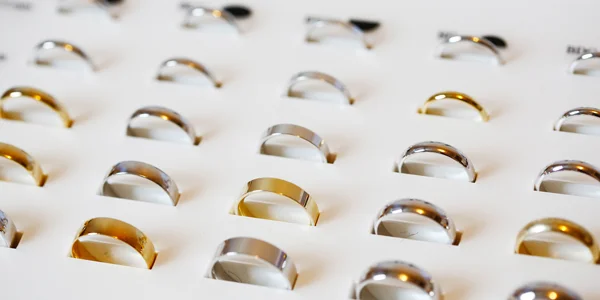
A wedding band is worn every day for decades, so the metal it is made from matters as much as the design. Men's bands face knocks, scratches and heavy wear, and different metals handle that life very differently. This guide breaks down every popular option so you can choose a band that suits your hands, your budget and your lifestyle.
Platinum is the premium choice — dense, hypoallergenic and naturally white — and typically runs $700–$2,500 for a men's band. 14k and 18k gold ($500–$1,800) offer warmth and easy resizing. Titanium, tungsten and cobalt ($150–$600) are extremely hard and scratch-resistant but difficult or impossible to resize. Your best metal depends on how you use your hands, your skin sensitivity and whether you want to resize later.
The premium metals: platinum and gold
- Platinum: naturally white, about 60% denser than gold, and hypoallergenic. It develops a soft patina rather than losing metal when scratched, and it is easy for a jeweler to resize or refurbish. Expect $700–$2,500.
- 18k and 14k gold: available in yellow, white and rose. 14k (58.5% gold) is harder and more affordable than 18k (75% gold), which is richer in color but softer. White gold is plated with rhodium and needs re-plating every 1–2 years. Typical range $500–$1,800.
- Palladium: a member of the platinum family — white, lightweight and hypoallergenic — often priced between gold and platinum.
The contemporary metals: titanium, tungsten, cobalt and more
- Titanium: very light, strong and hypoallergenic. Affordable at $150–$400, but hard to resize.
- Tungsten carbide: the most scratch-resistant option and highly polished, but brittle — it can crack under a sharp impact and generally cannot be resized.
- Cobalt and tantalum: durable, naturally white alternatives; tantalum is prized for its subtle blue-grey tone and resistance to corrosion.
- Zirconium: can be heat-treated to a durable black finish for a bold, modern look.
How to choose the right metal
Start with your hands. If you work with tools or use your hands heavily, prioritize scratch resistance (tungsten, titanium) or a metal that patinas gracefully (platinum). If you have sensitive skin, choose platinum, palladium or titanium. If you think you may need to resize in future — weight changes are common over a lifetime — gold and platinum are far more forgiving than the contemporary metals. Browse the full range of wedding bands to compare finishes in person, and pair your choice with a matching engagement ring where relevant.
Matching metals and long-term care
Many couples coordinate metals across their wedding bands and eternity rings. Whichever you choose, have the band checked once a year, re-plate white gold as needed, and store it separately from harder pieces. For more on metals, settings and stones, see our diamond education hub.
Frequently asked questions
Which metal is the most durable? Tungsten resists scratches best, but platinum is the most durable over a lifetime because it can be repaired and refinished rather than replaced.
Can all bands be resized? No. Gold, platinum and palladium resize easily. Titanium is difficult, and tungsten, cobalt and ceramic generally cannot be resized at all.
Which metals are hypoallergenic? Platinum, palladium and titanium are the safest choices for sensitive skin.