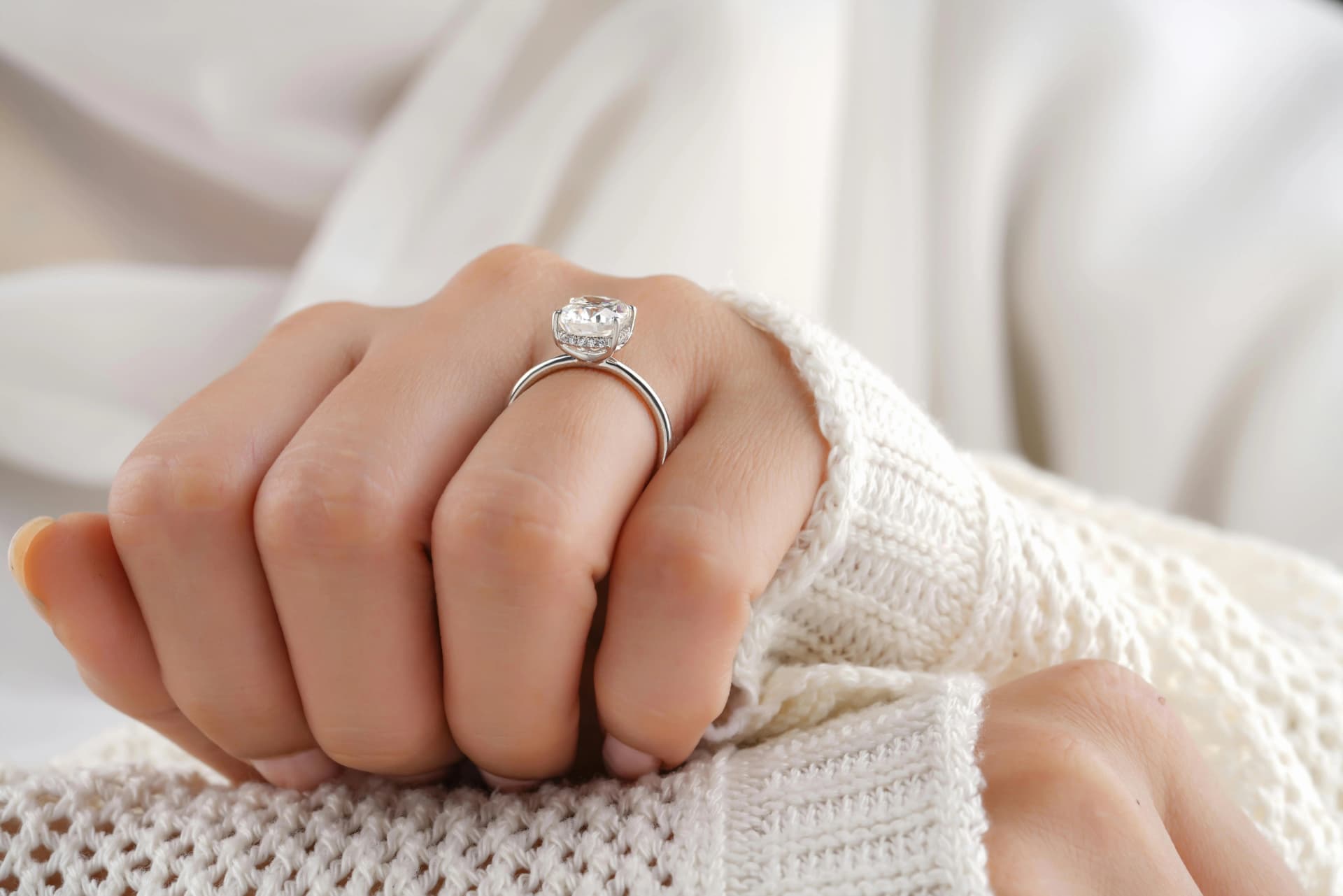
When it comes to designing the ideal diamond engagement ring, one of the most crucial decisions is the type of setting you choose. While the diamond itself takes center stage, the setting is what holds the gemstone in place, keeps it secure, and can even enhance its brilliance. Prong settings, in particular, are a popular choice because they allow the diamond to shine while keeping it secure. But with so many variations to choose from, how do you know which is right for you?
A four-prong setting maximizes light return and makes a center stone look 10-15% larger; a six-prong setting holds the diamond more securely and is the safer choice for stones above 1.50ct or for active hands. V-prongs protect the sharp corners of marquise and pear cuts. In platinum, expect prong-tipping maintenance every 3-5 years; in 18k white gold, every 2-3 years.
In this article, we’ll guide you through the key points to consider when selecting the perfect prong setting for your diamond engagement ring.
What is a Prong Setting?
A prong setting is one of the most common and traditional ways to hold a diamond in place. Essentially, it uses small metal “claws,” called prongs, to grip the diamond tightly from different angles, securing it to the band. These prongs can vary in number, style, and metal, all of which can impact the diamond’s appearance and security.
The beauty of prong settings is that they leave most of the diamond exposed, allowing for more light to pass through and increase its sparkle. If you’re looking for a beautiful diamond to pair with your prong setting, make sure to check out engagement rings for more inspiration.
Types of Prong Settings
There’s more than one way to set your diamond in prongs, and each style offers something unique. Let’s dive into some of the most popular prong settings and what makes them stand out.
Four-Prong Setting
The classic four-prong setting is a timeless favorite. With four prongs holding the diamond securely in place, this style is both elegant and practical. It offers a good balance between security and light exposure, allowing the diamond to catch the light beautifully. Many brides-to-be love this setting for its minimalistic look that highlights the stone.
If you're considering a larger stone, you might want to explore large diamond rings to see how they fit with a four-prong setting.
Genuine Story: One couple, Emily and Jake, were torn between a six-prong and four-prong setting. They finally chose the four-prong for their round-cut diamond, and Emily was thrilled with how much light it let in, making her diamond look even more brilliant.
Six-Prong Setting
If security is your top priority, a six-prong setting might be the way to go. With two additional prongs compared to the four-prong setting, the diamond is held more firmly in place. This makes it ideal for those with an active lifestyle or those who want the extra peace of mind that their diamond isn’t going anywhere. It’s especially popular with larger diamonds, as the six prongs provide added stability.
Genuine Story: Julia, an avid hiker, wanted a ring that could handle her adventurous lifestyle. She chose a six-prong setting for her engagement ring and never worried about losing her diamond, even on her most rugged outdoor trips.
Double-Prong Setting
For those who want a bit more design flair, the double-prong setting offers something different. Instead of a single prong holding the diamond at each point, you’ll have two smaller prongs side by side. This not only increases the ring’s durability but also adds a more refined look, especially with larger diamonds.
Genuine Story: Sarah loved the look of a large diamond but was concerned about security. She chose a double-prong setting for her 2-carat oval diamond, and it gave her the perfect blend of elegance and security.
Metal Types for Prong Settings
The type of metal you choose for your prong setting can also have a big impact on both the look and durability of your ring. Different metals offer different levels of strength and style.
Platinum
Platinum is often considered the most durable metal for prongs. Its strength makes it an excellent choice for those who want long-lasting security. Platinum prongs are less likely to bend over time, and while it’s a more expensive option, the investment is well worth it for those who prioritize durability.
White Gold
If you love the sleek, modern look of platinum but want something a bit more budget-friendly, white gold is a great alternative. It offers a similar look, though it may require occasional replating to maintain its shine. Still, it’s a beautiful option that complements diamonds of all shapes and sizes. For those interested in matching their prong setting with other jewelry, you might want to check out wedding bands for a cohesive look.
Yellow and Rose Gold
For those looking for something unique, yellow or rose gold prongs can create a contrast against a white diamond. Yellow gold offers a warm, classic look, while rose gold adds a romantic, vintage feel. Both options are becoming increasingly popular among brides who want their ring to stand out. Consider pairing your engagement ring with an eternity ring for a look that’s both timeless and unique.
Prong Settings and Diamond Shapes
The shape of your diamond plays a key role in determining the best prong setting for your engagement ring. Here’s a breakdown of how different shapes pair with prongs.
Round-Cut Diamonds
Round-cut diamonds are the most versatile and often work well with both four- and six-prong settings. The prongs help frame the diamond without taking away from its natural brilliance. For a more secure option, six prongs are ideal, while four prongs let in more light.
Princess and Emerald-Cut Diamonds
For square or rectangular diamonds like princess and emerald cuts, V-prongs are often used. These prongs protect the sharp corners of the stone from chipping, which is particularly important for these angular shapes. Want to see more options for unique diamond shapes? Explore lab-grown diamonds to find the perfect match for your engagement ring.
Pear, Marquise, and Heart-Shaped Diamonds
With pear, marquise, and heart-shaped diamonds, protecting the delicate points is crucial. Prong settings, especially those with V-prongs at the points, are essential for keeping these stones secure.
Genuine Story: Maria had her heart set on a pear-shaped diamond but worried about its delicate tip. Her jeweler suggested a V-prong setting that secured the stone without sacrificing its unique beauty.
Pros and Cons of Prong Settings
Pros
- Brilliance: Prong settings allow for maximum light exposure, making the diamond appear more brilliant.
- Timeless Style: The simplicity of a prong setting makes it a classic choice that won’t go out of style.
- Versatility: Prong settings work with almost all diamond shapes and sizes.
Cons
- Snagging: Prongs can catch on clothing or hair, especially if they aren’t maintained properly.
- Maintenance: Prongs need regular checkups to ensure they haven’t loosened over time, which could cause the diamond to fall out.
How to Maintain and Care for Prong-Set Engagement Rings
To keep your prong-set engagement ring in top shape, regular maintenance is key. It’s a good idea to have your prongs checked by a professional jeweler once a year to make sure they haven’t loosened. Cleaning your ring regularly with a soft brush and gentle soap can help prevent dirt buildup in and around the prongs.
Genuine Story: Katie nearly lost her diamond when one of the prongs on her ring loosened. Thankfully, she caught it in time during a routine inspection at her jeweler, who tightened the prongs and saved her precious stone. For those who want to keep their diamonds sparkling, make sure to check out earrings and other pieces that complement your engagement ring.
Choosing the Right Prong Setting for Your Lifestyle
Your lifestyle should play a big role in the setting you choose. If you’re someone with an active job or who loves outdoor activities, a more secure prong setting, like the six-prong or double-prong, may be a better fit. For those with less active lifestyles, a four-prong setting offers a more minimalistic look while still keeping your diamond safe.
Making the Final Decision
Selecting the perfect prong setting for your diamond engagement ring is a personal choice, but understanding the different options can make the decision easier. Whether you’re drawn to the classic look of a four-prong setting or need the extra security of a six-prong design, there’s a prong setting that will beautifully showcase your diamond. Work closely with your jeweler to find the perfect balance between style and functionality, ensuring your diamond engagement ring will sparkle for years to come. And for more inspiration, explore tennis bracelets and other timeless jewelry that complements your style.
FAQs
Which prong setting is best for daily wear?
Four-prong and six-prong settings in platinum or 18kt white gold give the best combination of security and brilliance for daily wear. Four prongs hold a round or princess-cut diamond securely with minimal metal covering the stone, maximizing sparkle. Six prongs add extra security for larger stones (1.5 carats and above) and create the classic Tiffany-style silhouette. Bezel settings — where the metal wraps the full perimeter of the stone — are the most secure of all and a good choice for active lifestyles.
How many prongs should an engagement ring have?
Four prongs for most round, princess, cushion, and asscher cuts under 1.5 carats. Six prongs for round diamonds 1.5 carats and above (the extra prongs distribute pressure on the larger stone). Pear, marquise, and heart shapes use three or five prongs with one V-shaped prong protecting the pointed tip. Emerald cuts often use four V-prongs at the corners to protect the right angles.
Are prong settings secure for an active lifestyle?
Standard four-prong and six-prong settings are secure for everyday wear and most office, retail, or hospitality work. For genuinely active lifestyles — daily manual work, weightlifting, climbing, or healthcare with frequent glove changes — bezel and half-bezel settings are more secure because no prong can catch or bend. If you want to keep a prong setting, choose 18kt gold or platinum (more wear-resistant than 14kt), have the prongs inspected annually, and remove the ring for gym sessions and manual chores.
Will prongs catch on clothes or hair?
Standard prongs are filed and polished smooth, so they rarely catch on knitwear or hair in normal wear. The risk increases as the metal wears down — after a few years the tips can become slightly thinned or hooked from contact with surfaces, which is when catching starts. A jeweler can re-tip prongs in under an hour for $75–$150, restoring them to their original profile. If catching is a daily frustration, switching to a bezel or low-profile setting eliminates the issue entirely.
How often should prong settings be professionally inspected?
Once a year for daily-wear engagement rings, more often if you do manual work. The inspection takes 5–10 minutes and checks for thinning, bending, or any loosening that could let a stone fall out. Most reputable jewelers — Reve Diamonds included — offer this inspection free of charge as part of lifetime aftercare on any ring they have sold. Catching prong wear early prevents the much more expensive stone-loss replacement.


