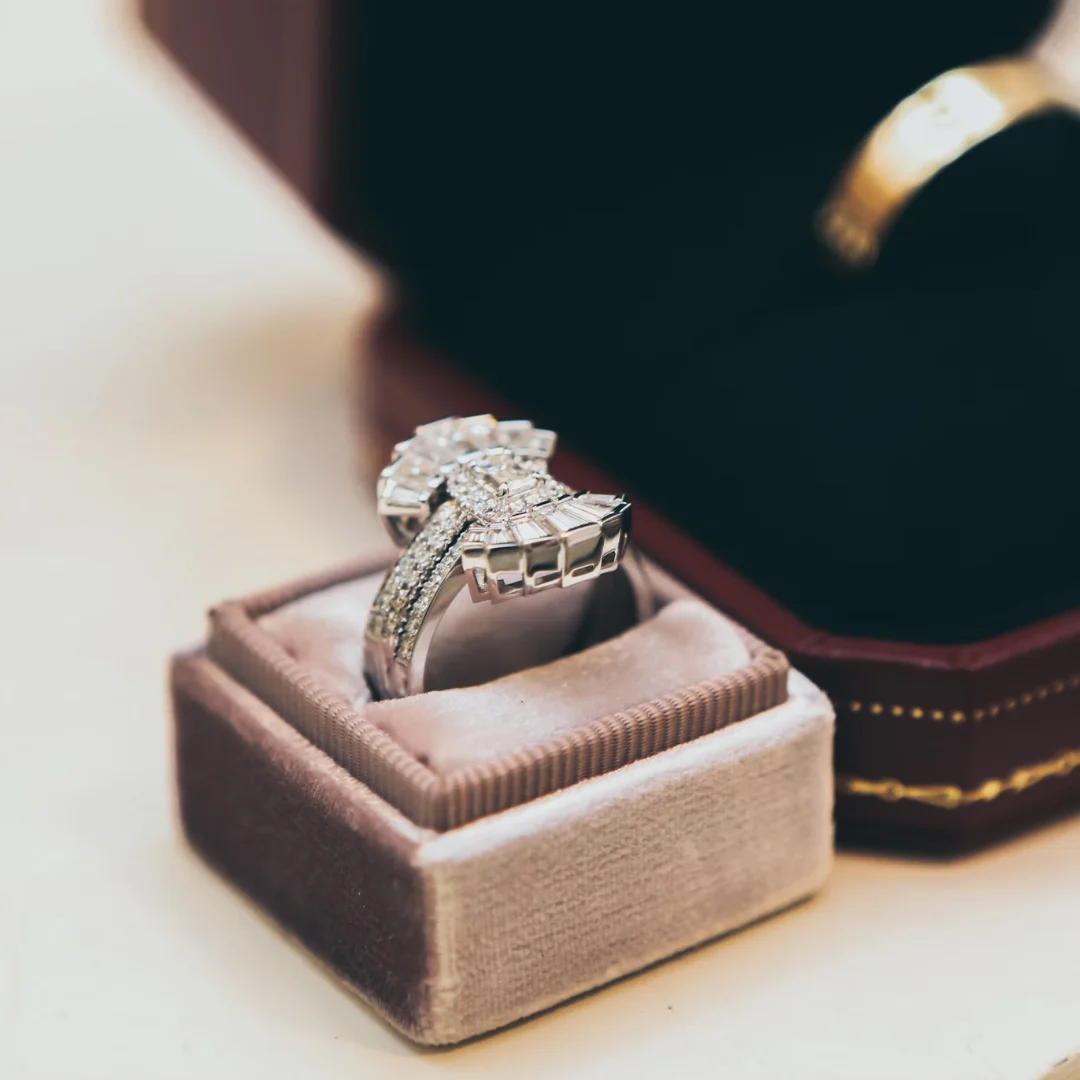
Choosing an engagement ring is one of the most exciting decisions you’ll make, but it’s also surrounded by myths that can cloud your judgment.
Three persistent myths to set aside: spending two or three months' salary is a 1930s advertising line, not a rule; lab-grown diamonds are real diamonds (identical Mohs 10 carbon structure, IGI/GIA certified); and bigger does not mean better — cut quality drives sparkle more than carat. The 2025 US average engagement-ring spend sits near $5,500, and roughly 50% of new center stones are lab-grown.
From misconceptions about diamond size to misunderstandings about lab-grown diamonds, it’s easy to be misled.
Let’s debunk some common myths to help you make an informed choice and find the perfect ring for your special moment.
The Bigger the Diamond, the Better the Ring
One of the most prevalent myths is that a bigger diamond always means a better ring.
While a larger diamond can be impressive, it’s not the only factor to consider.
The Four Cs—cut, color, clarity, and carat weight—are crucial in determining the overall quality of the ring.
Story: Quality Over Quantity
Take Emily and Jack, for example.
They initially thought that a larger diamond would be more impressive.
However, after learning about the Four Cs, they realized that a smaller, higher-quality diamond with an excellent cut and clarity would be a more beautiful choice.
They ended up with a ring that perfectly matched their tastes and budget, proving that sometimes, less is more.
For those interested in exploring a range of options, check out our engagement rings page.
Diamonds Are Forever and Never Lose Value
Many people believe that diamonds are a solid investment that will always retain their value.
While diamonds are indeed durable, their resale value isn’t always as high as one might expect.
Market demand and other factors can affect how much you’ll get if you decide to sell.
Story: The Reality of Resale
Consider the experience of Alex and Mia.
They bought an engagement ring thinking it would be a great investment.
A few years later, when they tried to resell it, they found that the ring’s resale value was significantly lower than they had anticipated.
This taught them that while diamonds are timeless, their financial value isn’t always guaranteed.
For alternatives that might fit your budget, you might want to explore our wedding bands or eternity rings.
Lab-Grown Diamonds Are Not Real Diamonds
A common misconception is that lab-grown diamonds aren’t “real” diamonds.
In reality, lab-grown diamonds are chemically and physically identical to natural diamonds.
They’re created in controlled environments and offer the same brilliance and durability.
Story: Embracing Lab-Grown Diamonds
Sophia and Noah chose lab-grown diamonds for their engagement ring.
They were initially concerned that lab-grown diamonds might not be as genuine as natural ones, but they were thrilled to find that the quality was exceptional.
They appreciated the ethical sourcing and cost-effectiveness, making their choice both meaningful and budget-friendly.
If you’re interested in exploring lab-grown options, check out our lab-grown diamonds page.
All Diamonds Are the Same
Another myth is that all diamonds are essentially the same.
In fact, diamonds can vary widely in quality, even if they look similar to the naked eye.
The differences in cut, color, clarity, and carat weight can significantly affect a diamond’s appearance and value.
Story: A Lesson in Diamond Quality
When Mia and Liam were shopping for their engagement ring, they noticed several diamonds that seemed similar.
However, after getting a detailed comparison of the diamonds' grading, they realized how much the differences in quality affected the overall look and value of the ring.
They learned that understanding these factors was key to finding the perfect diamond.
For more information on diamond quality and options, you might want to check out our diamond pendants and necklaces or large diamond rings pages.


