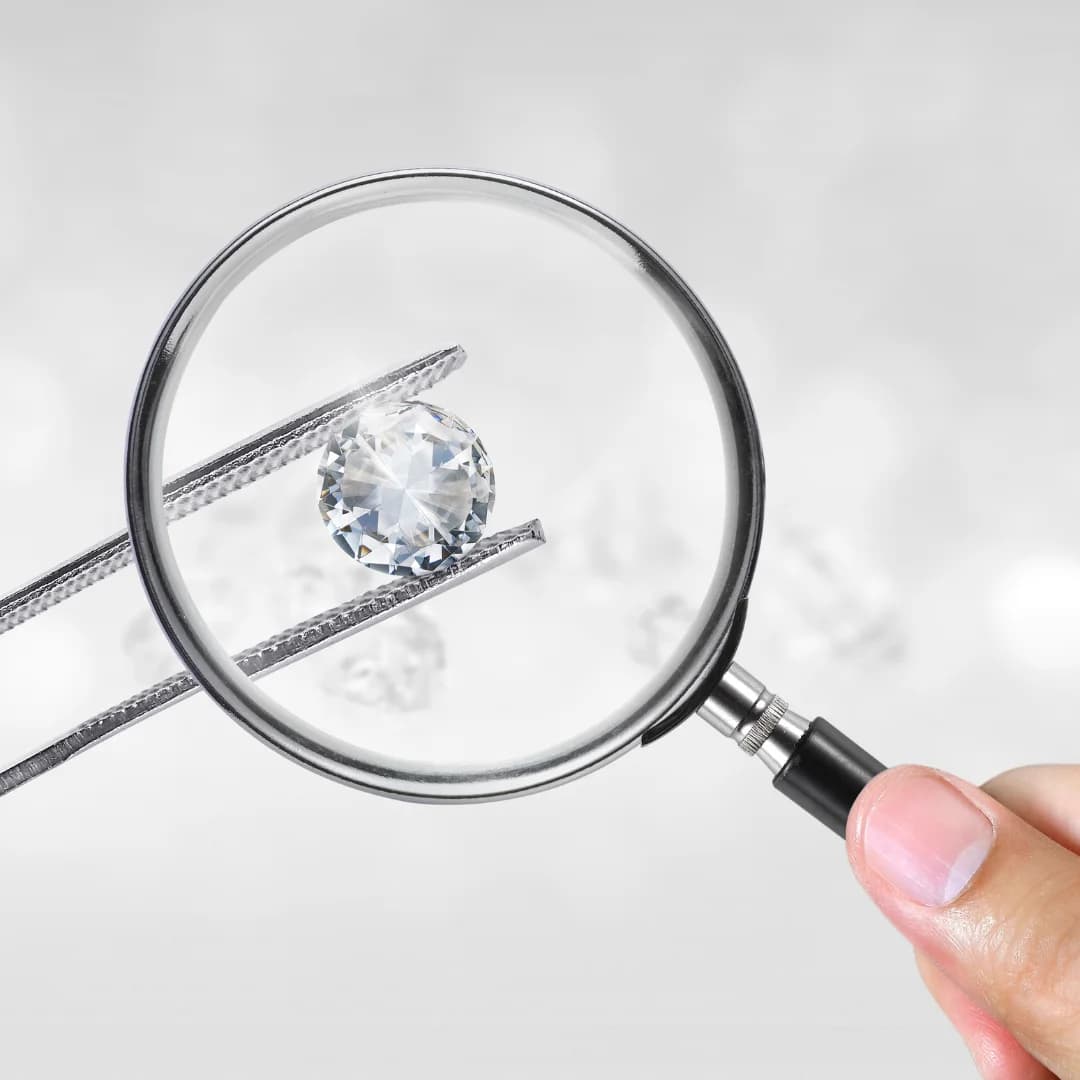
If you're weighing up a lab-grown diamond, one worry comes up again and again: will it hold up to a jeweler's diamond tester, or will it be exposed as "not a real diamond"? It's a fair question — and the answer is reassuring. Because a lab-grown diamond is a real diamond, it behaves exactly like a mined one under a standard tester. Here's what a tester actually checks, what it can and can't tell you, and how to be completely certain about any stone you buy.
Yes — lab-grown diamonds pass a diamond tester. Standard testers measure how a stone conducts heat (and sometimes electricity), and a lab-grown diamond conducts both exactly like a mined diamond because it is diamond. What a pocket tester can't do is tell you a stone's origin — lab-grown vs mined — or its quality. For that you need an independent grading report from GIA or IGI, which is the only reliable proof of what you're buying.
What a diamond tester actually measures
A handheld diamond tester doesn't "see" a diamond the way a lab does. It infers the material from a physical property — most commonly thermal conductivity. Diamond conducts heat better than almost any other material used in jewelry, so when the probe touches the stone and heat drains away at a diamond-like rate, the tester lights up "diamond." That's the whole trick: it's a materials test, not an authenticity or origin test.
How diamond testers work
There are two common types. Thermal testers send a tiny pulse of heat into the stone and measure how quickly it dissipates. Electrical (or "moissanite") testers add a second check for electrical conductivity, because one common diamond look-alike — moissanite — also passes a thermal test but conducts electricity differently. Better combo units run both checks so they can separate diamond from moissanite. Crucially, neither method can separate a lab-grown diamond from a mined one, because on both measures they are identical.
Do lab-grown diamonds pass a diamond tester?
They do, every time a mined diamond would. A lab-grown diamond has the same carbon crystal lattice, the same hardness, and the same thermal and electrical behavior as a mined stone — the only difference is that it was grown in a reactor rather than underground. To a thermal or combo tester there is nothing to distinguish, so it reads "diamond." If a stone sold as a diamond fails a tester, that's a red flag it may be a simulant like cubic zirconia or glass — not that it's lab-grown.
When a tester can be fooled
Testers are useful for weeding out obvious fakes, but they have limits. Moissanite can trip up a thermal-only unit, which is why the electrical check exists. Very small stones, dirty surfaces, or a poorly maintained probe can give inconsistent readings. And no consumer tester distinguishes lab-grown from natural — that requires specialized laboratory screening for growth features and, in some cases, type IIa analysis. So a tester answers "is this diamond?" but never "where did this diamond come from?"
How to be certain your diamond is genuine
The dependable proof isn't a gadget, it's paperwork. Insist on an independent grading report from GIA or IGI: it confirms the stone is diamond, states whether it is laboratory-grown, and records the 4Cs so you know exactly what you're paying for. The two labs calibrate their scales slightly differently, so it's worth understanding the difference — we cover it in our guide to IGI vs GIA for lab-grown diamonds. You can also browse our GIA-certified lab-grown diamonds if a specific report matters to you, and our diamond education guides explain what each grade means.
A few myths, cleared up
"Lab-grown diamonds are fake." They aren't — they are chemically and physically diamond, which is exactly why they pass a tester. "A tester proves my diamond is natural." It doesn't — it only confirms the material is diamond. "Lab-grown stones fade or lose their sparkle." They don't — with the same hardness as mined diamonds, they stay brilliant for life. If value is part of your decision, our natural vs lab-grown price comparison shows how the numbers stack up.
Frequently asked questions
Will a jeweler's diamond tester say my lab-grown diamond is real?
Yes. A lab-grown diamond passes a standard thermal or combination tester because it is genuine diamond with identical thermal and electrical properties to a mined stone. A "diamond" result is expected, not a surprise.
Can a diamond tester tell lab-grown from mined?
No. Consumer testers only identify the material as diamond; they cannot determine origin. Separating lab-grown from natural requires laboratory screening, which is why an independent GIA or IGI report is the reliable way to confirm whether a stone is grown or mined.
What makes a stone fail a diamond tester?
Simulants that aren't diamond — such as cubic zirconia or glass — fail a thermal test. Moissanite can pass a thermal-only unit but is caught by the electrical check on a combination tester. A genuine diamond, lab-grown or mined, passes.
How can I be completely sure what I'm buying?
Ask for an independent grading report from GIA or IGI, view the stone in person or on high-resolution video, and prioritize cut and an eye-clean appearance. Certification confirms both authenticity and origin in a way no handheld tester can.
Want a stone you never have to second-guess? Explore our lab-grown diamonds and engagement rings, each available with independent certification so you know exactly what you're getting.