Do oval diamonds appear bigger than round ones?
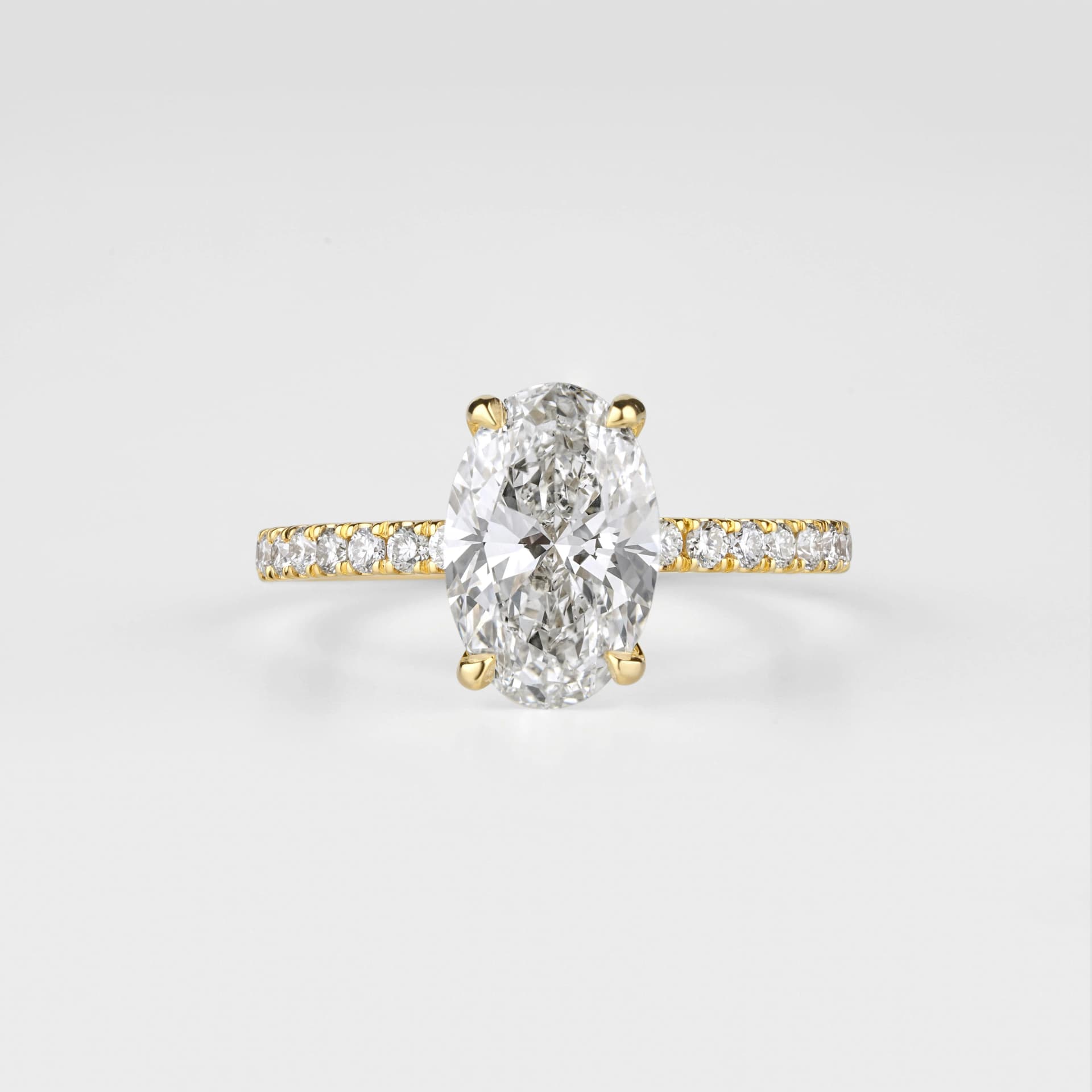
Yes. At the same carat weight, an oval diamond usually looks about 8–10% larger than a round brilliant. Its elongated outline spreads more surface area across the top of the finger, and the length draws the eye, so an oval reads bigger even though the two stones weigh exactly the same.
Shape is one of the most underrated levers for making a diamond look larger without spending more. Oval and round are two of the most popular choices, and the difference in perceived size between them surprises many shoppers.
Why ovals look larger
A round brilliant concentrates its weight into a compact, circular footprint, with a portion of that weight sitting in the depth of the stone. An oval of the same carat is stretched lengthwise, giving it a larger face-up surface area — the part you actually see. The elongation also creates a flattering, finger-lengthening effect. Together these make an oval appear noticeably bigger than a round of identical weight.
Putting numbers to it
As a rough guide, a 1.00 ct round brilliant measures around 6.5 mm in diameter, while a 1.00 ct oval typically measures about 7.7 mm long by 5.7 mm wide. That extra length is what your eye registers as "bigger." The same principle applies across carat weights, which is why elongated shapes are a favorite for buyers wanting maximum presence. For more on this, see our guide to whether carat or cut affects how big a diamond looks.
Things to weigh before choosing an oval
- The bowtie effect — ovals can show a dark bowtie shape across the center; a well-cut oval minimizes it, so review the stone before buying.
- Length-to-width ratio — a ratio around 1.35–1.50 gives the classic oval silhouette; go longer for a more dramatic stretch.
- Even outline — check the shoulders are symmetrical so the stone does not look lopsided.
- Setting protection — the pointed ends of some elongated shapes need protecting, though ovals have no sharp corners, which is a durability plus.
Is bigger-looking always better?
Not necessarily. Rounds return more brilliance than any other shape thanks to their optimized facet pattern, so if maximum sparkle is your priority a round may still win your heart. If size-for-money is the goal, an oval — or another elongated shape like marquise or pear — delivers more visible spread. Because lab-grown stones cost far less than mined equivalents, many buyers choose an oval and put the savings toward a higher carat or better cut. Explore options in our lab-grown diamonds and engagement rings collections, and pair with matching eternity rings.
To understand how proportions and cut quality affect a stone's face-up size, our diamond education guide breaks down the essentials.
Frequently asked questions
How much bigger does an oval look than a round?
An oval typically appears around 8–10% larger than a round brilliant of the same carat weight, thanks to its greater surface area and elongated outline.
Do oval diamonds cost less than round diamonds?
Often, yes. Ovals usually cost less per carat than rounds because cutting a round wastes more rough, so an oval can look larger and cost less at the same weight.
What is the bowtie effect in oval diamonds?
It is a dark band across the middle of an oval caused by light leakage. A quality cut keeps it faint, so always view the individual stone before purchasing.
Find your elongated favorite in our lab-grown collection.