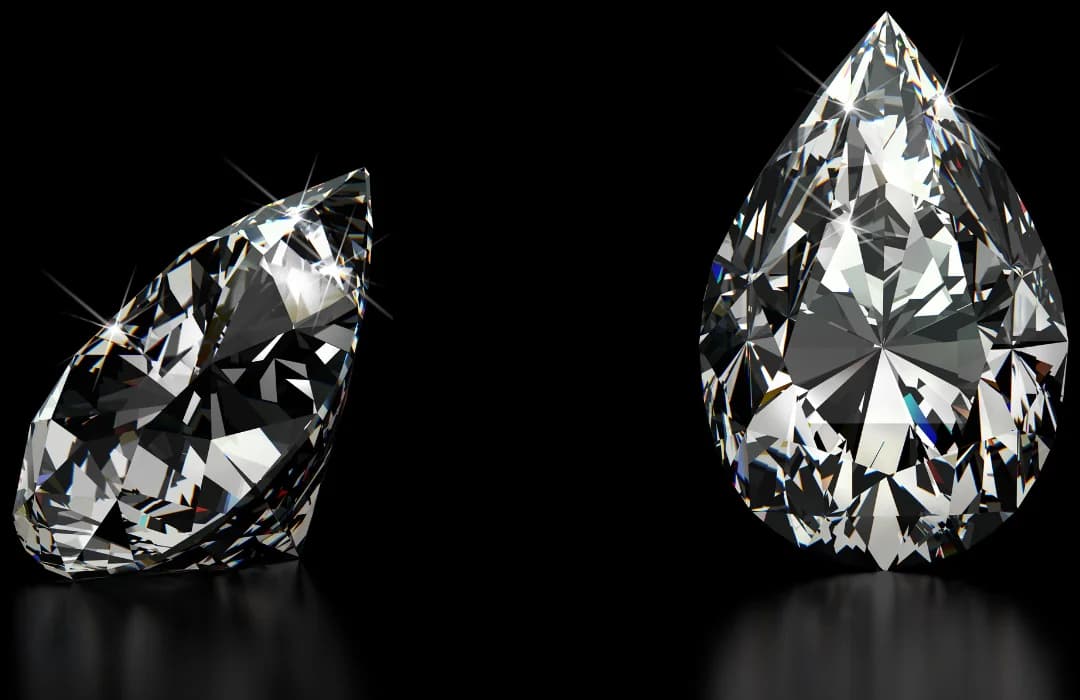
The pear cut diamond, with its striking teardrop silhouette, has charmed jewelry lovers for centuries. A harmonious blend of the round brilliant’s sparkle and the marquise’s elongation, this shape exudes romance and sophistication. Whether set in a vintage-inspired halo or a sleek solitaire, pear cuts offer versatility that suits both classic and contemporary tastes.
But what truly defines a pear cut’s beauty? The answer lies in its length-to-width ratio – a subtle yet powerful detail that determines its symmetry, brilliance, and how gracefully it sits on your finger. For those exploring unique designs, check out pear cut diamond ratios in non-traditional settings.
Understanding Pear Cut Diamond Ratios
What Is the Length-to-Width Ratio?
Imagine slicing a pear-shaped diamond lengthwise – the ratio compares its longest point (the tip-to-tail length) to its widest point (the rounded end). This number shapes whether your diamond appears plump and symmetrical or sleek and elongated.
The ratio is calculated by dividing the diamond’s length by its width. For example, a pear-shaped diamond measuring 10mm in length and 6.5mm in width has a ratio of approximately 1.54:1, placing it in the "classic" category. This ratio is pivotal in achieving the perfect balance between the rounded "head" and the pointed "tail" of the teardrop.
How Ratio Shapes Sparkle and Silhouette
A pear cut’s ratio isn’t just about looks—it’s about light. A well-proportioned diamond balances the “head” (rounded end) and “tail” (pointed tip) to maximize brilliance. Too elongated, and you risk a visible bow-tie effect (a dark band across the center). Too short, and the diamond may lose its elegant taper.
The facets of a pear cut are arranged to optimize light reflection. In a balanced ratio, light enters through the table (top), bounces off the pavilion facets, and exits in a brilliant display of fire and scintillation. For insights into how diamonds form their unique characteristics, compare pear cut diamond ratios.
Popular Pear Cut Ratios and Their Unique Features
- Classic Ratios (1.45:1–1.55:1): A timeless teardrop shape, perfect for vintage settings. These diamonds offer even weight distribution and a symmetrical silhouette, making them ideal for solitaire or halo engagement rings.
- Balanced Ratios (1.56:1–1.65:1): Slightly elongated for modern versatility. This range enhances carat visibility and pairs beautifully with east-west settings or tapered side stones.
- Elongated Ratios (1.66:1+): A dramatic, finger-lengthening silhouette ideal for statement pieces. These ratios demand expert cutting to avoid asymmetry or dullness.
Comparing Popular Pear Cut Ratios
Classic Ratios: Symmetry and Tradition
Classic ratios deliver a balanced teardrop, beloved for their even weight distribution and vintage charm. These diamonds shine in halo settings or as solitaires, particularly suiting smaller hands. Their symmetrical sparkle evokes timeless elegance, though they offer less of a finger-lengthening effect.
For those drawn to vintage glamour, classic ratios pair beautifully with milgrain detailing or intricate pavé bands. The rounded head of the pear complements Art Deco-inspired designs, while the tapered tail adds a touch of sophistication. For complementary gemstone accents, compare pear cut diamond ratios in gemstone-adorned designs.
Balanced Ratios: The Best of Both Worlds
Slightly elongated pears strike a modern balance, offering subtle elongation without compromising sparkle. Ideal for east-west settings or paired with tapered baguettes, they’re a favorite among U.S. buyers seeking a fresh twist on tradition.
These ratios are particularly flattering on medium-sized hands, offering a graceful elongation without appearing overly stretched. Their versatility makes them suitable for both engagement rings and pendants. However, precision cutting is crucial—even minor asymmetry can disrupt the teardrop’s harmony.
Elongated Ratios: Bold and Graceful
Elongated pears are all about drama. Their slender silhouette creates a striking finger-lengthening illusion, perfect for pendants or Art Deco-inspired rings. However, their brilliance hinges on expert cutting—poor craftsmanship can lead to a dull bow-tie effect.
These ratios are ideal for bold, contemporary designs. Think sleek bezel settings, tension mounts, or minimalist solitaires. The elongated shape also pairs beautifully with geometric wedding bands or mixed-metal designs. For pairing ideas, check out pear cut diamond ratios with diamond wedding bands.
How to Choose the Right Pear Cut Ratio
Match Ratio to Your Hand Shape
- Slim fingers: Elongated ratios (1.6:1+) enhance proportionality, creating an elegant, elongated look.
- Wider fingers: Classic ratios (1.5:1) provide balance without over-elongation, ensuring the diamond doesn’t appear cramped.
- Medium hands: Balanced ratios (1.55:1–1.65:1) offer a harmonious blend of length and width.
Align with Your Jewelry Style
- Vintage lovers: Opt for classic ratios with milgrain details or pear-shaped halos. Pair with yellow gold or rose gold for a warm, nostalgic feel.
- Modern minimalists: Sleek, elongated ratios in bezel or tension settings. Platinum or white gold enhances the contemporary aesthetic.
- Statement seekers: Elongated ratios in bold settings, such as double-prong solitaires or asymmetric designs.
Practical Tips for U.S. Buyers
- Try before you buy: Use virtual try-on tools or visit trusted jewelers in areas like New York's Diamond District or LA’s Jewelry District. Seeing the diamond on your hand is invaluable.
- Check certifications: Prioritize GIA or IGI certifications to verify symmetry, cut quality, and ratio accuracy.
- Consider lab-grown: Ethical, budget-friendly alternatives with identical brilliance. For a detailed comparison, compare pear cut diamond ratios in lab-grown versus natural options.
- Metal matters: The setting’s metal impacts the diamond’s appearance. White metals (platinum, white gold) enhance cool tones, while yellow gold adds warmth.
Debunking Myths About Pear Cut Ratios
Myth: “All Pear Cuts Look the Same”
Reality: Even a slight ratio change alters the diamond’s silhouette and light performance dramatically. A 1.5:1 ratio creates a plump teardrop, while 1.65:1 yields a sleek, modern shape.
Myth: “Elongated Pears Sparkle More”
Reality: Sparkle depends on cut quality—a poorly cut elongated pear can appear dull. Focus on excellent symmetry and ideal depth percentages (58–62%) for maximum brilliance.
Myth: “Symmetry Doesn’t Matter”
Reality: Asymmetrical pears (uneven head/tail) lose value and visual harmony. The tip should align perfectly with the rounded end’s midpoint.
FAQs About Pear Cut Diamond Ratios
Q: What’s the most popular pear ratio in the U.S.?
A: Balanced ratios (1.55:1–1.65:1) are most popular, offering a modern yet timeless teardrop shape.
Q: Can pear cuts hide inclusions well?
A: Yes! Their tapered shape and faceting mask inclusions better than many cuts. For gemstone alternatives, check out pear cut diamond ratios in gemstone rings.
Q: Does ratio affect price?
A: Rare ratios (e.g., 1.7:1+) may cost slightly more due to cutting complexity, but carat weight and color matter most.
Q: How do I avoid a bow-tie effect?
A: Choose excellent-cut diamonds and inspect them under natural light. A faint bow-tie is normal, but avoid stones with dark, unbroken bands.
Q: Are pear cuts durable for everyday wear?
A: The pointed tip (the "tail") can be prone to chipping. Protect it with a V-prong setting or bezel.
Q: Can I pair a pear cut with a colored gemstone?
A: Absolutely! Pear cuts look stunning alongside sapphires, emeralds, or rubies. For ideas, compare pear cut diamond ratios in gemstone-accented designs.
The ideal pear-cut length-to-width ratio for US buyers is 1.50-1.70, giving a classic teardrop silhouette. Ratios near 1.40 look squat; 1.75+ look elongated and dramatic. Symmetry of the point and shoulders matters more than ratio. Aim for Excellent cut and no visible bowtie. A 1.50ct G/VS1 pear in 14k white gold runs $2,500-$4,000 lab-grown.