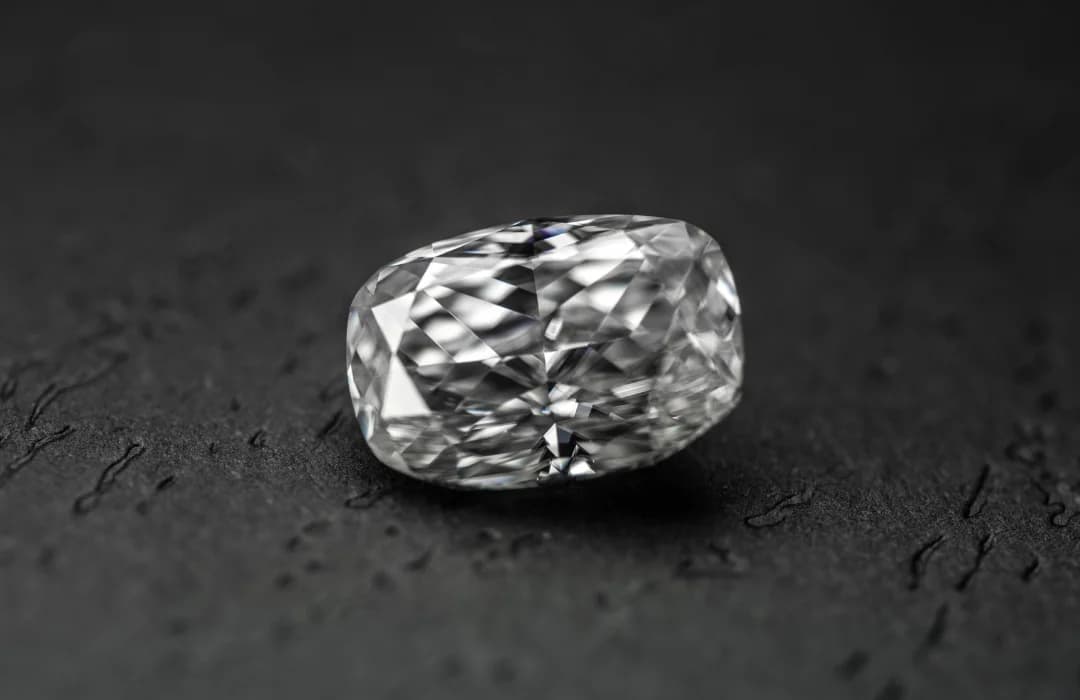
So, what’s this length-to-width ratio we’re talking about? Picture a cushion cut diamond from above. The ratio is simply its length divided by its width. Say it’s 6mm long and 6mm wide—that’s a ratio of 1.00, making it a perfect square. If it’s 6.6mm long and 5.5mm wide, you’re looking at a ratio of 1.20, which leans more rectangular. Easy enough, right?
This number matters because it determines whether your cushion cut looks short and square or long and elegant. Unlike round diamonds, which are all about uniformity, or emerald cuts with their sharp lines, cushion cuts have a soft, versatile charm. The ratio shapes that charm—whether it’s bold and modern or gracefully elongated. Let’s explore the options.
Ideal Cushion Cut Diamond Ratios: What’s Preferred?
Ask a jeweler about the “ideal” ratio for a cushion cut, and they’ll likely point you to a range between 1.00 and 1.20. Within that, 1.15 often gets called the sweet spot. At 1.00, you’ve got a perfectly square cushion—crisp, balanced, and full of character. Stretch it to 1.15 or 1.20, and it starts to look a bit more rectangular, adding sophistication without going overboard.
Why are these considered ideal? It’s all about balance. A squarer 1.00 maximizes the diamond’s surface, letting those facets sparkle brilliantly, while a slightly longer 1.15 or 1.20 softens the look with an elegant stretch. That said, “ideal” isn’t set in stone—it’s about what you love. Some adore the bold square look, others want something a bit more elongated. Let’s compare the options to help you decide.
Comparing Cushion Cut Diamond Ratios: Square vs. Rectangular
Square at 1.00
This is the cushion cut in its purest form—perfectly square with rounded corners. It’s bold, modern, and makes a strong statement with its symmetry. The facets really pop, making it a stunner in simple settings like a solitaire. It’s got a confident, clean-lined vibe.
Slightly Elongated at 1.10–1.15
Here’s where things get interesting. At 1.10 or 1.15, the diamond stretches just enough to feel refined without losing that cushion charm. It’s soft yet elegant, blending vintage romance with a modern edge. These ratios shine in halo settings, where the added length gives a graceful touch.
Rectangular at 1.20 and Beyond
Push past 1.20, and you’re in rectangular territory. This is a cushion cut with a twist—longer, leaner, and a bit more dramatic. It’s less common but striking, especially if you want something unique. The facets stretch out, changing the sparkle pattern—ideal for bold designs or side-stone pairings.
Each ratio changes how light moves through the diamond. A square 1.00 might feel brighter and more compact, while a 1.20 spreads that sparkle for a softer glow. It’s like choosing between a cozy nook and an airy hallway—both beautiful, just different moods.
How to Choose the Perfect Cushion Cut Diamond Ratio
Your Style
Are you into modern minimalism or vintage charm? A square 1.00 feels contemporary, while 1.15 or 1.20 leans into old-world elegance. Think about the jewelry you wear every day—it’ll help point you to what fits. For ideas, explore engagement ring styles and see how cushion cuts complement them.
Finger Shape
Here’s a fun tip: the ratio can influence how your hand looks. A square 1.00 might suit longer fingers for balance, while a 1.20 can elongate shorter ones. Try a few options to see what feels best.
The Setting
The ring setting matters too. A halo setting looks great with a 1.10–1.15 ratio, framing that subtle stretch perfectly. A solitaire? It handles anything from 1.00 to 1.20, letting the diamond’s shape take center stage. Talk to your jeweler to pair them properly.
The best tip? See them in person. Photos help, but holding a cushion cut under the light makes all the difference. You’ll know when it’s “the one.” And don’t forget the essentials—study the 4Cs like cut and clarity to make sure you’re choosing a true gem.
Common Mistakes to Avoid When Picking Cushion Cut Ratios
- Focusing on Ratio Alone: A perfect 1.15 means nothing if the cut is off or clarity is poor. Cushion cuts show inclusions more than some shapes, so never sacrifice quality for numbers.
- Overlooking Proportions: It’s not just about length and width—depth and table size also matter. Poor proportions can make any diamond look dull. Ask your jeweler for the full breakdown.
- Mismatched Settings: A long 1.20 in a setting meant for a square stone can look awkward. Make sure your ratio and ring design work in harmony.
Avoid these slip-ups and you’ll be in great shape. It’s about the full picture, not just one stat.
Pairing Your Cushion Cut Diamond with the Right Jewelry
Got your cushion cut picked out? Now let’s think about what to pair it with. A wedding band can enhance its shape—try a curved band with a 1.15 for a snug fit, or a straight one with a 1.00 for contrast. Cushion cuts also shine in pendants and earrings—a square one gives a bold drop, while a rectangular one adds elegance. For ideas, explore our diamond wedding rings to find the perfect match. Want something custom? Designing a bespoke setting can really bring your diamond to life.
FAQs About Cushion Cut Diamond Ratios
What’s the most popular cushion cut ratio?
Around 1.15—it’s a great balance between square and rectangular that many people love.
Does the ratio affect the diamond’s price?
Not directly—pricing is based more on carat, cut, and clarity. But a rarer ratio might bump the cost up slightly.
How does the ratio affect brilliance?
It’s more about shape than sparkle. A square 1.00 can feel brighter, while a 1.20 spreads out the light. Still, cut quality is the biggest factor for brilliance.
Can I choose a ratio outside the 1.00–1.20 range?
Definitely! Ratios below 1.00 or above 1.20 are less common but great if you’re looking for something unique.
Should I choose ratio before cut quality?
No—cut quality should always come first. Once that’s sorted, pick the ratio that matches your style.
How do I know if the ratio fits my ring?
Try it on! The setting can change how a ratio looks, so test it with your design before committing.
Does finger size affect the best ratio?
Sort of—a longer ratio can slim wider fingers, while a square one balances slender ones. It’s all about proportion.
Can I customize the ratio?
Yes! Work with a jeweler to design a cushion cut diamond that suits your exact preferences.
For a classic square cushion, target a length-to-width ratio of 1.00-1.05; for an elongated cushion that lengthens the finger, aim for 1.10-1.20. Below 1.00 looks distorted; above 1.25 reads more like an oval. Square cushions pair best with halos and three-stone settings; elongated cushions suit east-west and bezel settings. A 1.00ct cushion measures roughly 5.5mm square, costing $1,400-$2,200 lab-grown.