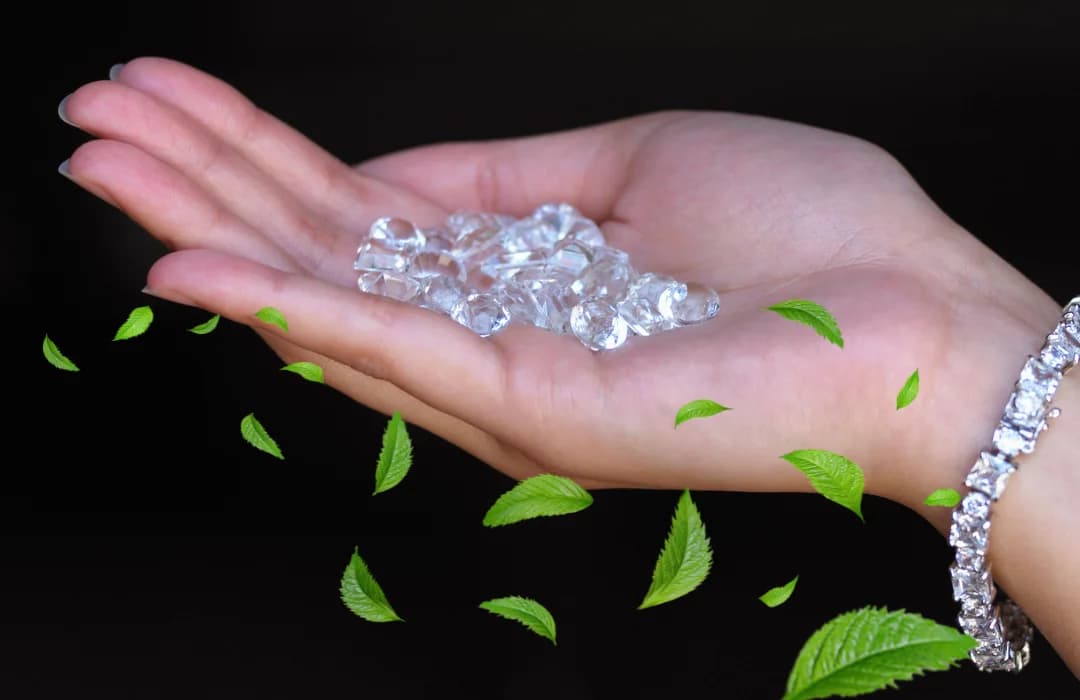
In recent years, lab grown diamonds have surged in popularity, transforming the jewelry market and reshaping consumer attitudes. With an increasing focus on sustainability and ethics, these innovative gems offer a compelling alternative to traditional mined diamonds. As more people become aware of the environmental and ethical issues associated with natural diamond mining, the appeal of lab grown diamonds continues to grow. If you're searching for a beautiful, luxurious, and responsible choice, lab grown diamonds may be the answer.
Lab-grown diamonds combine sustainability (roughly 80% less land use per carat) with affordability (60-80% lower cost than mined). IGI- or GIA-graded Mohs 10 stones are chemically identical to mined diamonds. A 1.50ct G/VS1 lab-grown round in 14k recycled white gold runs $2,000-$3,500 versus $9,000+ mined, with most New York builds shipping in 4-6 weeks.
Understanding Lab Grown Diamonds
Lab grown diamonds are genuine diamonds, created in controlled laboratory environments using advanced technology that mimics the natural conditions under which diamonds form deep within the Earth. Unlike imitations or synthetic stones, lab grown diamonds are chemically, physically, and optically identical to their mined counterparts.
There are two primary methods used to produce lab grown diamonds: High Pressure High Temperature (HPHT) and Chemical Vapor Deposition (CVD). The HPHT method replicates the extreme pressure and temperature found in the Earth, while CVD uses a gas to deposit carbon atoms onto a diamond seed. Both processes result in stunning diamonds that retain all the beauty and durability of natural diamonds.
For those looking to explore more options, check out lab grown diamonds in the UK for a range of high-quality choices.
Sustainability: A Greener Alternative
One of the most significant benefits of lab grown diamonds is their sustainable nature. Traditional diamond mining is notorious for its severe environmental impact, including deforestation, soil erosion, and habitat destruction. The extraction process requires vast amounts of water and energy, which contributes to ecological damage.
In contrast, lab grown diamonds are produced in a controlled environment that significantly reduces their environmental footprint. They use fewer natural resources and generate less waste, making them a much more sustainable option for eco-conscious jewelry buyers. By choosing a lab grown diamond, you’re making a choice that benefits not only yourself but also the planet.
Ethical Considerations: Conflict-Free Assurance
Ethics play a key role in the decision-making process for many jewelry buyers today. The traditional diamond industry has long been associated with issues like conflict diamonds—gems mined in war zones and sold to fund violence and human rights abuses. mining practices can often exploit local communities and workers.
Lab grown diamonds provide a conflict-free alternative, ensuring that no harm comes to people or communities during their production. The transparency in the sourcing of lab grown diamonds is a significant draw for consumers who want to make responsible purchases. When you choose a lab grown diamond, you can feel confident knowing your gem is produced ethically. For ethically-minded buyers, check out conflict-free fancy colored diamonds for a meaningful choice.
Affordability Without Compromising Quality
Lab grown diamonds are often 30-40% less expensive than natural diamonds of the same size and quality. This cost-effectiveness allows consumers to purchase larger or higher-quality stones without exceeding their budget.
It's important to note that the affordability of lab grown diamonds does not equate to lower quality. These diamonds are graded according to the same standards as natural diamonds, ensuring that you receive a product that meets high-quality criteria. With lab grown diamonds, you can enjoy all the beauty and brilliance of a diamond while staying within your budget. If you're looking for a larger diamond without compromising on quality, check out cushion cut lab grown diamonds for an elegant and affordable choice.
Variety and Customization Options
One of the most appealing aspects of lab grown diamonds is the sheer variety available. They come in an array of shapes, sizes, and colors, providing consumers with endless choices to find the perfect gem for their jewelry. Whether you prefer classic cuts like round and princess or more unique shapes like oval and pear, lab grown diamonds can cater to your personal style.
Also, many jewelers now offer bespoke design services, allowing you to create a unique piece that reflects your individuality. This flexibility means that lab grown diamonds can be tailored to suit any taste, whether you’re looking for an engagement ring, a special gift, or a piece to add to your collection. For a selection of shapes, check out our range of round lab grown diamonds.
Consumer Trends: Shifting Preferences
As consumer attitudes evolve, there is a noticeable shift towards sustainable and ethical products. Younger generations, in particular, are prioritizing sustainability, ethical sourcing, and transparency in their purchasing decisions. Lab grown diamonds fit perfectly into this new paradigm, offering a product that aligns with modern values.
This trend is especially evident in the engagement ring market, where lab grown diamonds are becoming the preferred choice for many couples. As more consumers seek to express their love and commitment while making ethical choices, lab grown diamonds tick all the boxes, providing a conflict-free, eco-friendly option that doesn’t compromise on luxury or quality.
Lab Grown Diamonds vs. Natural Diamonds: Key Comparisons
While lab grown diamonds and natural diamonds share the same physical and chemical properties, there are some critical differences to consider.
- Origin: Lab grown diamonds are created in laboratories, while natural diamonds are formed over millions of years deep within the Earth.
- Ethics: Lab grown diamonds are conflict-free and produced under ethical conditions, whereas natural diamonds may carry ethical concerns associated with mining practices.
- Environmental Impact: Lab grown diamonds have a much smaller environmental footprint compared to traditional diamond mining.
- Cost: Lab grown diamonds are more affordable, typically costing significantly less than natural diamonds of the same quality.
For many consumers, these differences make lab grown diamonds the clear choice. They offer the same beauty, durability, and sparkle as natural diamonds, but with added ethical and environmental benefits. If you're interested in unique cuts, check out pear shaped lab grown diamonds for a distinctive option.
The Future of Lab Grown Diamonds in Ethical Jewelry
As consumer demand for ethical and sustainable products continues to grow, lab grown diamonds are poised to become a mainstream option in the jewelry industry. Advances in technology will likely enhance the quality and accessibility of lab grown diamonds, making them an even more attractive choice for consumers.
Lab grown diamonds represent a new era in the diamond industry, where luxury and responsibility go hand in hand. By choosing lab grown diamonds, you’re not just buying a beautiful piece of jewelry; you’re making a statement about your values and commitment to ethical consumerism.
FAQs
Are lab-grown diamonds really more sustainable than mined?
In most measurable ways, yes. Lab-grown production avoids the open-pit mining, freshwater diversion, and ecosystem disruption associated with conventional diamond extraction. Several major lab-grown producers now operate facilities powered by 100% renewable electricity, which makes the manufacturing process effectively carbon-neutral. Independent lifecycle assessments place lab-grown well below mined diamonds on land, water, and emissions impact.
Why are lab-grown diamonds so much cheaper than mined?
The cost difference reflects supply chain economics, not stone quality. Mined diamonds carry costs of geological exploration, deep extraction, security, and the De Beers-era scarcity premium. Lab-grown diamonds are produced on predictable 2–4 week cycles in dedicated facilities. That efficiency translates to 60–70% lower retail prices for the same carat, color, and clarity grades.
Are lab-grown diamonds graded by the same labs as mined diamonds?
Yes — the GIA, IGI, and GCAL all grade lab-grown diamonds on the standard 4Cs (cut, color, clarity, carat weight). The certificate clearly identifies the diamond as laboratory-grown, and the report number is laser-inscribed on the girdle of the stone itself. Reve Diamonds ships every lab-grown diamond with its full certificate so buyers can verify origin and grading at any time.
Can lab-grown diamonds be insured like mined diamonds?
Yes — all major jewelry insurers (Jeweler's Mutual, BriteCo, and the like) cover lab-grown diamonds on the same terms as mined. The insured value is based on the appraised retail price at purchase. Because lab-grown stones cost less to begin with, the insurance premium is also lower — typically $1–$2 per $100 of insured value annually.
See the numbers for yourself: our natural vs lab-grown diamond price comparison matches any diamond in our stock with its lab-grown twin, so you can see the exact saving.
