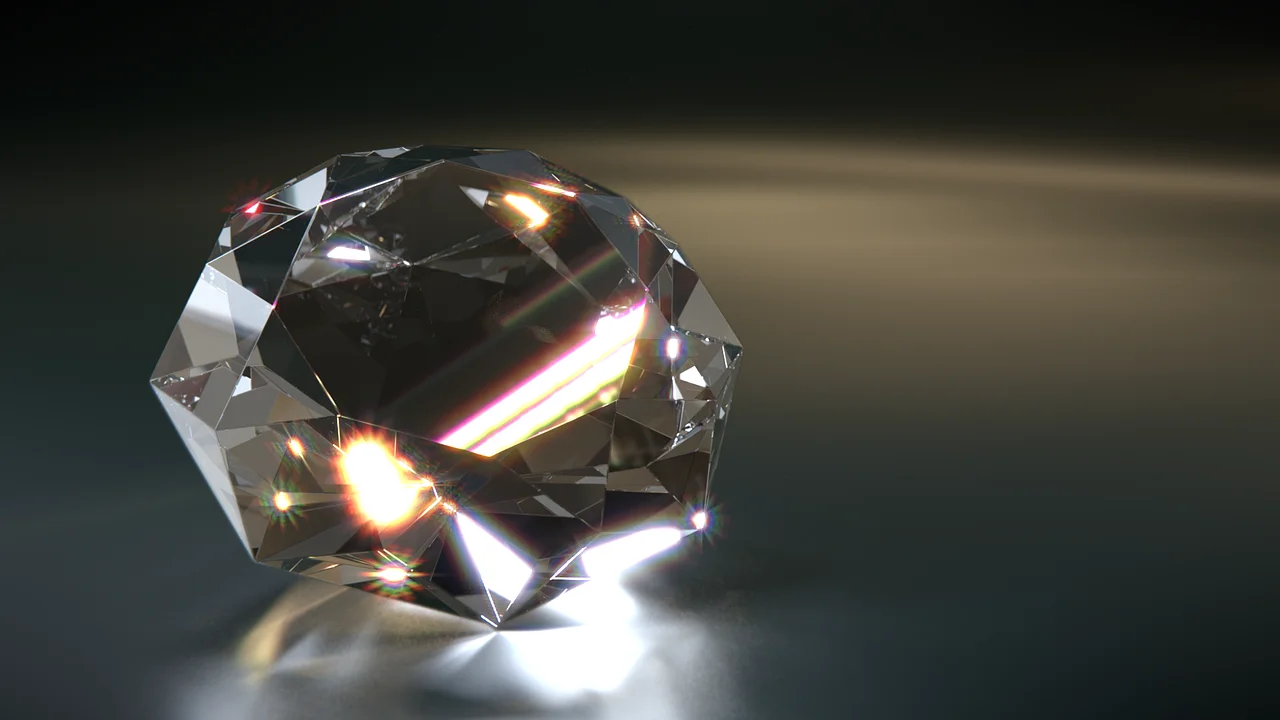
Lab-grown diamonds have become one of the most talked-about choices in jewelry, and one question comes up more than any other: what are they actually worth? The honest answer has two parts - what you pay at the counter, and what the stone represents over time. Here is a clear, practical look at both.
Lab-grown diamonds typically retail for roughly 20-40% of the price of a comparable natural diamond. As a rough guide, a 1.00-carat D/VS1 round lab-grown diamond often sits around $1,750-$2,250, where an equivalent mined stone can cost several times more. Their value is in exceptional up-front savings and identical beauty rather than in resale, so buy one to wear and enjoy, not as an investment.
What drives a lab-grown diamond price
Lab-grown diamonds are priced on exactly the same criteria as mined diamonds - the four Cs of cut, color, clarity and carat. A larger, colorless, flawless, expertly cut stone costs more than a small, tinted, included one. Cut quality has the biggest impact on sparkle, so it is worth prioritizing. Our diamond education guide explains how each factor moves the price.
How much do they cost?
Prices have become very accessible as production has scaled. As a general benchmark, a well-cut 1.00-carat lab-grown diamond in a near-colorless, eye-clean grade commonly falls in the $1,700-$2,500 range, with two-carat stones offering some of the biggest savings versus mined equivalents. For a side-by-side breakdown across sizes, see our natural versus lab-grown price comparison and how much more affordable lab-grown diamonds are.
Do lab-grown diamonds hold their value?
This is where expectations matter. Like most jewelry - including mined diamonds, which also sell for well below retail secondhand - lab-grown diamonds are not designed to be financial investments, and their resale value is modest. What you are buying is a genuine diamond of outstanding beauty at a dramatically lower entry price. For most people that trade is exactly the point: more diamond, more sparkle, less spent. This is general information, not financial advice.
Getting the most value
To maximize what you get, prioritize cut, choose an eye-clean clarity rather than paying for flawless, and consider a shape that hides inclusions well. Insist on certified lab-grown diamonds graded by GIA or IGI so you know precisely what you own. Then put the savings toward a setting you love from our engagement ring collection. For the bigger picture, compare lab-grown versus natural diamonds.
Frequently asked questions
Are lab-grown diamonds a good investment? They are best viewed as beautiful, affordable jewelry rather than an investment. Resale values are modest, as they are for most diamonds.
Why are lab-grown diamonds cheaper? They can be produced in weeks in a controlled facility, avoiding the scarcity and long supply chain of mined diamonds - so the savings pass to you.
Are they lower quality because they cost less? No. A lab-grown diamond is identical in composition and durability to a mined one; the lower price reflects supply, not quality.
