Emeralds are among the most coveted coloured gemstones in the world, prized for their rich green glow and long history in fine jewellery. But are they actually expensive? The honest answer is that emeralds range from very affordable to more costly than diamonds, depending on quality. This buyer's guide explains what drives an emerald's price, what to look for, and how to get the best value whether you are buying a ring, a pendant or a pair of earrings.
Emerald prices are driven above all by colour, then by clarity, cut and carat, and heavily by how much the stone has been treated. Commercial-quality emeralds can cost from around £30–£400 per carat, good-quality stones £400–£2,000 per carat, and fine, vivid, minimally treated emeralds anywhere from £2,000 to £8,000 per carat — with exceptional untreated Colombian stones fetching tens of thousands per carat at auction. Lab-grown emeralds are chemically identical to natural ones and typically cost a small fraction of the price.
What makes an emerald valuable?
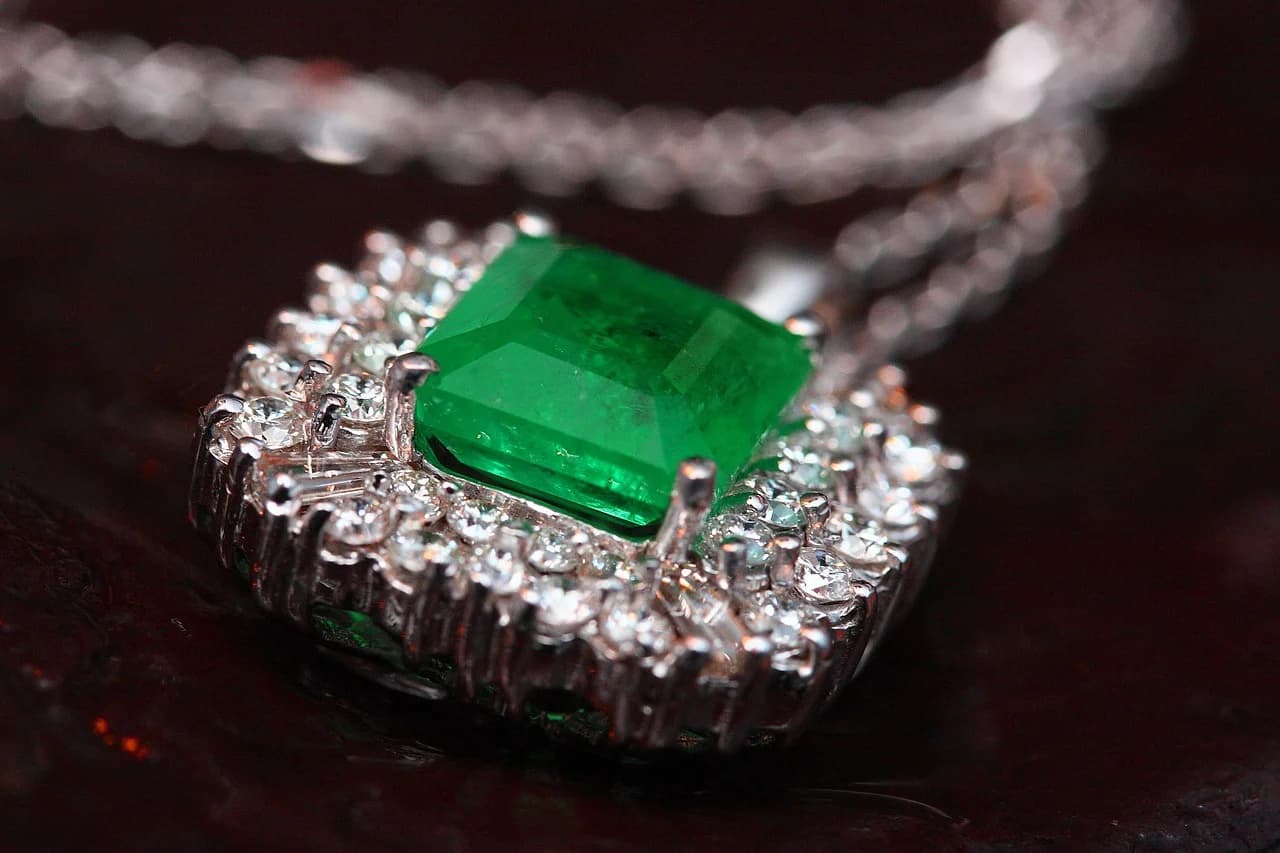
Emerald is the green variety of the mineral beryl, coloured by traces of chromium and vanadium. Its value is judged on the four Cs, but the weighting is very different from diamonds: for emeralds, colour is king. A pure, vivid, slightly bluish-green with medium to medium-dark tone commands the highest prices, while stones that are too pale, too dark or too yellowish are worth far less. After colour come clarity, cut and carat weight.
- Colour — the single biggest price factor. Look for a saturated, evenly distributed green. The legendary vivid "Colombian green" sits at the top of the market.
- Clarity — almost all emeralds contain inclusions, poetically called the jardin (French for garden). Some inclusions are expected and accepted; an eye-clean emerald with strong colour is rare and valuable.
- Cut — a good cut balances colour and brilliance and protects the stone. The classic rectangular "emerald cut" was actually developed to reduce pressure on this brittle gem.
- Carat — price per carat rises steeply with size, because large, high-quality emeralds are far rarer than small ones.
The role of treatments
This is where many buyers are caught out. The overwhelming majority of emeralds on the market are treated with oil or resin that seeps into surface-reaching fractures and improves apparent clarity. The degree of treatment — commonly graded as none, minor, moderate or significant — has a large effect on price. An emerald with no treatment ("no oil") and strong natural colour is rare and commands a substantial premium, while a heavily treated stone is much cheaper. Always ask for a reputable laboratory report that states the treatment level before buying an expensive emerald.
Origin and its effect on price
Origin carries real weight in the emerald market. Colombian emeralds, especially from the Muzo and Chivor mines, are famed for their warm, pure green and typically command the highest prices. Zambian emeralds often show a slightly bluish, cooler green and can be cleaner, offering excellent value. Brazilian and other origins fill out the more affordable end. A stone's documented origin can noticeably change its price even at similar quality.
How much do emeralds actually cost?
As a broad guide for natural emeralds set in jewellery:
- Commercial quality: roughly £30–£400 per carat — paler or heavily included stones suitable for everyday, affordable pieces.
- Good quality: around £400–£2,000 per carat — attractive colour with acceptable clarity and only minor to moderate treatment.
- Fine quality: approximately £2,000–£8,000 per carat — vivid, well-cut stones with minimal treatment.
- Exceptional: £10,000 per carat and well beyond for large, vivid, untreated Colombian emeralds, which are true collector's items.
Because per-carat prices climb sharply with size, a two-carat fine emerald can cost far more than twice a one-carat stone of the same quality.
Natural versus lab-grown emeralds
Lab-grown (created) emeralds are grown by hydrothermal or flux methods and are chemically, physically and optically identical to natural emeralds — they are real emeralds, simply made in a controlled environment rather than in the earth. They typically cost a small fraction of a comparable natural stone, often display cleaner clarity and more consistent colour, and are an ethical, budget-friendly choice. The same logic that makes lab-grown diamonds so popular applies to created emeralds; if you like the idea of lab-grown stones, our guide to lab-grown versus natural diamonds explains the wider picture.
How to buy an emerald without overpaying
- Prioritise colour over size — a smaller stone with vivid green usually looks and holds value better than a large, washed-out one.
- Insist on a laboratory report that states any treatment; be wary of "too good to be true" bargains on large, clean, deeply coloured stones.
- Decide whether origin matters to you — Zambian stones can offer Colombian-like beauty for less.
- Consider a lab-grown emerald for a bigger, cleaner stone on a smaller budget.
- Buy the setting to suit the gem — emeralds are softer and more brittle than diamonds, so protective settings such as bezels suit rings that will be worn daily.
Caring for emeralds
Emeralds rate about 7.5–8 on the Mohs hardness scale, but their inclusions make them more brittle than diamonds and sensitive to heat and harsh chemicals. Never clean them in an ultrasonic or steam cleaner, as this can strip the oil and worsen fractures. Instead, wipe gently with a soft cloth and lukewarm soapy water. Emeralds are a beautiful choice for pendants and necklaces or earrings, which see less knocking about than rings, though a well-set emerald engagement ring can be worn with a little extra care.
Frequently asked questions
Are emeralds more expensive than diamonds?
They can be. Most emeralds cost less per carat than a comparable diamond, but the finest vivid, untreated emeralds are among the most expensive gemstones on earth and can exceed diamond prices per carat. Quality, not gem type alone, decides the price.
Why are some emeralds so cheap?
Very inexpensive emeralds are usually pale, heavily included, heavily treated, or lab-grown. All can be perfectly attractive, but they are far more affordable than fine, vivid, minimally treated natural stones.
Do emeralds hold their value?
Fine natural emeralds with strong colour, minimal treatment and documented origin tend to hold value well and can appreciate. Commercial and heavily treated stones are bought for beauty rather than investment.
Are lab-grown emeralds real emeralds?
Yes. Lab-grown emeralds have the same chemical composition and optical properties as mined emeralds. They are genuine emeralds grown in a laboratory, and they cost significantly less than natural stones of similar appearance.