Few questions come up more often when shopping for a ring than this one: where do lab-grown diamonds actually come from? The short answer is that they are grown in advanced laboratories using processes that recreate the exact conditions under which diamonds form deep inside the Earth. The result is a real diamond — identical in chemistry, structure and sparkle to a mined stone — produced in weeks rather than billions of years.
Lab-grown diamonds are made using two proven methods. HPHT (High Pressure, High Temperature) presses squeeze a tiny diamond seed under enormous pressure and intense heat, mimicking the Earth's mantle. CVD (Chemical Vapour Deposition) grows a crystal layer by layer from carbon-rich gas inside a vacuum chamber. Both produce genuine diamonds that are chemically, physically and optically the same as natural ones — and both are graded by the same independent laboratories, such as GIA and IGI.
What exactly is a lab-grown diamond?
A lab-grown diamond is pure crystallised carbon, arranged in the same cubic lattice as a natural diamond. It is not a simulant like cubic zirconia or moissanite, which only imitate a diamond's look. Because a lab-grown diamond shares the natural stone's hardness, refractive index and dispersion, no jeweller can tell the two apart by eye — specialist equipment is needed to read the tiny growth patterns that reveal a stone's origin. You can read more about how the two compare in our diamond education guide.
The two ways lab-grown diamonds are made
High Pressure, High Temperature (HPHT)
HPHT is the older of the two techniques and the closest recreation of nature. A small diamond seed is placed alongside a source of pure carbon and a metal catalyst, then subjected to pressures above 1.5 million pounds per square inch and temperatures around 1,400–1,600°C. Under these conditions the carbon dissolves and crystallises onto the seed, building outward into a rough diamond. HPHT is especially good at producing colourless and near-colourless stones, and it is also used to refine the colour of some finished diamonds.
Chemical Vapour Deposition (CVD)
CVD takes a gentler, more modern approach. A thin diamond seed is sealed inside a vacuum chamber that is filled with a carbon-rich gas such as methane. The gas is energised into a plasma, which frees carbon atoms and lets them settle onto the seed one atomic layer at a time. Over several weeks the crystal grows upward into a square tablet of rough diamond. CVD offers excellent control over clarity and purity, which is why it has become the method of choice for many high-quality gem diamonds.
From rough crystal to finished gem
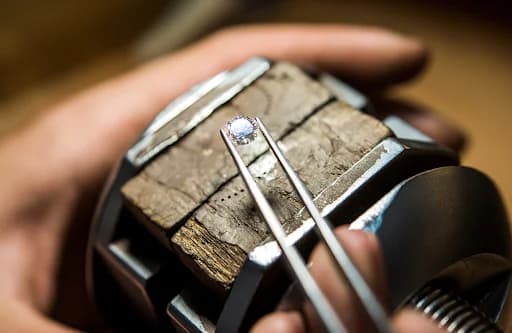
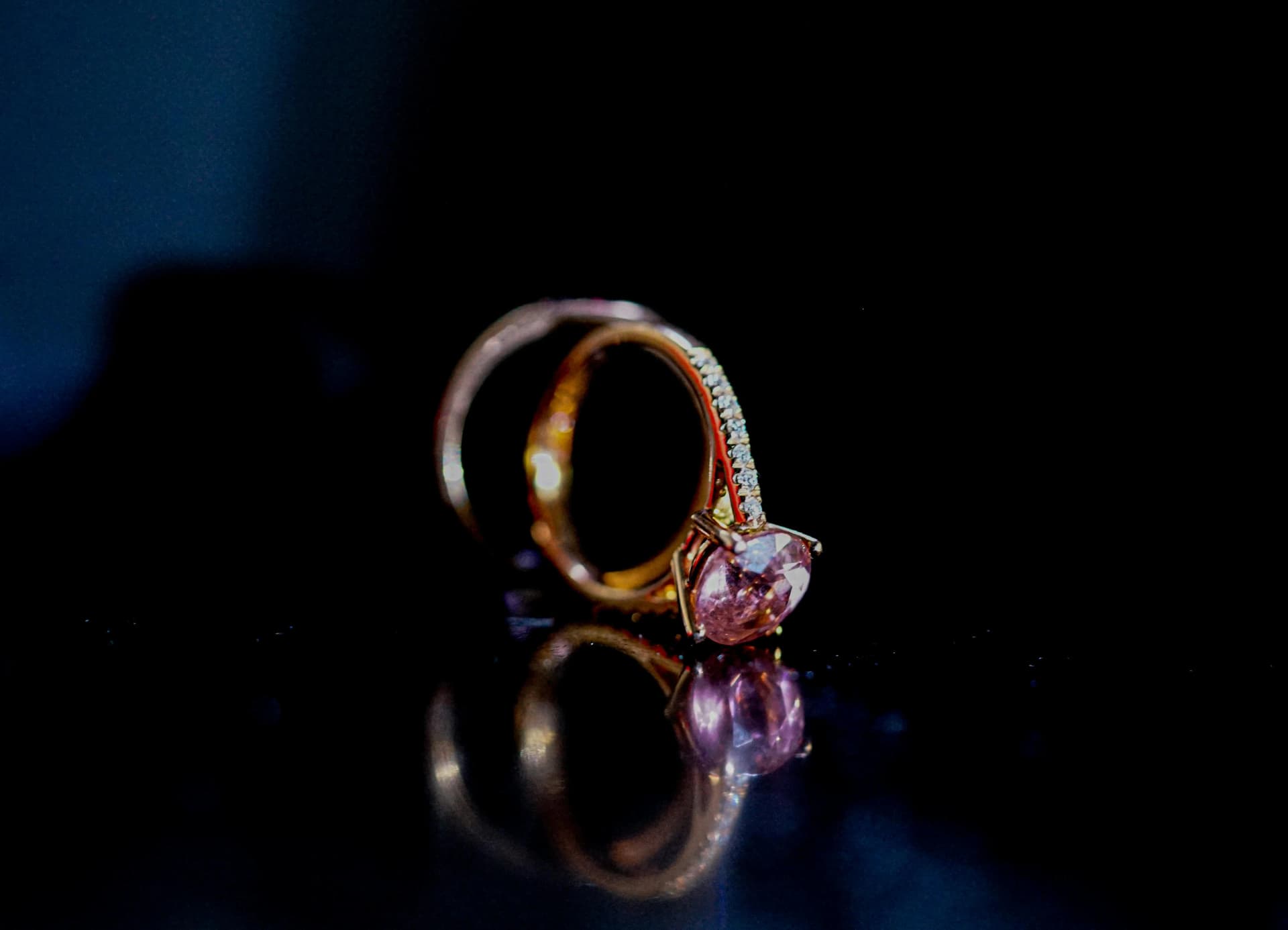
Whichever method is used, the rough crystal is only the beginning. Skilled cutters plan, cleave, cut and polish each stone to unlock its brilliance — exactly as they would with a mined rough. The finished gem is then sent to an independent laboratory for grading against the familiar 4Cs of cut, colour, clarity and carat weight. Only after certification does a diamond make its way into a finished piece, whether that is one of our engagement rings, a pair of diamond earrings or a pendant.
Are lab-grown diamonds real diamonds?
Yes. This is the single most important point for any buyer to understand. A certified lab-grown diamond is a real diamond in every measurable sense; the only difference is its origin story. Because they avoid the cost of mining, lab-grown stones typically sell for a fraction of the price of a comparable mined diamond, which means a larger or higher-quality stone for the same budget. Our price comparison guide shows how the numbers stack up side by side.
Why the growing method matters to you
For most shoppers the choice between HPHT and CVD is far less important than the grading on the certificate. A well-cut, well-graded stone will look stunning regardless of the chamber it grew in. What the method does guarantee is a transparent, traceable supply chain with no mining involved. If you would like to explore the full collection, our lab-grown diamonds hub is the best place to start.
Frequently asked questions
How long does it take to grow a diamond?
Depending on the size and the method, a gem-quality diamond takes roughly two to four weeks to grow, followed by cutting, polishing and grading.
Will a lab-grown diamond test as a real diamond?
Yes. A standard diamond tester reads it as diamond because it is diamond. Only specialised laboratory equipment can distinguish a grown stone from a mined one.
Do lab-grown diamonds hold their sparkle over time?
Absolutely. They have the same hardness (10 on the Mohs scale) as mined diamonds and will keep their fire indefinitely with normal care.
Ready to see the science turned into something beautiful? Browse our lab-grown engagement rings or learn more in the diamond education centre.