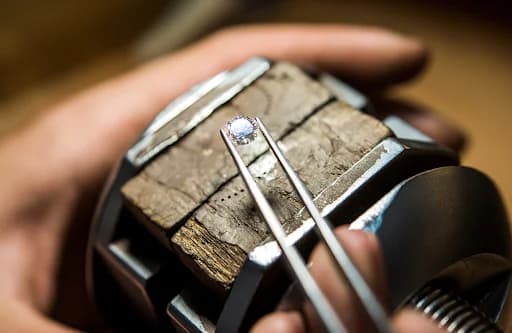
The world of engagement rings is evolving, and lab-grown diamonds are at the forefront of this change.
More UK couples choose lab-grown diamonds in 2025 — over 60% of engagement-ring centre stones — driven by 60-80% lower price (1.00ct D/VS1 round £1,400-£1,800 versus £6,500+ natural), full origin traceability, roughly 60-70% less energy per carat, and identical chemistry (pure carbon, Mohs 10) plus GIA/IGI certification. On the £3,928 UK average spend, lab-grown funds a 50-100% larger centre stone.
More couples than ever before are opting for lab-grown diamonds, drawn to their affordability, ethical appeal, and sheer beauty.
Whether you're looking for a ring that sparkles just as brightly as a natural diamond, or you’re conscious of your impact on the planet, lab-grown diamonds offer a compelling alternative to mined gems.
In this article, we'll explore why these diamonds are becoming the top choice for so many couples and what makes them such an attractive option for engagement rings.
What Are Lab-Grown Diamonds?
Lab-grown diamonds, as the name suggests, are created in a controlled laboratory environment.
Through advanced technological processes, scientists replicate the natural conditions under which diamonds form in the earth.
The result is a diamond that’s chemically, physically, and visually identical to a mined diamond.
These diamonds shouldn’t be confused with diamond simulants, like cubic zirconia or moissanite.
Lab-grown diamonds are the real deal, made of pure carbon, just like their natural counterparts.
The only difference is their origin – and that’s part of what makes them so appealing.
For more details, you can explore lab-grown diamonds and discover why they’re a fantastic option for an engagement ring.
Why Lab-Grown Diamonds Are Gaining Popularity Among Couples
There’s no denying the allure of a diamond engagement ring.
However, as times change, more and more couples are considering factors beyond just the beauty of the stone.
Ethical concerns, environmental impact, and cost are playing a much bigger role in the decision-making process.
For couples who want a ring that’s not only stunning but also aligns with their values, lab-grown diamonds are an easy choice.
They’re conflict-free, kinder to the environment, and more affordable – all without compromising on quality.
You can also browse the lab-grown diamond search to explore a wide variety of options for different shapes and styles.
Ethical and Environmental Benefits of Lab-Grown Diamonds
One of the biggest reasons couples are turning to lab-grown diamonds is the peace of mind they provide.
With a lab-grown diamond, you can be sure that your ring hasn’t contributed to any unethical practices, such as child labour or conflict diamond mining.
Also, the environmental impact of lab-grown diamonds is significantly lower.
Diamond mining can be highly destructive to the earth, causing deforestation, water pollution, and habitat destruction.
Lab-grown diamonds, by contrast, have a much smaller carbon footprint and require fewer natural resources.
For couples who want to start their lives together with a clean conscience, lab-grown diamonds tick all the boxes.
Learn more about ethical fancy coloured diamonds as an additional option for those who want both beauty and responsibility.
Affordability Without Compromise
When it comes to engagement rings, price is often a key consideration.
Lab-grown diamonds are generally 30-40% less expensive than their natural counterparts.
This means that couples can often afford a larger or higher-quality stone for the same budget.
The cost-saving element makes lab-grown diamonds especially appealing for young couples or those looking to invest more in other areas, such as their wedding, honeymoon, or future home.
And the best part? There’s no compromise on the sparkle or brilliance of the diamond.
You’re getting the same high-quality gem for a fraction of the price.
You can even compare different diamond cuts, like cushion-cut lab-grown diamonds to find the best fit for your budget and preferences.
Uncompromised Quality: Lab-Grown Diamonds vs. Natural Diamonds
One of the most common misconceptions about lab-grown diamonds is that they’re somehow inferior to natural diamonds.
This couldn’t be further from the truth.
Lab-grown diamonds are chemically and physically identical to natural diamonds.
They’re just as hard, just as durable, and just as brilliant.
Lab-grown diamonds are graded and certified using the same criteria as natural diamonds – the 4 Cs: Cut, Clarity, Colour, and Carat weight.
This ensures that when you buy a lab-grown diamond, you know exactly what you’re getting.
Whether it’s a natural diamond or a lab-grown one, both will stand the test of time, symbolising your love and commitment for years to come.
Explore radiant-cut lab-grown diamonds to see how they compare to other popular cuts.
More Flexibility in Design and Customisation
Lab-grown diamonds also offer more flexibility when it comes to design.
Since they’re more affordable, couples often feel freer to explore custom designs or larger, more intricate settings.
Whether you’re after a classic solitaire, a vintage-inspired design, or something completely unique, lab-grown diamonds give you the freedom to choose exactly what you want without breaking the bank.
Many jewellers now specialise in lab-grown diamond engagement rings, offering a wide range of styles to suit every taste and personality.
For a unique touch, check out heart-shaped lab-grown diamonds for a romantic and customisable look.
Celebrity Influence: How Big Names Are Supporting the Trend
It’s not just everyday couples making the switch – many high-profile celebrities are also choosing lab-grown diamonds.
This increased visibility has helped to boost the popularity of these diamonds, showcasing their beauty and desirability on a global stage.
From actresses and models to environmental activists, celebrities are embracing lab-grown diamonds as a symbol of sustainability and style.
Their influence is helping to shift public perception, proving that lab-grown diamonds are not just a trend, but a forward-thinking choice for the future.
Challenges and Misconceptions About Lab-Grown Diamonds
Despite their growing popularity, lab-grown diamonds are still subject to a few misconceptions.
Some people worry that lab-grown diamonds won’t hold their value over time.
While it’s true that natural diamonds have a longer history of being seen as a valuable investment, lab-grown diamonds are rapidly gaining acceptance in the jewellery market.
Another concern is that lab-grown diamonds aren’t "real."
As mentioned earlier, lab-grown diamonds are identical to natural diamonds in every way, aside from their origin.
Once people understand this, they quickly see the benefits.
To explore all your options, view different diamond shapes in our lab-grown diamond search and find the perfect fit.
The Future of Engagement Rings: Lab-Grown Diamonds Leading the Way
The jewellery market is changing, and lab-grown diamonds are leading the way.
With increasing awareness around ethical and environmental issues, more couples are choosing to make a positive impact with their engagement ring purchase.
Lab-grown diamonds offer an opportunity to celebrate love in a way that’s not only beautiful but also responsible.
As demand continues to rise, lab-grown diamonds are set to become an even more prominent feature in the world of fine jewellery.
FAQs: Common Questions About Lab-Grown Diamonds for Engagement Rings
What is the difference between lab-grown and natural diamonds?
Lab-grown diamonds are created in a laboratory, while natural diamonds are formed in the earth over millions of years.
However, both are made of pure carbon and are identical in terms of chemical structure and physical properties.
Are lab-grown diamonds worth it?
Absolutely.
Lab-grown diamonds offer the same quality and beauty as natural diamonds but at a lower price.
They’re also an ethical and eco-friendly choice, which adds to their appeal.
How are lab-grown diamonds certified?
Lab-grown diamonds are certified and graded using the same standards as natural diamonds, based on the 4 Cs: Cut, Clarity, Colour, and Carat weight.
This ensures that you know exactly what you’re buying.
Will lab-grown diamonds retain value?
The resale value of diamonds, whether lab-grown or natural, can fluctuate.
While lab-grown diamonds may not hold the same long-term investment value as natural diamonds, they offer significant benefits in terms of affordability, ethics, and environmental impact.
Lab-grown diamonds are more than just a trend – they represent a shift towards sustainability, affordability, and conscious consumerism.
For couples who want to start their journey together with a ring that’s not only beautiful but also meaningful, lab-grown diamonds are the perfect choice.