Aquamarine is the birthstone for March and one of the most calming, versatile gemstones in fine jewelry. Its cool blue color evokes clear water and open sky, and its durability makes it well suited to everyday wear. This guide covers where it comes from, what to look for, and how to keep it beautiful.
Aquamarine is a blue-to-blue-green variety of the mineral beryl (the same family as emerald), colored by trace iron. It rates 7.5–8 on the Mohs hardness scale, making it durable enough for daily wear. Faceted stones typically run $50–$400 per carat, with deeper, more saturated blues commanding the highest prices. Most of the finest material comes from Brazil, along with parts of Africa and Asia.
What aquamarine is
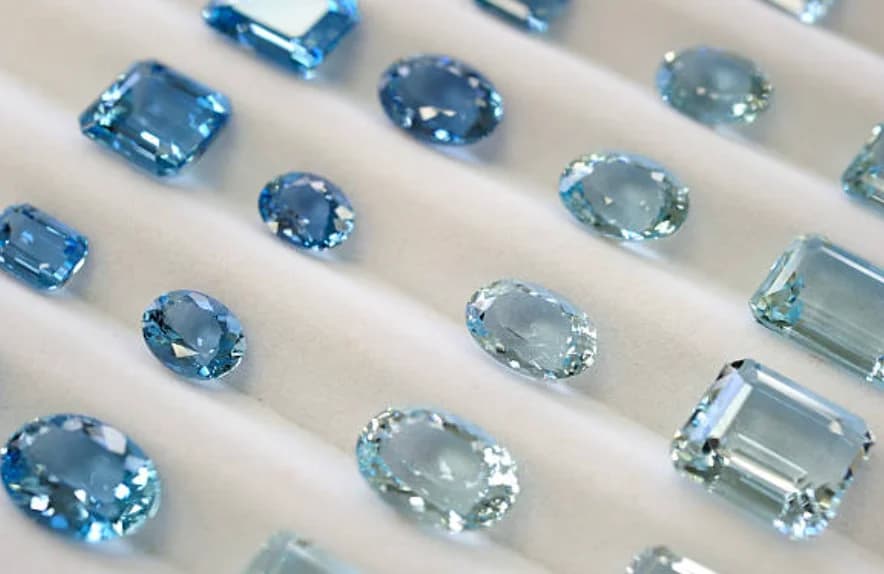
Aquamarine belongs to the beryl family, which also includes emerald and morganite. Its signature sea-blue color comes from traces of iron within the crystal. Stones range from pale, icy blue to a richer blue-green, and unlike many gems, aquamarine often forms in large, clean crystals — so well-cut, eye-clean stones are widely available.
Color, clarity and value
- Color is the biggest driver of value. Pure, saturated blue is the most sought-after; greenish tints are common and usually more affordable.
- Clarity is typically excellent — most faceted aquamarines are eye-clean, so visible inclusions are uncommon.
- Cut matters for brilliance. Emerald cuts and elongated shapes flatter the stone's clarity, while brilliant cuts maximize sparkle.
- Carat: larger stones are readily available, and price per carat rises with color saturation rather than size alone.
Myths and meaning
Historically, aquamarine was carried by sailors as a talisman for safe passage and calm seas. Today it is associated with tranquility, clear communication and renewal — part of why it is such a popular choice for March birthdays and for anniversary jewelry.
Aquamarine in jewelry
With a hardness of 7.5–8, aquamarine wears well in rings, though ring-worn stones benefit from protective settings. It is especially at home in pendants and necklaces and earrings, where it catches the light beautifully and is shielded from impact. It also pairs elegantly with diamonds in engagement rings for those who want a colored center stone.
Caring for your aquamarine
Clean aquamarine with warm, soapy water and a soft brush; avoid steam and harsh chemicals. Store it separately so harder stones like diamonds cannot scratch it. For guidance on choosing and pairing colored stones with diamonds, see our diamond education hub, and consider a lab-grown diamond accent from our lab-grown diamond collection to keep costs down.
Frequently asked questions
Is aquamarine durable enough for daily wear? Yes. At 7.5–8 on the Mohs scale it is well suited to everyday jewelry, though a protective setting is wise for rings.
Why do some aquamarines look greener? The blue-green range is natural. Gentle heat treatment is commonly used to bring out a purer blue and is standard in the trade.
Is aquamarine expensive? It offers excellent value. Most stones fall between $50 and $400 per carat, far less than comparable sapphire.