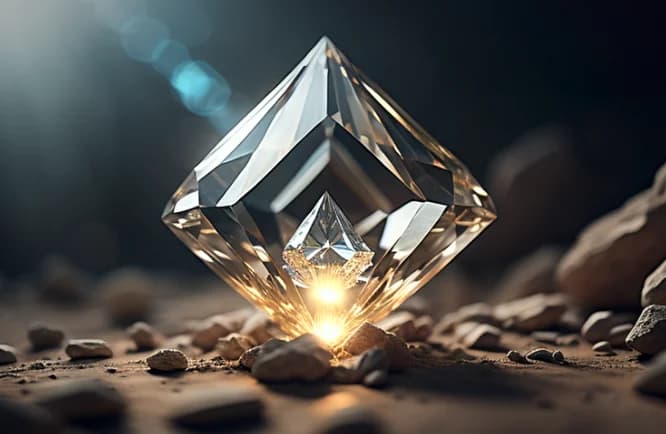
Lab-grown diamonds let you wear a real diamond with a far lighter footprint on the planet and on your conscience.
Lab-grown diamonds are chemically, physically, and optically identical to mined diamonds, but they are created in a matter of weeks instead of over a billion years underground. They avoid the land disruption and community harm associated with mining, typically use less water, and — when grown with renewable energy — can carry a smaller carbon footprint. They also cost roughly 60–85% less than comparable natural stones, so a sustainable choice is usually an affordable one too. Explore Rêve Diamonds' lab-grown collection.
What Makes a Lab-Grown Diamond "Ethical"?
A lab-grown diamond is grown in a controlled facility using one of two methods — High Pressure High Temperature (HPHT) or Chemical Vapor Deposition (CVD). Because the origin of every stone is fully traceable, there is no ambiguity about how it was sourced. That transparency is the heart of its ethical appeal: you know exactly where your diamond came from. To understand how these stones compare with mined ones, see our guide to how lab-grown and natural diamonds compare.
The Environmental Case
- Less land disturbance: traditional mining can move tons of earth to recover a single carat, while a lab-grown diamond needs no excavation at all.
- Lower water use: growing a diamond in a reactor uses a fraction of the water consumed by large-scale mining operations.
- Potential for clean energy: the main environmental variable is electricity, so producers that run on renewable power can dramatically cut the carbon footprint of each stone.
- No mining runoff: there is no risk of acid drainage or habitat loss tied to your diamond. Read more in our overview of whether lab-grown diamonds are better for the environment.
It is worth being balanced: growing diamonds is energy-intensive, and not every producer uses renewable power. The key advantage is that this footprint is measurable and steadily improving, whereas the impacts of mining are fixed by geology.
The Human and Social Case
Because lab-grown diamonds are produced in modern facilities, they sidestep the labor and conflict concerns that have historically shadowed parts of the diamond trade. For buyers who want complete peace of mind, this traceability is often as important as the environmental benefits — a point we explore in our look at lab-grown diamonds as an ethical alternative to mined diamonds.
Sustainable and Affordable
Choosing sustainability rarely means paying a premium here. A lab-grown diamond typically costs 60–85% less than a mined diamond of the same size and quality, which means a larger or cleaner stone for the same budget. Compare the numbers in our natural vs. lab-grown price comparison, then browse settings in our engagement ring collection.
How to Choose a Responsible Lab-Grown Diamond
Look for stones certified by respected laboratories such as IGI or GIA, ask about the energy source used in production where possible, and prioritize cut quality, which has the biggest effect on sparkle. Our diamond education hub walks through the 4Cs so you can shop with confidence.
Frequently Asked Questions
Are lab-grown diamonds real diamonds? Yes. They share the same carbon crystal structure, hardness, and brilliance as mined diamonds; only their origin differs.
Are lab-grown diamonds truly better for the environment? In most respects, yes — they avoid mining's land and water impact. Their carbon footprint depends on the energy used to grow them, which is why renewable-powered production matters.
Do lab-grown diamonds hold sentimental value? Absolutely. A diamond's meaning comes from what it represents, not from how many years it spent underground.
