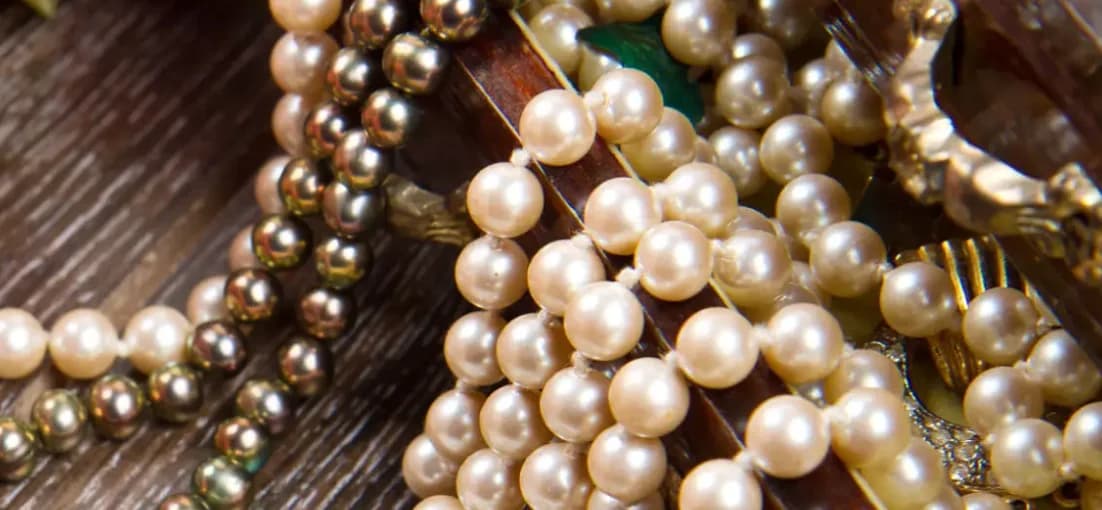
Pearls have long been cherished for their natural beauty and elegance.
Real pearls (natural and cultured) feel slightly gritty when rubbed against a tooth's edge — the nacre's microscopic crystal layers — while plastic and glass imitations feel smooth. Look for tiny surface irregularities, varying shapes, and warm body luster. Real pearls are slightly cool to the touch initially. Top Akoya 7-8mm strands run $400-$2,000; South Sea $2,000-$10,000+.
However, with the market flooded with imitations, distinguishing genuine pearls from fake ones can be a bit tricky.
If you're looking to identify whether your pearls are the real deal, here are some practical methods to guide you.
Understanding Real Pearls
Genuine pearls are formed when an irritant, such as a tiny organism, enters a mollusk, prompting it to secrete layers of nacre around the intruder.
Over time, this process results in the creation of a pearl.
There are two primary types: natural pearls, which form without human intervention, and cultured pearls, which are cultivated with human assistance by introducing an irritant into the mollusk.
Both are considered authentic, but natural pearls are rarer and often more valuable.
For those interested in exploring other exquisite gemstones, check out gemstone engagement rings that offer unique and vibrant alternatives.
Spotting Fake Pearls
Imitation pearls are man-made beads designed to mimic the appearance of real pearls.
Common materials include glass, plastic, or shell, often coated to resemble the luster of genuine pearls.
While some fakes are easily identifiable, high-quality imitations can closely resemble real pearls, making them more challenging to detect.
If you're considering alternatives to traditional pearls, you might explore non-traditional engagement rings that feature distinctive designs and gemstones.
Visual Inspection
When examining pearls, look for subtle imperfections.
Real pearls typically have slight irregularities and unique ridges on their surface, reflecting their organic formation process.
In contrast, fake pearls often appear perfectly round and flawless.
Also, genuine pearls may display variations in color and overtone, whereas imitations tend to have a uniform hue.
The Tooth Test
A traditional method involves gently rubbing a pearl against the edge of your front teeth.
Authentic pearls will feel slightly gritty due to the crystalline structure of nacre, while fake ones glide smoothly.
However, be cautious with this test to avoid damaging the pearl or your teeth.
If you're interested in learning more about gemstone authenticity, you might find this article on lab-grown diamonds vs gemstones insightful.
Weight and Temperature
Genuine pearls usually feel cooler to the touch initially and possess a certain heft.
In contrast, plastic imitations tend to match room temperature and feel lighter.
Glass fakes might mimic the weight and coolness of real pearls, so it's advisable to use this method in conjunction with others.
For those considering other precious stones, exploring diamond wedding rings can offer timeless elegance.
Examining Drill Holes
Inspect the drill holes of the pearls.
Real pearls typically have small, clean drill holes, whereas imitation ones may exhibit larger holes with visible chipping or flaking around the edges, indicating a coating over a different core material.
If you're exploring other jewelry options, consider these non-traditional engagement rings that offer unique designs and settings.
Professional Assessment
If you're still uncertain about the authenticity of your pearls, consider seeking a professional evaluation.
Jewelers or gemologists can perform advanced tests, such as X-ray examinations, to determine the internal structure and confirm whether a pearl is natural, cultured, or an imitation.
For insights into gemstone formation and differences, you might find this article on how and where gemstones and diamonds are formed informative.
Frequently Asked Questions
Can fake pearls have value?
While imitation pearls don't hold the same monetary value as genuine ones, certain high-quality fakes, like Majorica pearls, are renowned for their craftsmanship and can be valuable in their own right.
Do real pearls scratch easily?
Yes, genuine pearls are relatively soft compared to other gemstones and can be scratched if not handled or stored properly.
How should I care for my real pearls?
To maintain their luster, store pearls separately from other jewelry to prevent scratches, avoid exposure to chemicals like perfumes or hairsprays, and gently wipe them with a soft cloth after wearing.
Are all real pearls perfectly round?
No, perfectly round pearls are rare and often more valuable.
Many genuine pearls are oval, button-shaped, or baroque (irregularly shaped), each with its unique charm.
Can real pearls change color over time?
Yes, pearls can develop a yellowish tint over time, especially if stored improperly.
Regular wear and proper care can help maintain their original color.