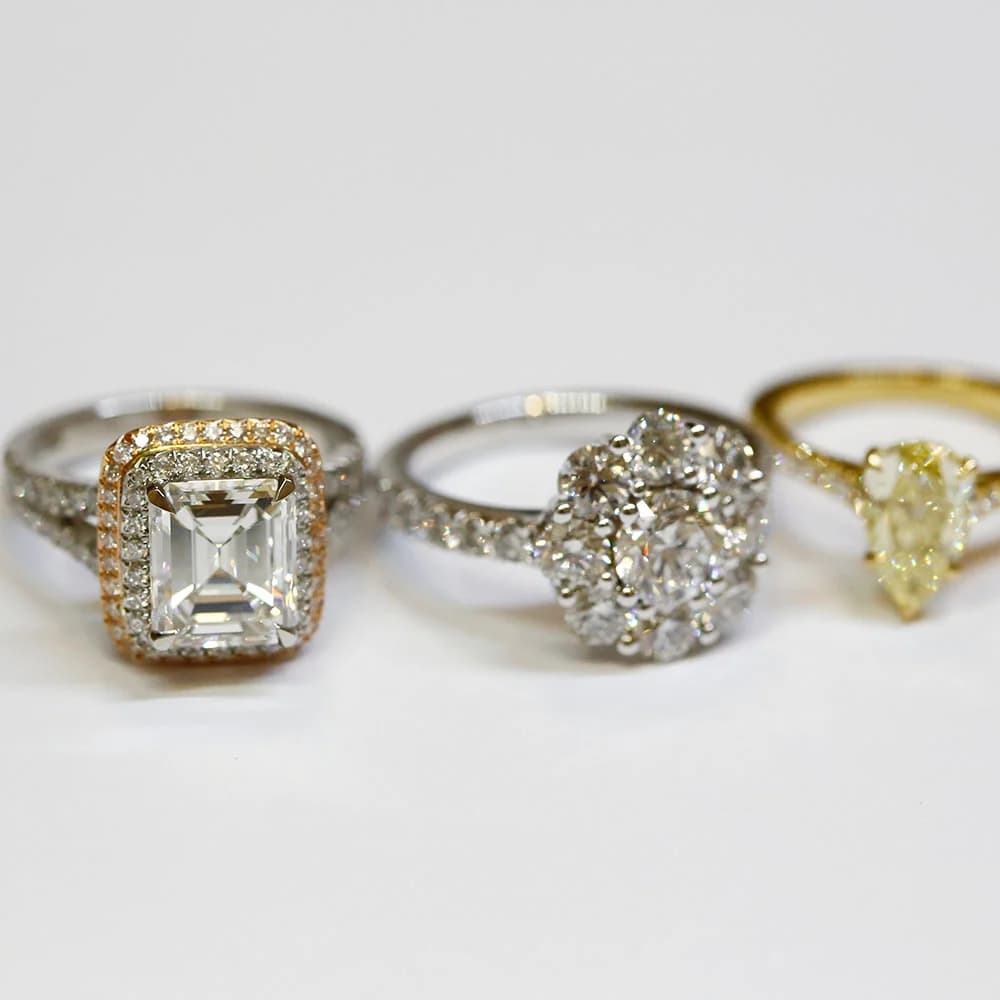
That bright, mirror-white shine on a white gold ring isn't the gold you're looking at. It's rhodium, a thin layer of precious metal plated over the top. Here's what that layer actually does, how long it lasts, and how to keep a piece looking its best between visits to the jeweller.
rhodium plating is a very thin coating of a rare white metal applied over white gold to give it that crisp, reflective finish. It wears down over roughly 12 to 24 months and is easily reapplied.
What is rhodium plating?
Rhodium is a rare, silvery-white metal from the platinum family. Jewellers apply it using an electric current, building a coating usually less than a micron thick over the surface of a piece. On its own, white gold has a faint warm, greyish cast, because it starts life as yellow gold and gets mixed with paler metals to lighten the colour. The rhodium coat covers that cast and gives the bright white most people picture when they imagine white gold. It adds a little hardness too, and helps the surface shrug off scratches and tarnish.
Why is white gold plated in the first place?
Pure gold is yellow, and no amount of alloying turns it truly white; it only gets paler. Left unplated, most white gold looks slightly tinted, a bit like weak tea. The rhodium layer is what delivers the clean, icy white that buyers expect, so nearly every white gold ring, especially an engagement ring, leaves the workshop with a fresh coat on it. If you'd rather skip replating for good, platinum holds its white colour for life; here's how the two compare.
How long does rhodium plating last?
Most white gold jewellery keeps its finish for around 12 to 24 months before it needs redoing, though there's no fixed date. A ring worn every day meets desks, steering wheels and hot water far more than a pendant that sits against fabric, so rings wear first. Your own skin chemistry plays a part as well: some people are more acidic or perspire more, and that quietly wears the plating down. A wedding band you never take off might want attention inside a year, while earrings can look perfect for three or four.
What are the signs it's wearing off?
The tell-tale sign is a faint warm or yellowish tint creeping through where the metal gets the most contact. On a ring that's the back of the shank and the underside of the band. You might spot one side looking duller or more golden than the top. It happens gradually, so it's easy to miss until you hold the piece next to a freshly plated one. Once the gold is clearly showing through, the rhodium has worn thin and it's due a refresh.
Does rhodium plating wear off completely?
Yes. Rhodium is a surface finish, not a permanent change to the metal underneath, so it will always wear away in time. That's normal and it isn't a fault with the ring. The finish does its job and then needs renewing, much as a polish brings the shine back to a pair of shoes.
How much does re-rhodium plating cost, and how does it work?
Re-plating a single ring at a jeweller's usually costs somewhere around £30 to £60 in the UK, depending on the piece and whether it needs cleaning or stones checked first. The jeweller cleans the item properly, polishes it, then suspends it in a rhodium solution and passes a current through so a fresh layer bonds to the surface. Once the prep is done the plating itself takes only minutes, and you tend to get the piece back looking new. Detailed settings with lots of small stones can cost a bit more, since they take longer to prepare and rinse.
Is rhodium plating hypoallergenic?
It is. Rhodium is nickel-free and sits comfortably against skin that reacts to other metals, which is why a freshly plated ring often solves the irritation some people get from white gold. Many white gold alloys contain a little nickel, a common trigger for contact allergies, and the rhodium coat puts a barrier between your skin and the alloy beneath. Worth knowing, though: once the plating wears thin the metal below is exposed again, so if you're nickel-sensitive, keeping on top of replating matters.
Can you rhodium plate yellow or rose gold?
Yes, and it's done more often than you'd think. Yellow and rose gold take rhodium just as readily as white gold, so if you love a ring's shape but want a white finish, plating changes the look without buying new. Remember it works the other way round too: a rhodium-plated yellow gold piece will show its real colour as the coat wears, which can be a pleasant surprise or an annoyance depending on what you were expecting.
What is black rhodium?
Black rhodium is the same process with a darkened solution, giving a deep gunmetal-to-black finish. It's popular for men's bands, bold statement pieces and settings where you want the metal to recede so the diamonds carry the eye. It wears like ordinary rhodium and needs redoing from time to time, and because the colour contrast is stronger, thinning tends to show a little sooner on high-contact spots.
How do I make rhodium plating last longer?
A few simple habits stretch the gap between replating. Take rings off before you clean the house, train at the gym or get in a pool, since bleach, chlorine and gritty products are hard on the finish. Keep perfume, hairspray and lotion off the metal: put them on first, let them dry, then add your jewellery. Store pieces so they aren't knocking against each other, and give them an occasional wipe with a soft cloth. None of this stops wear entirely, but it slows it down noticeably.
Frequently asked questions
How long does rhodium plating last?
Usually 12 to 24 months. Everyday rings wear fastest, while earrings and pendants can hold their finish for several years. Your wear habits and skin chemistry make the real difference.
Does rhodium plating wear off?
Yes. It's a surface finish, so it gradually wears and reveals the slightly warmer white gold underneath. That's expected, and a quick replating restores the original look.
How much does it cost to re-rhodium a ring?
In the UK, roughly £30 to £60 for a single ring, depending on the piece and whether it needs cleaning or stone-checking first. More intricate settings cost a little more.
Is rhodium plating hypoallergenic?
Yes. Rhodium is nickel-free, so a freshly plated white gold piece sits well against sensitive skin. Once the coat wears thin the alloy beneath is exposed again, so replating helps if you're nickel-sensitive.
Can you rhodium plate yellow gold?
You can. Yellow and rose gold take rhodium as easily as white gold, so plating is a simple way to give a warm-toned piece a white finish. It will show its true colour again as the plating wears.
How do I make rhodium plating last longer?
Take rings off for cleaning, the gym and swimming, keep perfume and harsh chemicals off the metal, and store pieces so they don't scratch. None of it stops wear, but it slows it down.
What is black rhodium?
It's rhodium plating applied with a darkened solution to give a black, gunmetal finish. It's popular for men's bands and bold designs, and it needs periodic redoing just like standard rhodium.
What are the signs my rhodium plating needs redoing?
A warm or yellowish tint showing through, usually on the back of a ring shank or the underside of the band. When the gold is clearly visible, it's time for a refresh.