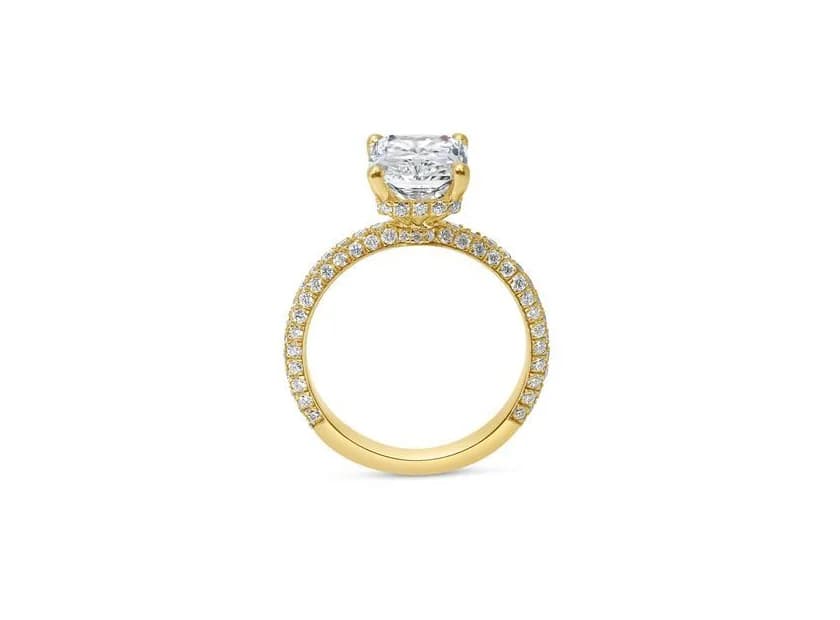
Understanding the Cost of a Lab-Grown Diamond Ring
Lab-grown diamonds have transformed what buyers can afford, putting larger and higher-quality stones within reach of far more people. But 'lab-grown' is not a single price – the cost of a finished ring depends on the stone, the setting and the metal. This guide explains exactly what you are paying for and gives realistic UK price ranges.
A lab-grown diamond ring costs much less than a natural equivalent – often a fraction of the price for the same size and quality. The final figure depends on the 4Cs, the metal and the setting. As a rough UK guide, a certified one-carat lab-grown solitaire ring frequently lands between £1,000 and £2,500 all in. Browse options in our lab-grown diamonds range.
Why lab-grown diamonds cost less
A lab-grown diamond is a real diamond – identical in every physical respect – but it is created in weeks rather than mined from finite deposits. A shorter, more scalable supply chain means lower prices without any compromise in quality. Learn the basics in our beginner's guide to lab-grown diamonds.
What drives the price of the stone
The 4Cs govern the cost of the diamond itself. Carat has the steepest effect – price rises sharply as size increases. Cut quality affects both beauty and price; an excellent or ideal cut is worth prioritising. Colour and clarity add cost as they approach colourless and flawless, though near-colourless (G–H) and eye-clean (VS) stones offer the best value. Our diamond education guides show how to balance them.
Setting and metal add to the total
Beyond the diamond, the mount matters. Platinum costs more than 18ct gold; an elaborate halo or pavé setting with accent diamonds costs more than a plain solitaire. As a rough guide, the setting and metal typically add anywhere from a few hundred pounds to well over £1,500 depending on complexity and metal choice.
UK price ranges by carat
For the certified lab-grown stone alone, expect roughly: 0.5 carat from around £300–£600; 1 carat around £600–£1,200; 2 carats around £1,500–£3,000; and 3 carats around £2,500–£6,000, depending on cut, colour and clarity. Add the setting and metal to reach the finished ring price. These are indicative – exact figures move with quality and market conditions.
How this compares with natural diamonds
A natural diamond ring of the same specification can cost several times more. The trade-off is resale value, which is stronger for natural stones. If getting the most ring for your money is the goal, lab-grown wins clearly – see the side-by-side figures in our natural vs lab-grown price comparison, and read our tips on affordable lab-grown diamonds.
Getting the best value
To stretch your budget, prioritise cut, accept a near-colourless grade rather than fully colourless, choose an eye-clean clarity, and consider a simpler setting that still shows the stone beautifully. You can then put the saving towards a larger centre diamond. Explore finished designs in our engagement rings collection.
Frequently asked questions
Are lab-grown diamond rings cheaper than natural? Yes, significantly – often a fraction of the price for the same size and quality.
Do lab-grown diamonds lose value? They hold less resale value than natural diamonds, but the much lower purchase price offsets this for most buyers.
Is a cheaper lab-grown diamond lower quality? Not necessarily – price reflects the 4Cs. A well-chosen, certified stone can be excellent value at a modest price.
