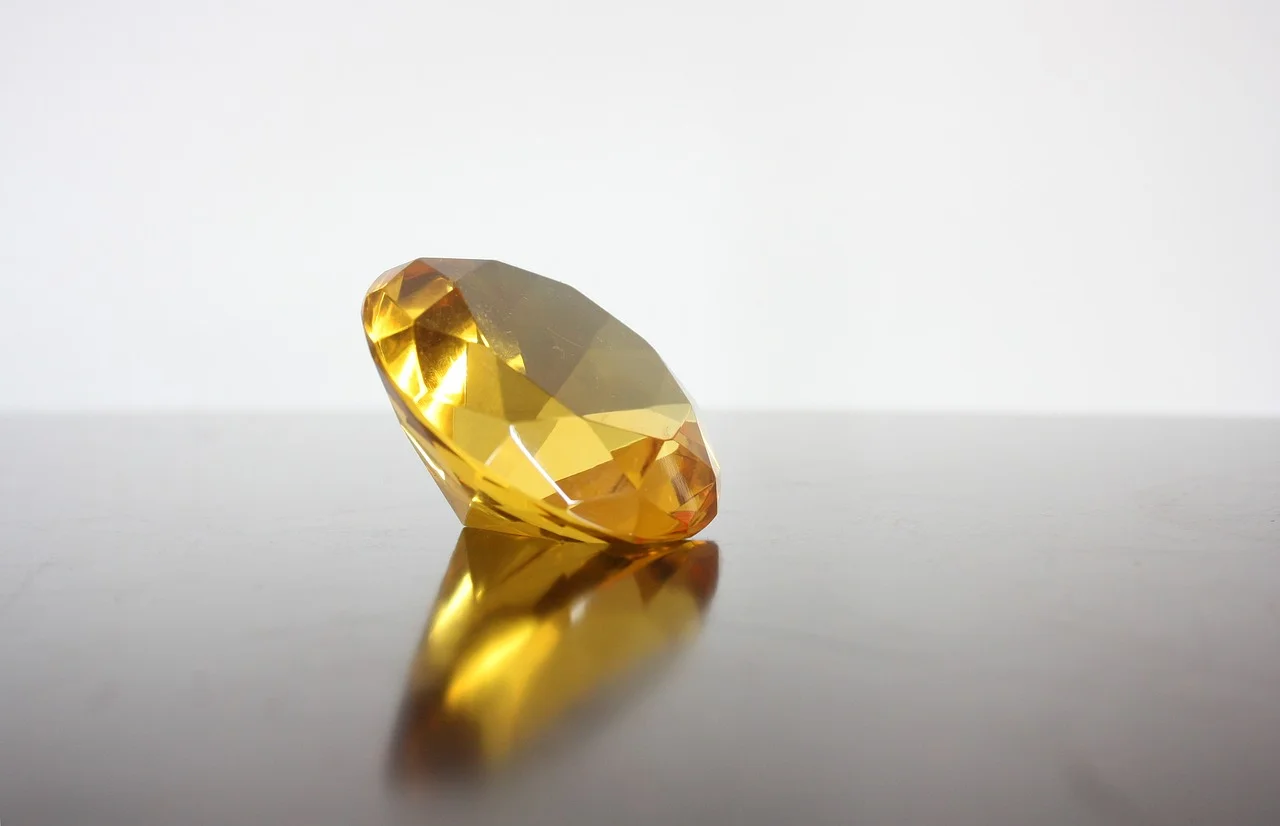
One of the most common questions about lab-grown diamonds is whether anyone can tell they are not mined. The honest answer is that you cannot see the difference — and neither can a jeweler with a loupe. The proof lies in documentation and specialist equipment, not the naked eye.
A lab-grown diamond is identical to a mined one in look, hardness and chemistry, so it cannot be distinguished by eye or with a standard loupe. Origin is confirmed by the grading certificate, a laser inscription on the girdle, and specialist laboratory instruments. Learn the fundamentals in our beginner’s guide to lab-grown diamonds.
Why You Cannot See the Difference
A lab-grown diamond is made of the same pure crystallized carbon as a mined diamond, with the same hardness of 10 on the Mohs scale and the same brilliance and fire. It is a real diamond, not an imitation. Because the material is identical, no difference in sparkle, weight or color reveals its origin. This is why simulants such as cubic zirconia and moissanite — which are different materials entirely — are far easier to identify than a lab-grown diamond.
The Certificate Tells You Everything
The single most reliable way to know a diamond's origin is its grading report. Laboratories such as GIA and IGI grade lab-grown and mined diamonds alike and state the growth method clearly on the certificate. A report that describes the stone as laboratory-grown, along with its 4Cs, is definitive. Our diamond education hub explains how to read one.
Look for the Laser Inscription
Most certified lab-grown diamonds carry a microscopic laser inscription on the girdle — the thin edge around the stone — bearing the report number and often the words lab grown. Visible only under magnification, this inscription links the physical stone to its certificate and provides quick confirmation of origin.
How Laboratories Actually Test Origin
Gemological laboratories use specialized instruments that detect the tiny differences in how lab-grown and mined diamonds form. Equipment analyzing a stone's fluorescence, phosphorescence and growth patterns, along with spectroscopy, can identify whether a diamond was grown by high-pressure high-temperature or chemical vapor deposition methods. This is expert, machine-based analysis — not something done by eye at the counter.
What This Means for Buyers
Because a lab-grown diamond is visually and physically a diamond, you receive the same beauty for a lower price, with certification providing full transparency. When buying, simply insist on a GIA or IGI report and check the inscription. Browse certified lab-grown diamonds and see them set in engagement rings or as diamond earrings.
Frequently Asked Questions
Can a jeweler tell a lab-grown diamond apart by eye?
No. Even an experienced jeweler cannot distinguish a lab-grown diamond from a mined one with a standard loupe, because the two are physically identical. Specialist laboratory equipment is required.
Will my lab-grown diamond be identified on its certificate?
Yes. GIA and IGI clearly state that a stone is laboratory-grown on the grading report, and the report number is usually laser-inscribed on the girdle.
How is a lab-grown diamond different from cubic zirconia or moissanite?
Those are simulants made of different materials and can be identified relatively easily. A lab-grown diamond is genuine diamond, identical in every physical respect to a mined stone.