WHICH DIAMOND SHAPE TENDS TO LOOK THE SMALLEST?
Compact shapes with deep proportions look smallest for their carat weight. Round brilliant, princess and Asscher cuts carry more of their weight below the surface, so they appear smaller face-up than elongated shapes like oval or marquise. If you love these cuts but want more presence, a halo, a thin band or a slightly higher carat weight easily makes up the difference. Compare shapes in our engagement ring collection.
Carat weight tells you how heavy a diamond is, not how big it looks. Because shapes distribute that weight differently, two stones of equal carat can appear quite different in size. Understanding which cuts tend to look smaller — and why — helps you choose wisely and avoid surprises when the ring is on the finger.
Why some shapes look smaller
A diamond that carries much of its weight in a deep pavilion (the part hidden below the setting) has a smaller "face-up" surface — the area you actually see. Compact, symmetrical outlines also lack the elongating effect that makes a stone appear larger. So the smallest-looking shapes tend to be those that are both deep and squarish or perfectly round.
The shapes that tend to look smallest
Round brilliant
Ironically, the round brilliant — the sparkliest shape — often looks smaller than elongated cuts of the same carat, because its depth is optimized for light return rather than surface spread. You trade a little apparent size for unmatched brilliance.
Princess
The princess cut is deep and square, hiding weight below the surface. It offers wonderful sparkle in a modern, geometric outline, but tends to look smaller face-up than an oval or radiant of the same weight.
Asscher and cushion
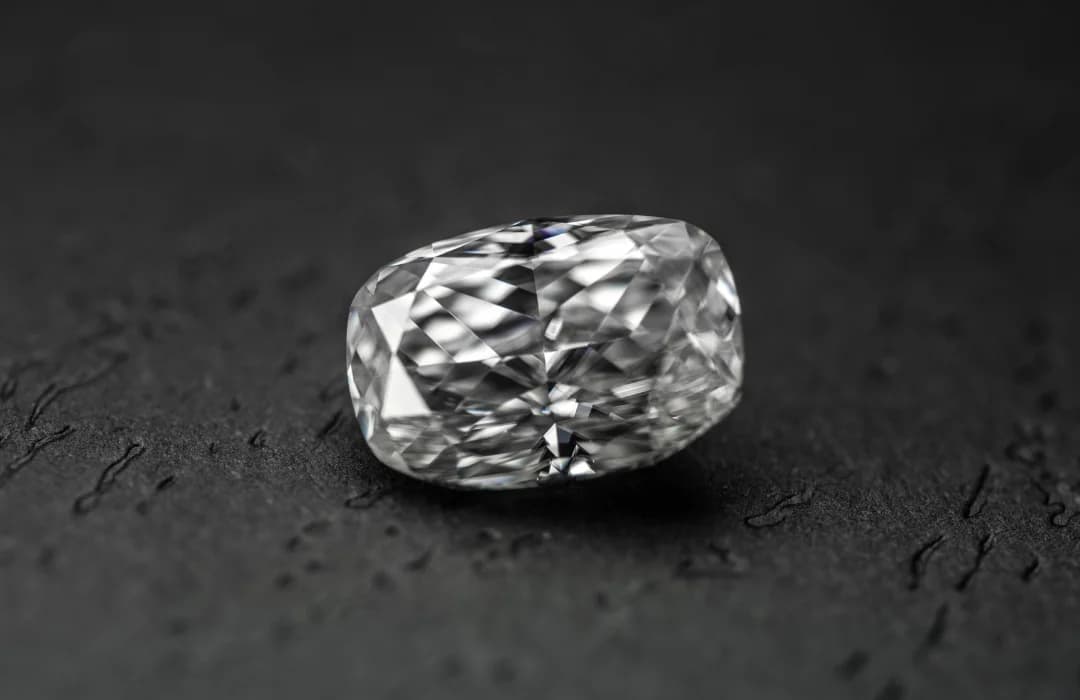
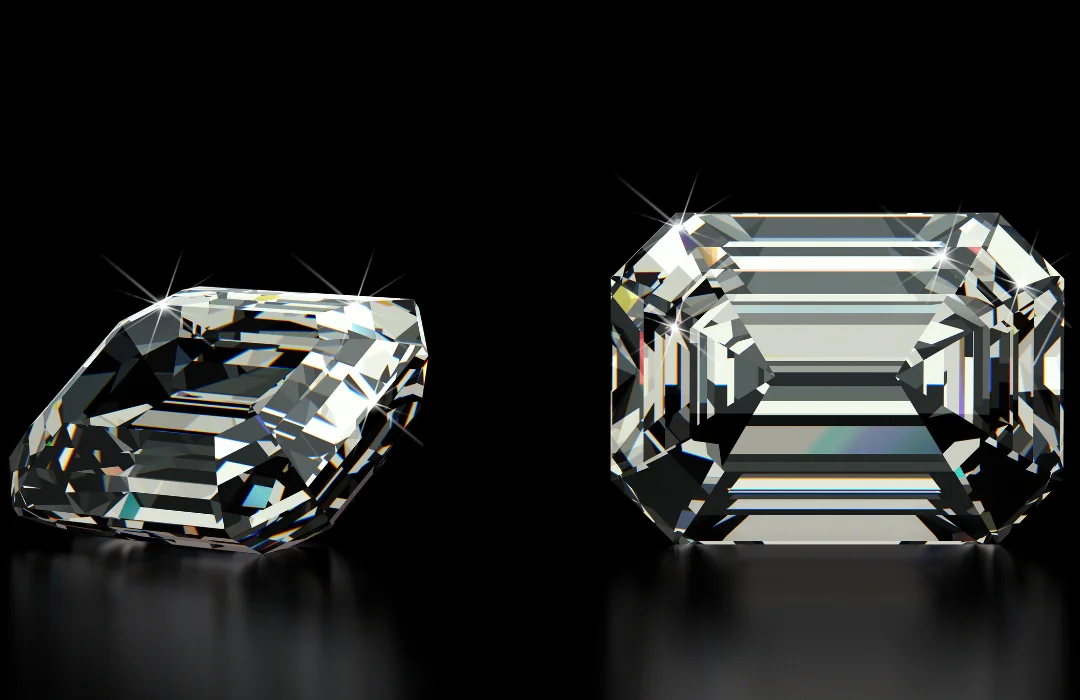
The Asscher, a square step cut, and the classic square cushion both have compact outlines that can appear smaller than elongated shapes, while offering distinctive vintage and romantic looks respectively.
How to make a compact shape look larger
Loving a round or princess cut does not mean settling for less presence. A halo of small diamonds can add the look of half a carat or more. A thin, delicate band makes the center stone appear proportionally bigger. Bright white metals like platinum and white gold enhance perceived size, and choosing an excellent cut keeps the stone lively and full of light. Our diamond education guide explains how proportions affect appearance.
Size up affordably with lab-grown
If you want your preferred shape to look bigger, the simplest solution is a higher carat weight — and lab-grown diamonds make that affordable. Identical to mined stones and certified by GIA or IGI, they cost roughly 60–85% less, so you can move up a size or two within the same budget. See the lab-grown collection and our price comparison. The savings can also fund matching earrings or an eternity ring.
Frequently asked questions
Which diamond shape looks the smallest?
Deep, compact shapes — round brilliant, princess and Asscher — tend to look smallest for their carat weight because more of their weight sits below the surface.
Does a round diamond really look smaller than an oval?
Yes. An oval of the same carat weight usually looks around 10% larger than a round, because its weight is spread across a longer, broader surface.
How can I make a smaller-looking shape appear bigger?
Use a halo setting, a thin band and a bright white metal, and consider a slightly higher carat weight — easily affordable with a certified lab-grown diamond.
Explore every shape and setting in our engagement ring collection, or design a bespoke ring that balances size, sparkle and budget.