Diamond earrings are the most forgiving way to own diamonds: they catch the light beside your face, work with everything from jeans to black tie, and never need resizing. Choosing lab-grown stones lets you buy a larger, cleaner diamond for the same budget while sidestepping the ethical and environmental questions that surround mining. This guide walks through every decision — style, shape, carat, metal, setting and certification — so you can buy lab-grown diamond earrings with total confidence.
Lab-grown diamonds are chemically and optically identical to mined diamonds but typically cost 60–80% less, so your budget stretches to a bigger or higher-quality stone. For everyday wear, four-claw or bezel-set studs of 0.25–1.00ct total in 18ct white gold or platinum offer the best balance of sparkle, security and value. Always insist on independent certification, and expect to pay from roughly £150 for petite studs up to £1,500+ for a 2ct total pair.
Why choose lab-grown diamonds for earrings?
A lab-grown diamond is a real diamond. It has the same carbon crystal structure, the same hardness (10 on the Mohs scale) and the same fire and brilliance as a stone pulled from the earth — the only difference is that it was grown in a matter of weeks rather than over billions of years. Because earrings are viewed from a short distance and in motion, they are the ideal place to enjoy that identical sparkle without paying a mining premium. You can learn more in our guide to how lab-grown diamonds are made.
- Value: expect to pay far less than the mined equivalent, freeing up budget for a larger carat weight or a better colour and clarity grade.
- Consistency: controlled growing conditions produce very high clarity and colour, so matching a pair is easier.
- Traceability: each stone has a clear, conflict-free origin — reassuring for anyone buying with the planet in mind.
- Durability: identical hardness means they resist scratches and hold up to daily wear just as well as mined diamonds.
Choosing a style
Stud earrings
The classic. A single diamond in each ear, studs are the most versatile earring you can own and the natural first purchase. Round brilliants deliver maximum sparkle, while a bezel setting gives a sleek, modern look and extra security for active lifestyles.
Halo and cluster studs
A central stone encircled by a ring of smaller diamonds looks noticeably larger than its carat weight suggests, making a halo an efficient way to maximise presence on a budget.
Hoops and huggies
Diamond-set hoops frame the face and range from delicate huggies that hug the lobe to bold statement hoops. They suit those who want movement and a little drama.
Drop and dangle earrings
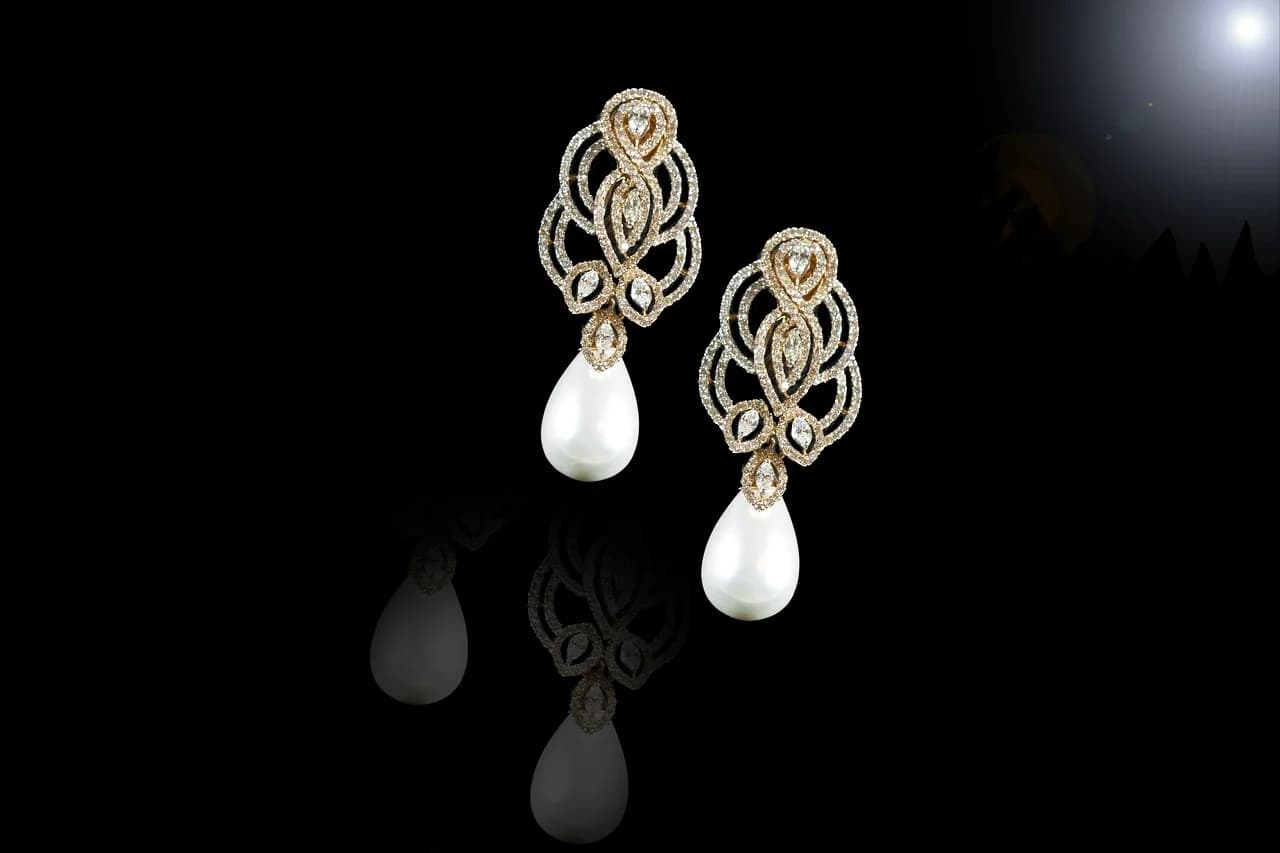
For evenings and occasions, drop earrings add elegant motion and draw the eye. They pair beautifully with a matching piece from our pendants and necklaces collection.
Shape, carat and the four Cs
Earrings follow the same quality language as every other diamond — the four Cs of cut, colour, clarity and carat. Cut matters most because it governs how much a stone sparkles; aim for Excellent or Very Good. For colour, G–H faces up bright white against most metals, and for clarity VS1–VS2 is eye-clean at arm's length. Our diamond education hub explains each grade in plain English.
- Round brilliant: the sparkliest and most popular choice for studs.
- Princess and cushion: square shapes that read larger and feel contemporary.
- Oval and pear: elongated shapes that flatter and appear bigger for their weight.
- Emerald and asscher: step cuts with a calm, sophisticated shine for those who prefer clarity of line over fire.
Total carat weight for studs is quoted as the pair combined. A 0.50ct total (0.25ct each) is a refined everyday size; 1.00ct total reads confidently; 2.00ct total and above makes a real statement.
Metals and settings
Setting metal affects both look and longevity. 18ct white gold and platinum keep white diamonds looking icy and bright, yellow and rose gold add warmth, and platinum offers the greatest security for stones you will wear daily. Four-claw settings maximise light and sparkle; three-claw martini settings sit closer to the ear; and bezel settings wrap the girdle in metal for the most protection.
Certification and buying with confidence
Never buy a diamond earring of any significance without independent certification. A GIA or IGI report confirms the stone's carat, colour, clarity and cut, and — crucially — that it is lab-grown. Reputable retailers laser-inscribe the certificate number on the girdle so you can match stone to paperwork. Read our full guide to lab-grown diamond certification before you buy.
What lab-grown diamond earrings cost
As a rough guide in the UK, petite 0.25ct total studs start from around £150; a well-matched 1.00ct total pair sits in the region of £500–£800; and a 2.00ct total pair typically runs from £1,200 upward, depending on grade and metal. The equivalent mined pair would cost several times more.
Caring for your earrings
- Clean gently every couple of weeks with warm water, a drop of washing-up liquid and a soft brush.
- Put earrings on last when dressing and take them off first — perfume and hairspray dull the sparkle.
- Store pairs separately in a soft pouch so the diamonds cannot scratch other pieces.
- Have the settings checked once a year to make sure the claws are secure.
Frequently asked questions
Are lab-grown diamond earrings as good as natural ones?
Yes. They are chemically and optically identical to mined diamonds, with the same hardness and sparkle, so they perform exactly the same in everyday wear.
Will lab-grown diamonds test as real diamonds?
They will. A standard diamond tester reads them as diamond because they are diamond; only specialist laboratory equipment can distinguish grown from mined.
What carat size is best for everyday studs?
A total weight of 0.50–1.00ct suits most people for daily wear — large enough to sparkle, small enough to feel effortless.
Do lab-grown diamonds hold up over time?
They do. With a hardness of 10 on the Mohs scale they resist scratching and, with occasional cleaning and a yearly settings check, will look brilliant for a lifetime. Explore the full earrings collection to find your pair.