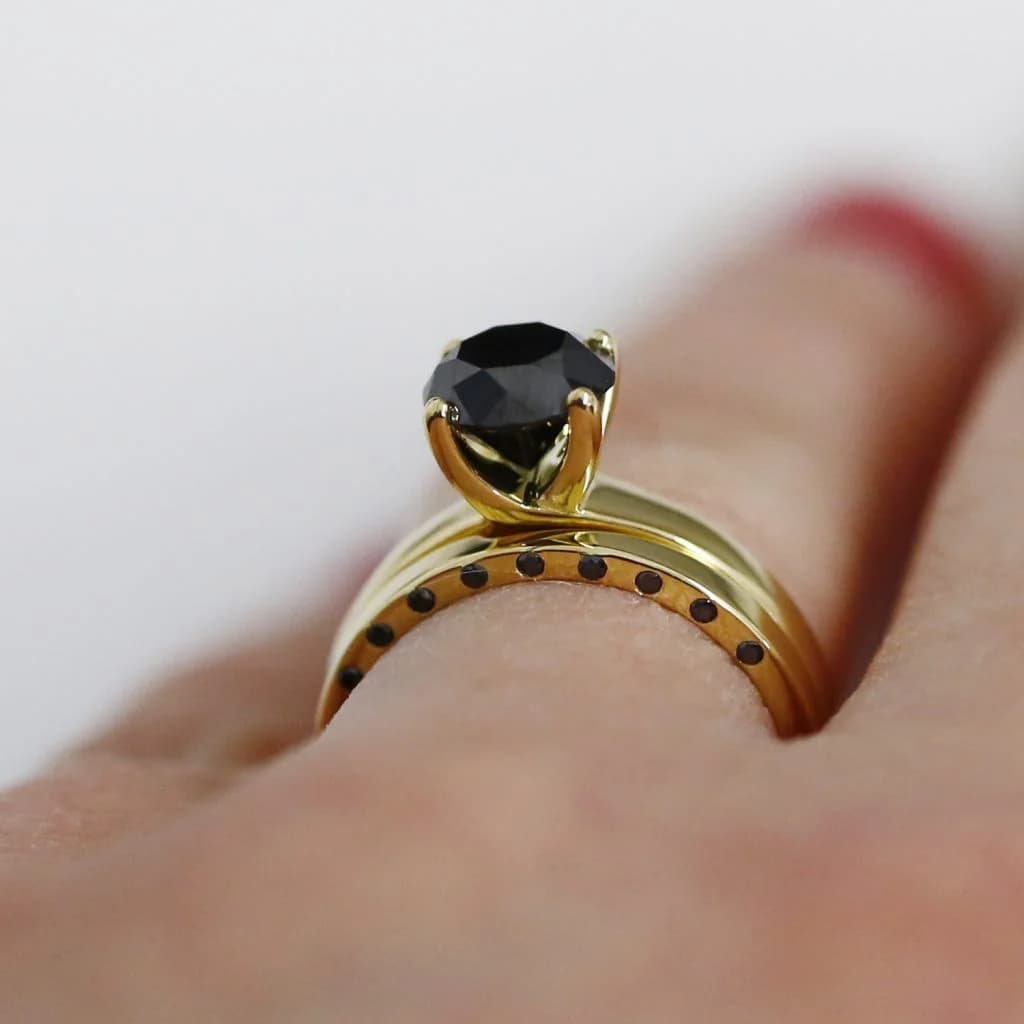
In recent years black diamonds have grown massively in popularity to become one of the most popular of the fancy coloured natural diamonds. The reasons for this may be that the demand for non-conventional engagement rings has grown significantly the styles of which perfectly suits the incorporation of black diamonds. Plus many celebrities are now wearing jewellery and engagement rings featuring black diamonds. However, even though black diamonds are so popular, there is still a lot that is unknown about them and a lot of misinformation and misconception surrounding these stunning gemstones. Here are answers to the five most asked questions about black diamonds:
Black diamonds are real diamonds (pure carbon, Mohs 10) coloured by graphite and hematite inclusions rather than D-Z grading. Most commercial stones are treated for uniform colour. A 1.00ct round black diamond costs £200-£700 in UK 2025 pricing, versus £6,500+ for white D/VS1 natural. They suit modern halo and bezel settings; opacity means no internal sparkle, only surface lustre.
What is a black diamond? Is it real and what is the difference between black and white diamonds?
Black diamonds are absolutely real, and there are two main types: natural black diamonds, also known as fancy diamonds or Carbonados, and treated black diamonds. Natural black diamonds are rarer than other fancy-colored diamonds because they derive their color from a polycrystalline structure made of diamond, graphite, and amorphous carbon, rather than from impurities like most colored diamonds. In contrast, treated black diamonds start as low-value white diamonds with significant inclusions that are transformed through treatments like irradiation or heat to achieve their black color, making them the most affordable option. Structurally, black diamonds are nearly identical to white diamonds, both formed by high pressure on carbon deep beneath the Earth’s surface. The primary difference is the inclusion of graphite in black diamonds, which gives them their distinctive color. Despite this, they are just as real as white diamonds.
Are Black Diamonds rare and are they considered a good investment?
Whilst they are by no means the rarest occurring colour in nature, natural fancy black diamonds are indeed more rare than common colourless diamonds and they are one of the most valued for their artistic beauty and dark allure, all of which means that they can command a higher price. Within the jewellery trade blue, red and pink diamonds are considered the most desirable of natural fancy coloured diamonds for investment (where investment is defined as a diamond whose value rises considerably over time as their supply deteriorates and demand continues to rise). A natural fancy black diamond would only be considered an investment item if it was considerably large or had a distinctive feature or factor that would make it in high demand in the market.
Are Black Diamonds Expensive?
The answer to this question must be yes and no. Treated or enhanced black diamonds are less expensive and the demand for them is relatively low as many people looking for a piece of jewellery or a ring incorporating a black diamond will prefer to opt for the real thing i.e. a natural fancy coloured black diamond. Natural fancy black diamonds are in fact quite affordable, but obviously it depends on the size of the diamond and the quality. Because black diamonds are heavily included and porous, they are often harder to polish. This can result in blemishes and nicks in the surface that may affect the cut. When buying black diamonds make sure the surface of them is smooth and polished and that the diamond is not porous. GIA certified natural black diamonds of a good quality can easily fetch $1,500-$3,000 per carat for diamonds weighing 1.00 - 3.00 carats, this is however still cheaper than a colourless white diamond which makes Black Diamonds an excellent cheap alternative to the conventional white diamond ring.
Are There any Famous Black Diamonds?
Possibly the most well know and famous black diamond is the Black Orlov. This was a cushion-cut 67.50 carat diamond brooch. The black diamond was surrounded by 108 white diamonds and suspended from a 124-diamond necklace. The Black Orlov is also referred to as the "Eye of Brahma" as folklore has it that an uncut black stone of 195 carats was pried out of the eye of the statue of the sacred Hindu God Brahma, from a temple in Southern India. Other famous black diamonds include the Korloff Noir, the Black Star of Africa, the Gruosi diamond, the Table of Islam and the Spirit of de Grisogono diamond. The largest black diamond in the world is the old Moghul-cut, 312.24 carat, black Spirit of de Grisogono which was mined in the Central African Republic. The Black Star of Africa is a very impressive 202 carat Fancy Black diamond but sadly it was seen for the last time in Tokyo in 1971. The Gruosi diamond was a heart-shaped, 115.34 carat black diamond that was discovered in India in 1998 and was cut by the world renowned black diamond cutting specialist, de Grisogono. The Table of Islam is a Fancy Black square emerald cut diamond weighing in at an impressive 160.18 carats but little is actually known about this diamond. The 88 carat Korloff Noir diamond is currently located with the Korloff jewellers in France and is reputed to bring good luck to the owner.
Do Black Diamonds Look Good as Jewellery?
If you love the allure and mystery that a black diamond possesses then you will no doubt agree that black diamonds, look stunning when used in jewellery and suit both men and women. Black diamonds are seen in many pieces of modern day from necklaces to cufflinks, engagement rings to bracelets and even in wedding rings. Many celebrities wear black diamonds one of the most famous being the black diamond halo ring engagement ring that Mr. Big gave to Carrie Bradshaw in the hugely popular tv show and movie Sex and the City. Alternative fashion icon Carmen Electra received a black diamond engagement ring and Katherine Heigl, Angelina Jolie, Cate Blanchett, Evan Rachel Wood, Jennifer Lawrence, Lauren Conrad, and Sarah Jessica Parker have all been seen wearing black diamond earrings