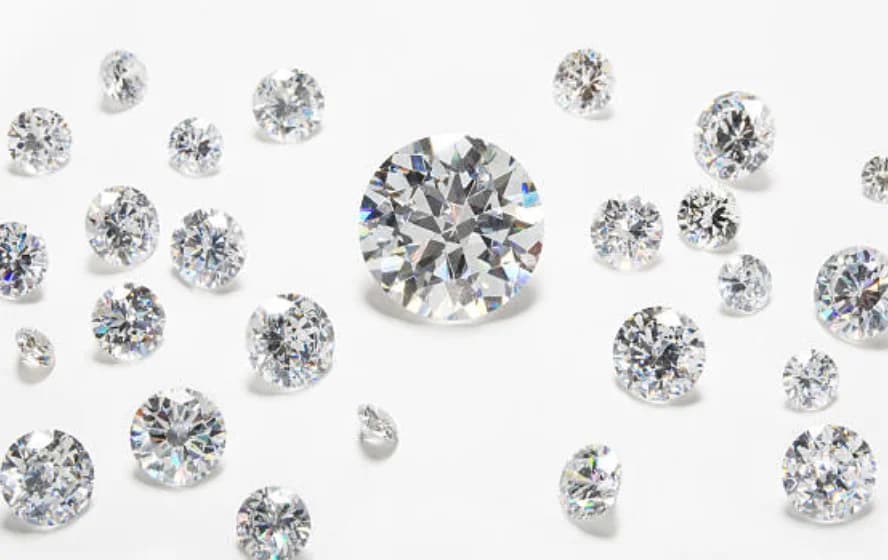
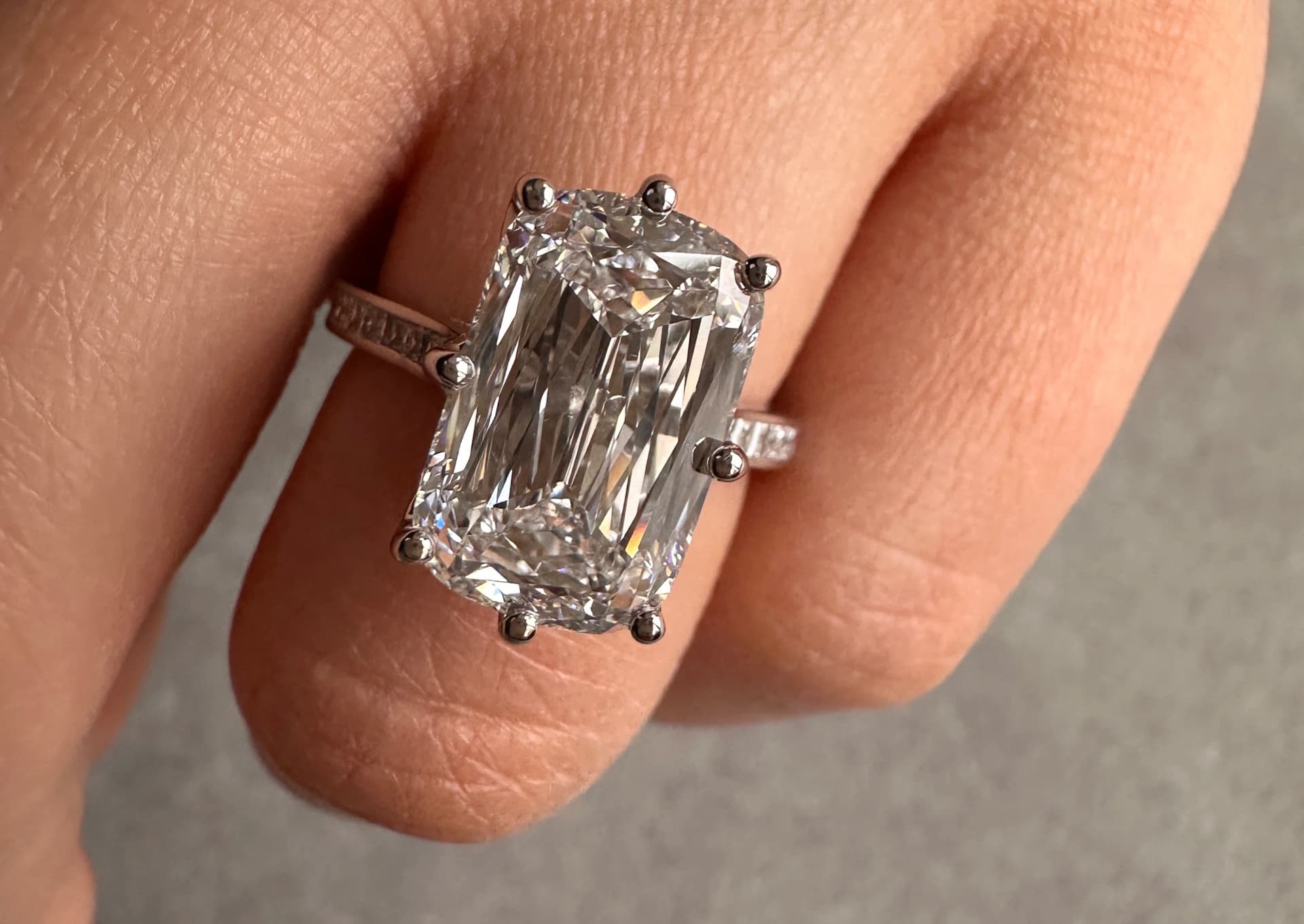
When choosing a diamond, cut is the single C that does the most for visible beauty — and it is also where buyers most often overpay. The grade difference between Excellent and Very Good cut affects price meaningfully, but visual difference is far smaller than the price gap suggests. This guide explains what each grade actually means and when Very Good is the smart choice.
Excellent cut returns roughly 5-8% more light than Very Good and shows visibly more brilliance under most lighting. The price difference is typically 10-20% for the same carat and clarity. For round brilliants, always choose Excellent (or GIA Triple Excellent for cut, polish and symmetry); for fancy shapes where GIA doesn't grade cut, prioritise polish and symmetry instead.
What "cut" actually measures
Cut is the only C that grades human craftsmanship rather than the stone's natural qualities. It measures how well the diamond's 57 or 58 facets are proportioned, aligned, and polished so that incoming light bounces around inside the stone and exits the top as brilliance (white-light return), fire (rainbow colour flashes), and scintillation (sparkle as the diamond or viewer moves). A poorly cut diamond leaks light through the pavilion, looking dull and lifeless regardless of its colour and clarity. A well-cut diamond looks bright even at modest colour and clarity grades.
Excellent cut: what GIA looks for
A GIA Excellent cut grade means the diamond meets strict criteria across seven attributes: brightness, fire, scintillation, weight ratio, durability, polish, and symmetry. Table sizes, crown angles, pavilion depths, and facet alignments all fall within optimal ranges. Excellent cut diamonds return roughly 90–95% of incoming light through the table, producing the maximum possible visual brilliance for the stone. Triple Excellent (XXX) means the cut, polish, and symmetry are all graded Excellent.
Very Good cut: still beautiful, less expensive
Very Good cut diamonds return 85–90% of incoming light — visually close to Excellent but priced 5–15% lower for the same carat, colour, and clarity. The differences in proportion are subtle: a slightly shallower or steeper crown angle, or symmetry that is excellent but not exact. To the naked eye, in most lighting, a Very Good cut diamond looks indistinguishable from an Excellent — especially in smaller sizes. The 10–15% saving can be redirected into a larger carat weight or higher colour grade.
When Excellent cut is worth paying for
Three situations justify paying the Excellent premium. First, large stones (1.5 carats and above): cut quality is most visible in larger sizes where light has more room to interact, so the extra brilliance shows. Second, round brilliant cuts: the round shape is the most exhaustively optimised for light return, so Excellent versus Very Good is most measurable. Third, settings that maximise light entry (solitaires, halo settings with open pavilions): Excellent cut diamonds outperform Very Good in these mounts. For elongated cuts (emerald, marquise, oval) Very Good is often plenty.
When Very Good cut is the smart choice
Buyers on a budget who care more about size or colour than maximum brilliance get more wearable diamond for their money with Very Good. Buyers choosing fancy shapes (cushion, princess, oval, emerald) where the cut grading scale is less standardised get most of the visual benefit at lower cost. Buyers who plan to set the stone in a bezel or halo that frames it tightly also see less benefit from the Excellent premium. The 10–15% saving on Very Good often funds the difference between a 0.90 and a 1.00 carat stone — a more noticeable visual upgrade.
What to never compromise on
Below Very Good (Good, Fair, Poor) cut grades start to show visible dullness, light leakage through the pavilion, or distracting symmetry issues. A Good-cut diamond can look noticeably less brilliant than a Very Good one of the same colour and clarity, and the price difference is rarely worth it. The minimum cut grade we recommend for any engagement-quality diamond is Very Good. Below that, the savings are real but the brilliance compromise is too steep.
Frequently Asked Questions
Can you see the difference between Excellent and Very Good with the naked eye?
Side by side in good lighting, an experienced eye can usually pick the Excellent. In normal wear, in normal light, viewed individually, most people cannot reliably distinguish them. Photography under bright lights exaggerates the difference; everyday wear flattens it. The visual gap is significantly smaller than the price gap.
Is Excellent cut available for all diamond shapes?
GIA only formally grades round brilliant cut diamonds on the full Excellent-to-Poor scale. For fancy shapes (cushion, princess, oval, pear, marquise, emerald, radiant, asscher), GIA grades polish and symmetry but does not assign an overall cut grade — there is no industry-agreed standard for what "Excellent cut" means in those shapes. Other labs (IGI, GCAL) issue cut grades for fancies using their own criteria. Buyers should evaluate fancy-shape cuts on individual proportions and on visual brilliance under store lighting rather than relying on a single grade.
How much can I save by choosing Very Good over Excellent?
Typically 5–15% on identical carat, colour, and clarity. For a 1-carat round brilliant in G colour and VS1 clarity, that might mean £3,800 instead of £4,400 — about £600 saved that can fund a colour or clarity upgrade, a slightly larger carat weight, or simply a smaller overall budget.
Does cut grade affect resale value?
Yes — Excellent cuts tend to hold value slightly better at resale because they command stronger demand. For most buyers, the difference is marginal (5–10% better resale recovery) and does not offset the upfront premium. Resale value is a weak reason to pay for cut grade alone; buy Excellent because you can see the difference and value it, not as an investment.
Does Excellent cut affect how a diamond looks dirty?
All diamonds lose visible brilliance when their pavilion facets are coated with skin oils, soap residue, or hand lotion. Excellent cut diamonds lose proportionally more brilliance because they had more to lose — a clean Excellent looks dramatically better than a clean Very Good, but a dirty Excellent and a dirty Very Good can look similar. Routine ultrasonic cleaning every six months keeps cut quality visible.
Choosing your cut grade at Reve
Reve Diamonds shows you Excellent and Very Good cut diamonds side by side in our London showroom under jewellery-store lighting so you can see the actual visual difference before deciding. Browse our engagement rings collection or book a viewing appointment.