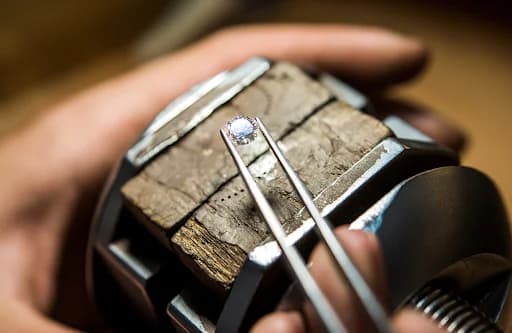
CVD (Chemical Vapour Deposition) diamonds are a marvel of modern technology, bridging the gap between science and nature. These diamonds, though created in a laboratory, possess the same physical, chemical, and optical properties as natural diamonds. However, the process behind their creation and the ethical considerations they raise make them a fascinating subject for both jewellery enthusiasts and those concerned with sustainable luxury.
CVD (chemical vapour deposition) diamonds grow layer-by-layer when methane gas is heated to plasma in a vacuum chamber, depositing carbon atoms onto a thin diamond seed. The process takes 4-6 weeks for a 1.00ct rough yielding a 0.50-0.70ct polished stone. CVD diamonds are pure carbon, Mohs 10, GIA/IGI gradable, and indistinguishable from mined diamonds without specialist equipment. UK 2025 prices: £1,400-£1,800 for a 1.00ct D/VS1 round.
The CVD Diamond Creation Process
The creation of CVD diamonds begins with a diamond seed, a small piece of another diamond, placed in a chamber filled with carbon-rich gases. Under controlled temperatures and pressures, the gases are broken down, and carbon atoms deposit onto the diamond seed, layer by layer, mimicking the natural process that forms diamonds deep within the Earth. This method allows for precise control over the diamond's properties, resulting in high-quality gemstones that are virtually indistinguishable from their natural counterparts.
One of the significant advantages of the CVD process is its ability to produce diamonds that are less likely to contain the inclusions and blemishes found in natural diamonds. This process also enables the production of diamonds in a range of colours, from the more common colourless stones to rarer hues such as blue, green, or even black, depending on the gases used during the deposition process.
Ethical and Environmental Benefits
CVD diamonds represent a more sustainable and ethical choice compared to mined diamonds. The traditional diamond mining industry has been associated with various environmental and ethical issues, including habitat destruction, water pollution, and the exploitation of workers in conflict regions. In contrast, CVD diamonds are created in a controlled laboratory environment, with significantly lower environmental impact and without the ethical concerns related to mining practices.
For consumers who value sustainability and social responsibility, CVD diamonds offer a compelling alternative to natural diamonds. By choosing a CVD diamond, one can enjoy the beauty and brilliance of a diamond while knowing that their purchase has a reduced environmental footprint and supports ethical practices.
Applications and Uses
Beyond their use in jewellery, CVD diamonds have various industrial applications due to their exceptional hardness and thermal conductivity. These diamonds are used in cutting tools, heat sinks for electronics, and even in medical devices. Their versatility and durability make them valuable not only as gemstones but also as essential materials in advanced technologies.
FAQs about CVD Diamonds
What makes CVD diamonds different from natural diamonds?
CVD diamonds are created in a laboratory using the Chemical Vapour Deposition process, whereas natural diamonds are formed deep within the Earth's mantle over millions of years. Despite their different origins, both types of diamonds share the same physical, chemical, and optical properties. However, CVD diamonds are typically more affordable and have fewer inclusions.
Are CVD diamonds real diamonds?
Yes, CVD diamonds are real diamonds. They have the same atomic structure, hardness, brilliance, and other characteristics as natural diamonds. The only difference lies in their origin—CVD diamonds are created in a lab, while natural diamonds are mined from the Earth.
Can you tell the difference between CVD diamonds and natural diamonds?
In most cases, it is nearly impossible to distinguish between a CVD lab-grown diamond and a natural diamond with the naked eye. Even professional gemologists may need specialised equipment to identify a CVD diamond, as they share the same visual properties as natural diamonds.
Are CVD diamonds more affordable than natural diamonds?
Yes, CVD diamonds are generally more affordable than their natural counterparts. This is because the controlled production process in a laboratory setting allows for the creation of diamonds without the extensive labour and environmental costs associated with mining natural diamonds.
Do CVD diamonds have the same value as natural diamonds?
While CVD diamonds hold significant value, especially for their quality and ethical appeal, they may not retain the same market value as natural diamonds. The resale value of a diamond can depend on various factors, including demand, rarity, and consumer perceptions. However, for many buyers, the appeal of CVD diamonds lies more in their ethical and environmental benefits than in their resale value.