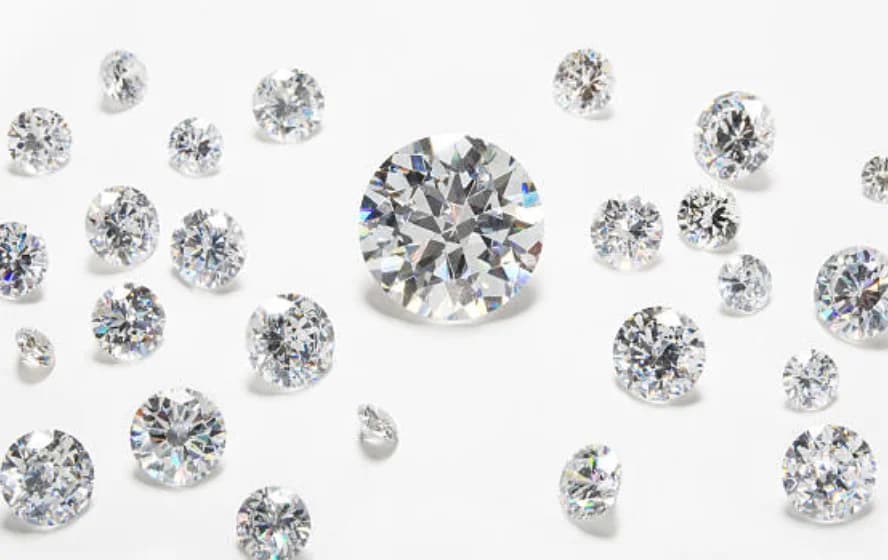
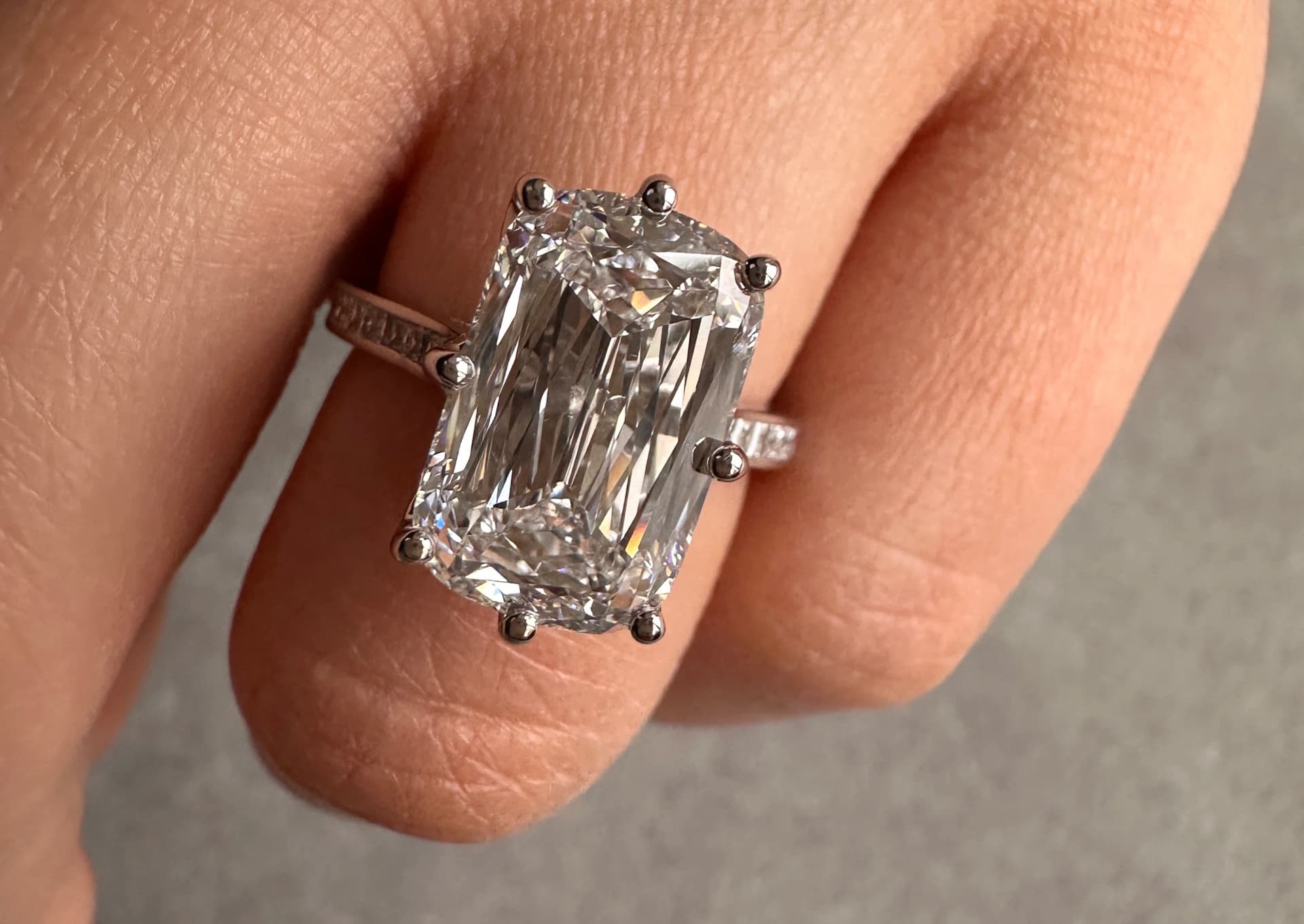
When selecting a diamond, understanding the differences between cut grades is crucial to making an informed choice. The cut of a diamond is a key factor in its brilliance and overall appearance. Among the most common cut grades are 'Excellent' and 'Very Good.' Both have their merits, but knowing how each one impacts the diamond’s look and value can guide you to the right decision for your needs.
Excellent cut diamonds return roughly 5-8% more light than Very Good cuts, producing visibly sharper brilliance and fire — but they cost 10-20% more for the same carat, colour and clarity. On a 1.00ct round D/VS1, that is typically a £400-£900 premium. Very Good cuts deliver 90%+ of Excellent sparkle and offer the best value-per-pound; choose Excellent only if face-up performance is the priority.
Search Natural Diamonds
Why Cut Quality Matters
The cut of a diamond is not just about its shape; it directly affects how light interacts with the stone. A well-cut diamond reflects light beautifully, resulting in that coveted sparkle. An Excellent cut diamond will have the best proportions and symmetry, optimizing light reflection and enhancing brilliance. In contrast, a Very Good cut diamond might reflect slightly less light due to less optimal proportions, but it still offers significant sparkle at a potentially lower price point.
Understanding the Excellent Cut
An Excellent cut diamond is often regarded as the pinnacle of diamond cutting. This grade is awarded to diamonds that achieve near-perfect symmetry and proportions, allowing them to reflect almost all light that enters the stone. The result is a diamond with maximum brilliance and fire, capturing attention with its stunning sparkle. However, these diamonds also tend to be more expensive, reflecting the skill and precision required in their creation.
The Value Proposition of a Very Good Cut
Very Good cut diamonds are an excellent choice for those looking for a balance between quality and cost. While these diamonds may not reflect as much light as their Excellent cut counterparts, the difference is often imperceptible to the untrained eye. For those who want a beautiful diamond without the top-tier price, a Very Good cut offers a compelling option. It’s important to note that the perceived difference in sparkle between these two grades is minimal, especially once the diamond is set in jewelry.
Key Considerations When Choosing Between Excellent and Very Good Cuts
When deciding between an Excellent and Very Good cut diamond, consider your priorities. If achieving the highest possible brilliance is your primary goal, an Excellent cut might be worth the investment. However, if you are looking for a diamond that offers great sparkle with a bit more budget flexibility, a Very Good cut can be an ideal choice. Also, consider the setting of the diamond, as certain settings can enhance the appearance of a Very Good cut, making it appear nearly as brilliant as an Excellent cut.
FAQs
What is the main difference between Excellent and Very Good cut diamonds?
The main difference lies in the precision of the diamond’s proportions and symmetry. An Excellent cut diamond has near-perfect proportions, maximizing light reflection and brilliance, while a Very Good cut diamond is slightly less precise but still offers significant sparkle.
Is the difference in sparkle between an Excellent cut and a Very Good cut noticeable?
To the untrained eye, the difference in sparkle may be minimal. Excellent cut diamonds are designed to reflect nearly all light, creating maximum brilliance, but Very Good cut diamonds still reflect a substantial amount of light and are visually stunning, especially when set in jewelry.
Are Excellent cut diamonds worth the extra cost?
Whether an Excellent cut diamond is worth the extra cost depends on your priorities. If achieving the highest level of brilliance is crucial to you, the additional investment in an Excellent cut might be justified. However, if you are looking for a balance between quality and budget, a Very Good cut offers significant sparkle at a lower price point.
Can a Very Good cut diamond look as brilliant as an Excellent cut diamond?
In certain settings and lighting conditions, a Very Good cut diamond can appear nearly as brilliant as an Excellent cut diamond. The difference in brilliance is often subtle and may not be easily noticed once the diamond is set in jewelry.
Which cut grade should I choose if I want the best value for my money?
If you are seeking the best value for your money, a Very Good cut diamond offers a combination of quality and cost-effectiveness. It provides excellent sparkle while allowing you to stay within your budget. However, if your budget allows and you prioritize maximum brilliance, an Excellent cut is the superior choice.