Edwardian Engagement Rings
The Edwardian era spanned from 1901 to 1920, characterized by elegant, graceful, and lightweight jewelry. Filigree techniques were prominently featured during this period, with precious metals like platinum and gold meticulously applied in threads to create intricate and lacy designs, exuding undeniable elegance and femininity.
In short: Edwardian engagement rings (1901-1910) are defined by lacy platinum filigree, milgrain edging, and Old European-cut diamonds offset by pearls or sapphires. King Edward VII's reign popularized platinum settings across heritage US jewelers. Original pieces in good condition typically run $4,500-20,000+ depending on diamond size and provenance. Modern Edwardian-inspired rings in lab-grown diamonds cut spend 60-80% versus natural equivalents.
Another widely employed technique in Edwardian jewelry was milgraining, a decorative method involving tiny bead-shaped rows along the ring's edge. This technique was particularly popular for engagement rings, often surrounding the stones.
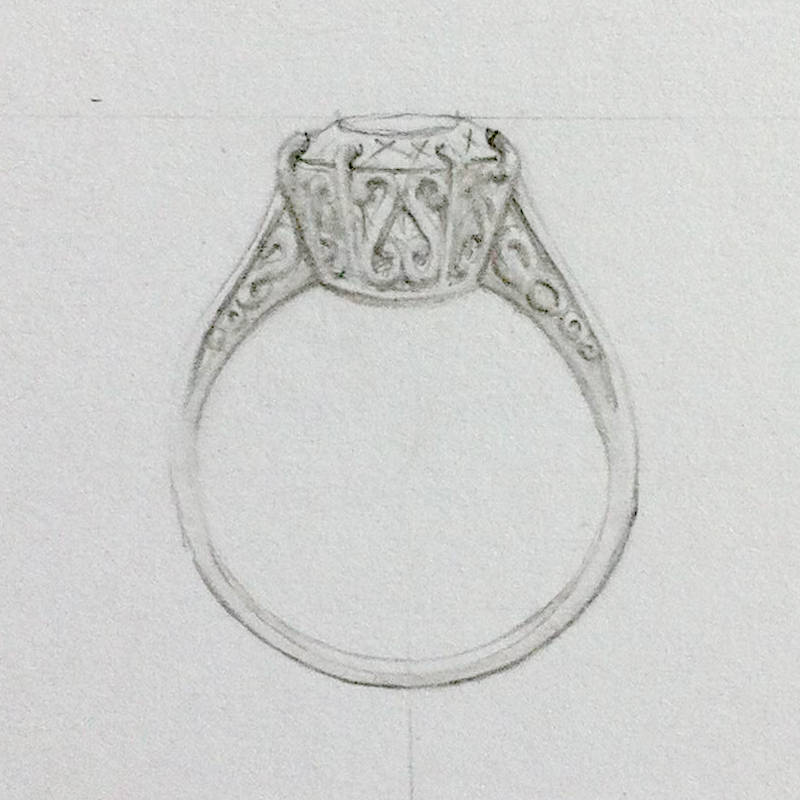
Rings were designed to convey a sense of decorum, with designers favoring classic palettes and simple motifs. The focal point of the ring was always the gemstone, as jewelers aimed to showcase the natural beauty of the stone. Prominent motifs during this era included scrolls, garlands of flowers, laurel wreaths, bows, and tassels. Key components included platinum, pearls, and diamonds, the latter prized for its understated elegance.
While diamonds were the most popular choice, other gemstones such as aquamarines, black opals, sapphires, peridots, garnets, and amethysts were also used during this period. Often, they were combined with diamonds to create the centerpiece of the ring.
In summary, if you appreciate delicate, elegant, and feminine jewelry pieces, an engagement ring with an Edwardian design is certainly worth considering.
Edwardian engagement rings: frequently asked questions
What defines an Edwardian engagement ring?
From the early 1900s (1901–1915), these rings are delicate and lace-like — fine filigree, milgrain detailing and airy, intricate platinum work.
Why is platinum central to Edwardian rings?
Platinum had just become workable in jewelry, and its strength let makers create the fine, pierced, almost gossamer designs the era is famous for.
What diamonds do Edwardian rings use?
Mostly old European cuts and rose cuts, whose rounded facets suit the soft, romantic look of the period.
Are Edwardian rings durable enough for daily wear?
The fine filigree is delicate, so they reward gentle wear and occasional professional checks to keep the detail and stones secure.
