Fancy Colored Diamonds: A Buyer's Guide
Fancy colored diamonds are the rule-breakers of the diamond world. Where a classic white diamond is graded on how little color it shows, a fancy colored diamond is prized for the opposite — a rich, distinct body color that puts it in a category, and a price bracket, all its own. Yellows and browns are the most familiar, but the family runs to pink, blue, green, orange and the almost mythical red. This guide covers how they are graded, what the different colors cost, how natural and lab-grown stones compare, and how to buy one without overpaying.
In short: Fancy colored diamonds are graded on the strength of their color, from Faint up to Fancy Vivid, rather than on the colorless D-to-Z scale. Yellow and brown are the most affordable; pink, blue and green command steep premiums; red is the rarest of all. Lab-grown versions offer the same colors for a fraction of the price. Always insist on a GIA or IGI report that states whether the color is natural.
What makes a diamond a fancy colored diamond?
Every diamond carries some trace of color. In white diamonds, graders use the D-to-Z scale to measure how faint it is — the less, the better. Fancy colored diamonds sit off the end of that scale. Their color is strong enough to be graded on its own terms, using three properties: hue (the actual color), tone (how light or dark) and saturation (how intense). The GIA grades the overall strength on a nine-step scale — Faint, Very Light, Light, Fancy Light, Fancy, Fancy Intense, Fancy Vivid, Fancy Deep and Fancy Dark. As a rule, the stronger and purer the color, the rarer and more valuable the stone.
The colors and what they cost
Color is the single biggest driver of price. Yellow and brown (often sold as champagne or cognac) are the most common, which keeps them the most affordable — a fancy yellow can sit within reach of a good white-diamond budget. Orange and pure green are much scarcer. Pink and blue are genuinely rare and priced accordingly, often many times the cost of a white diamond of the same size. Red is the rarest fancy color on earth, with only a few dozen known. You can browse a live selection across colors on our fancy colored diamonds page.
Natural vs lab-grown fancy colored diamonds
A natural fancy color forms over billions of years, which is why strong hues are so rare and so expensive. A lab-grown fancy colored diamond is chemically and optically the same stone, with the color created under controlled conditions — so a vivid yellow or pink that would run into five or six figures naturally can cost a fraction of that. If budget is the deciding factor, lab-grown is how most buyers get the color they actually want. See our lab-grown fancy colored diamonds, and our natural vs lab-grown price comparison for the numbers side by side.
What to check before you buy
Three things matter most. First, certification: insist on a report from the GIA or IGI that names the color grade and states whether the color is natural or treated — treated stones are legitimate but worth far less. Second, the color grade itself in writing (the hue and the Fancy-intensity level), since that is what you are really paying for. Third, the setting: colored stones are often framed with white diamonds and set in matching or contrasting metals to push the color, so the mount is part of the look, not an afterthought.
How and where to buy fancy colored diamonds
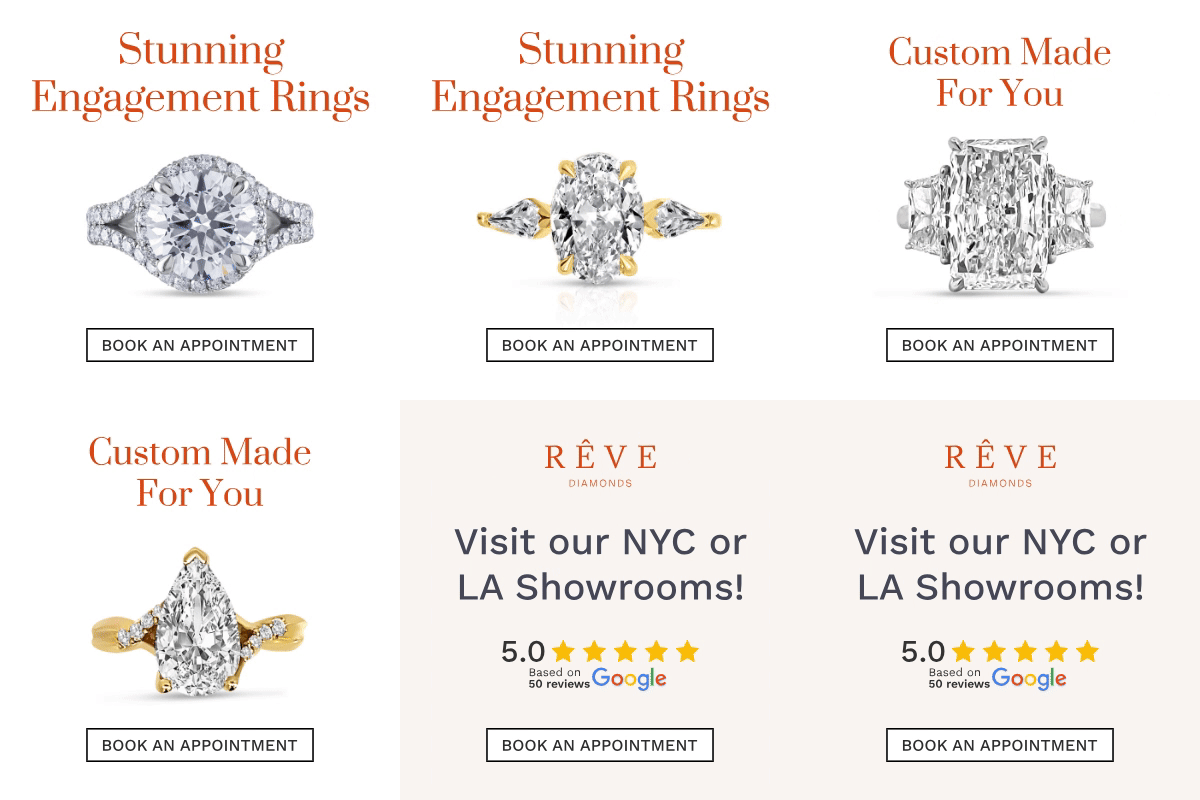
Most fancy-color buying now starts online, where you can filter by color, intensity and budget and see full certification before you commit. Rêve is online-first and ships fully insured, and if you would rather see stones in person you can book an appointment at our New York or Los Angeles showrooms, or a live virtual consultation from anywhere. Whichever way you shop, compare a few certified stones in your target color before deciding. You can also set a colored center stone into one of our engagement rings.
Buying fancy colored diamonds: frequently asked questions
What is a fancy colored diamond?
A diamond with a natural or lab-created body color strong enough to be graded on its own color scale rather than the colorless D-to-Z scale. Yellow, pink, blue, green, orange, brown and red are all fancy colors.
Are fancy colored diamonds more expensive than white diamonds?
It depends on the color. Yellow and brown can be comparable to or cheaper than a white diamond, while pink, blue and red command large premiums because they are so rare. Lab-grown versions bring any color down sharply in price.
What is the rarest fancy diamond color?
Red is the rarest, with only a few dozen known worldwide. Blue and pink are also extremely rare, while yellow and brown are the most common.
Are lab-grown fancy colored diamonds real diamonds?
Yes. They are chemically and optically identical to natural diamonds; only the origin of the color differs. A reputable lab report will state that the stone is laboratory-grown.
What certification should a fancy colored diamond have?
A GIA or IGI report that states the color grade and whether the color is natural or treated. It is the single most important document when buying a colored stone.
Can I get an engagement ring with a fancy colored diamond?
Yes. Colored center stones, especially yellows and pinks, are a popular choice. See our engagement rings or ask about a bespoke setting.
