Side Stones Setting
When choosing an engagement ring, you have an abundance of options to choose from. One of the most popular options is an engagement ring with side stones. This is perfect for those who want a ring that appears bigger and has a bolder appearance without the feature diamond looking out of proportion to the finger. When buying this type of ring, you have many different side stone designs to choose from. In this post, we are going to take you through some of the most popular and the different points you need to consider.
In short: A side-stone setting flanks the centre diamond with two or more smaller accent stones — typically tapered baguettes, trillions, half-moons, or round brilliants in 0.10-0.50ct each. Five-stone (1+2+2) and three-stone variants are the most popular UK styles. Adds 0.20-1.00ct total carat weight versus a same-centre solitaire, boosting visual scale 15-30%. Works in 18kt yellow, white, rose gold, and platinum.
The majority of rings with side stones follow the same sort of layout – one big diamond in the middle, with two smaller diamonds on either side. Sometimes people opt to have smaller accent stones on the band of the ring as well. In most cases, the three diamonds will all be of the same shape. Most people tend to go for pear, marquise, emerald, square, oval, or round. There are plenty of other shapes available, which you will discover more about by heading to our diamond shape section. Although some of these are not common in regards to side stone rings.
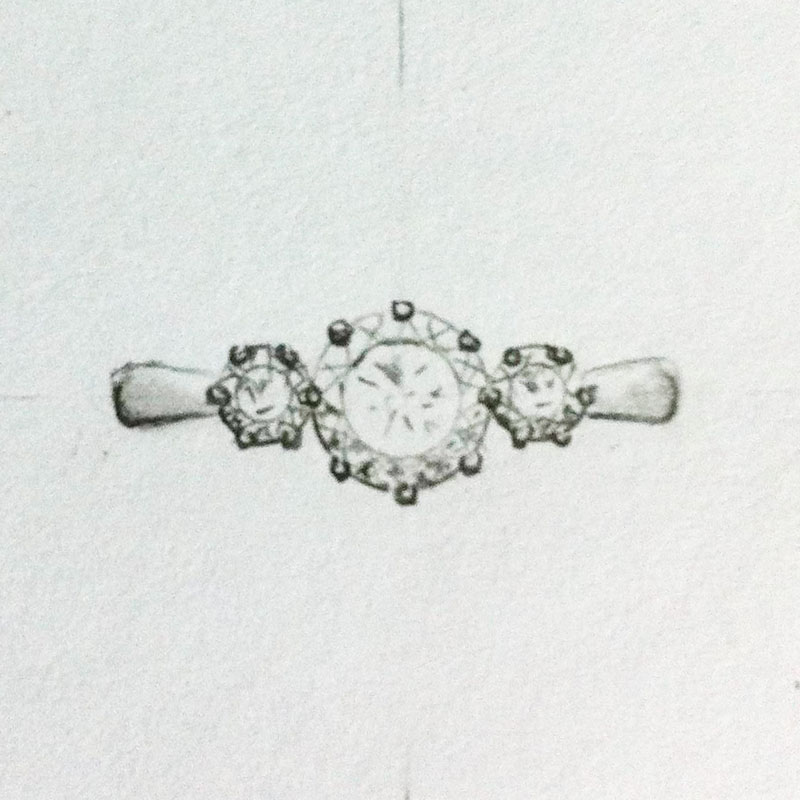
Explore our side stones diamond rings below - click on the image to learn more
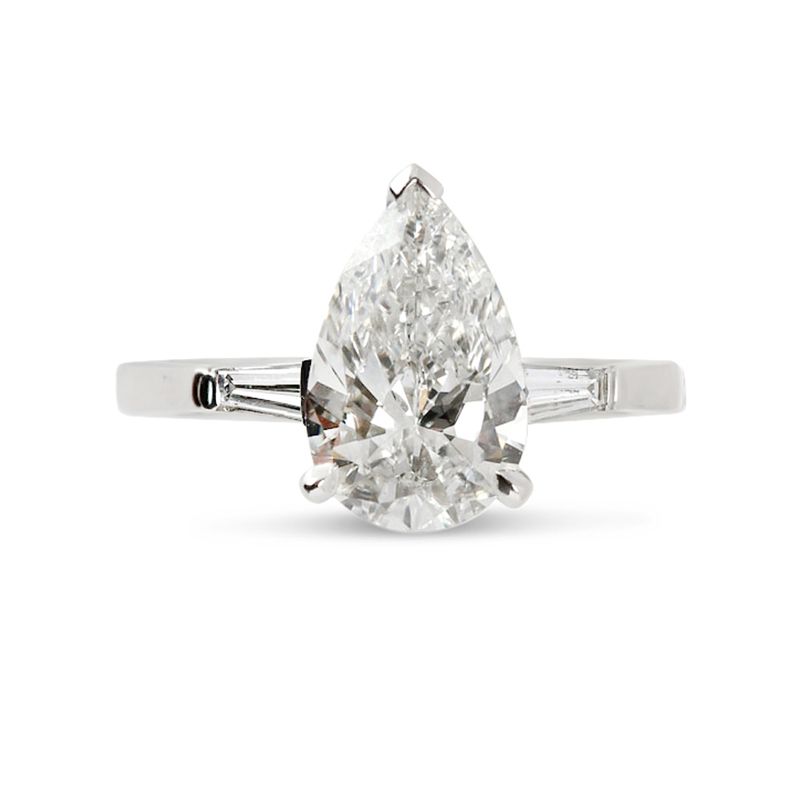
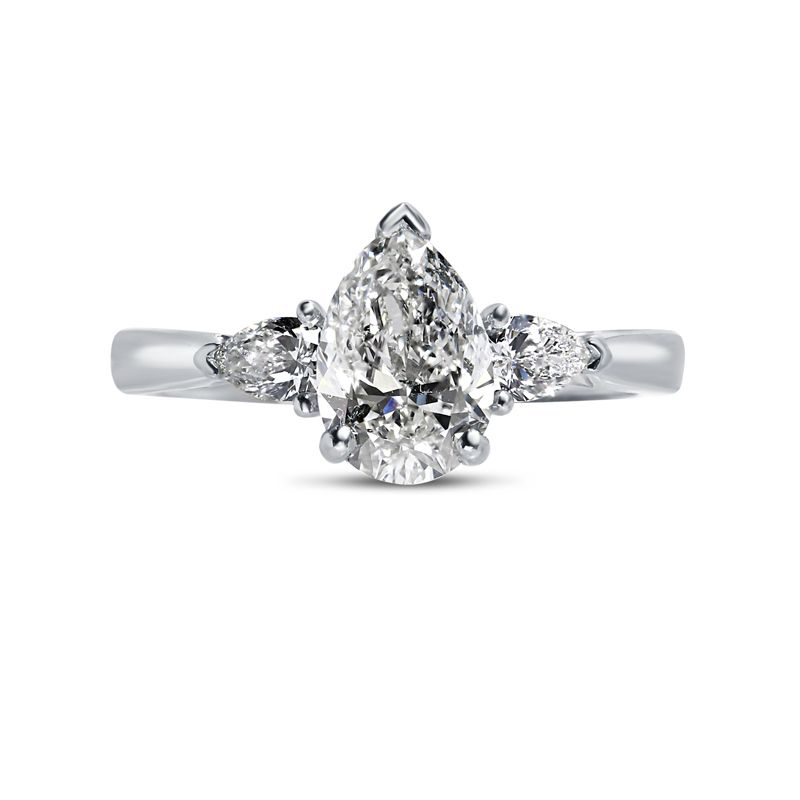
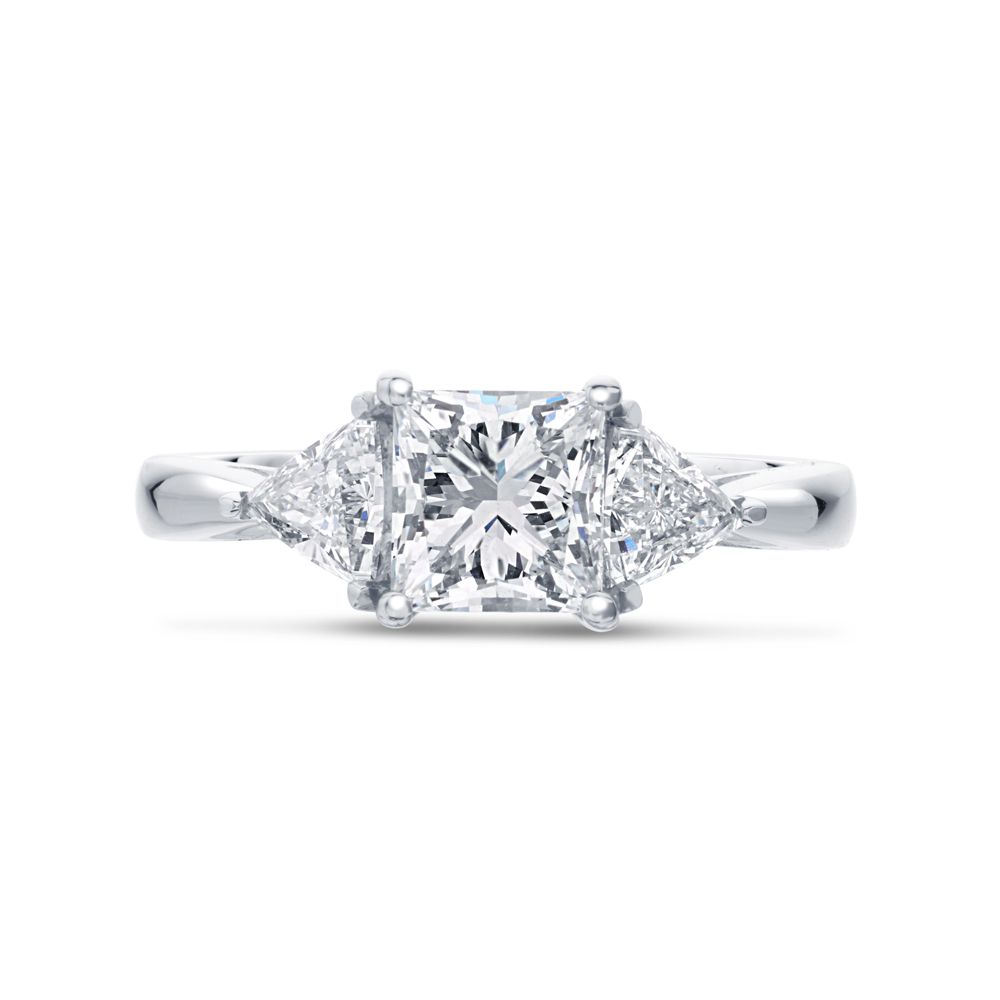
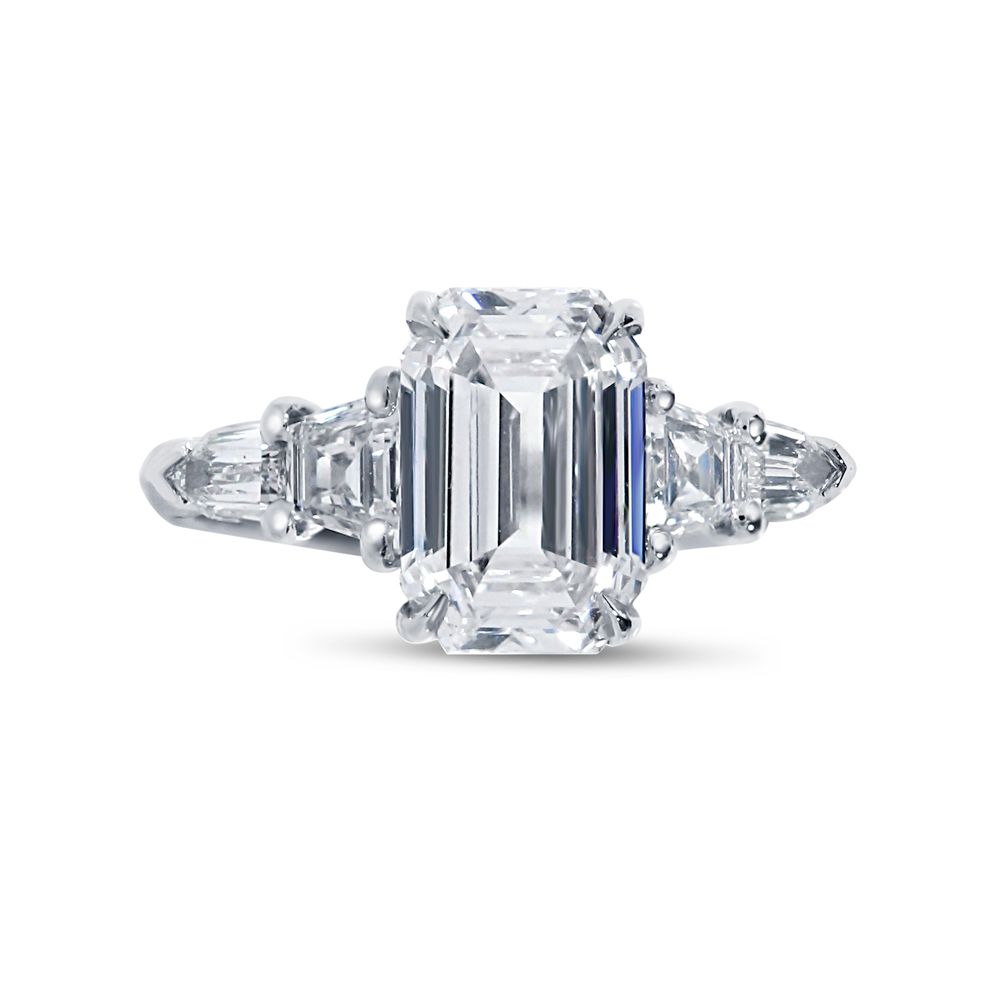
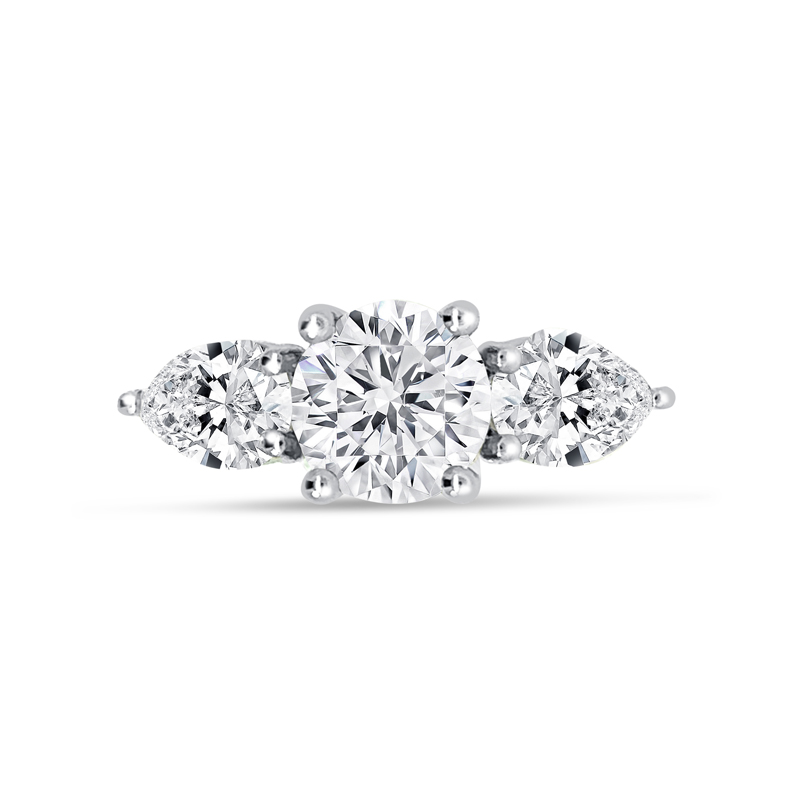
TAPERED BAGUETTE SIDE STONES DIAMOND RING
Tapered baguette side stones are popular. In this case, there will be a centre diamond, such as a Round or Emerald cut diamond, and then the side stones are set horizontally, almost appearing like a bar. This ensures that the eye is drawn towards the stunning centre stone, yet the ring still has a sparkly and abundant appearance.
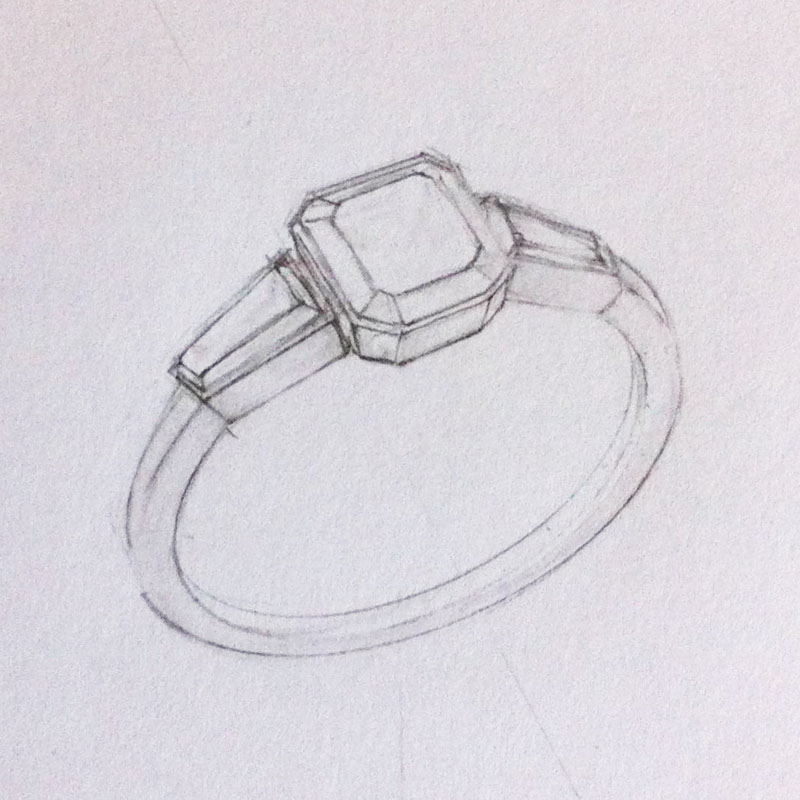
TRAPEZOID SIDE STONES
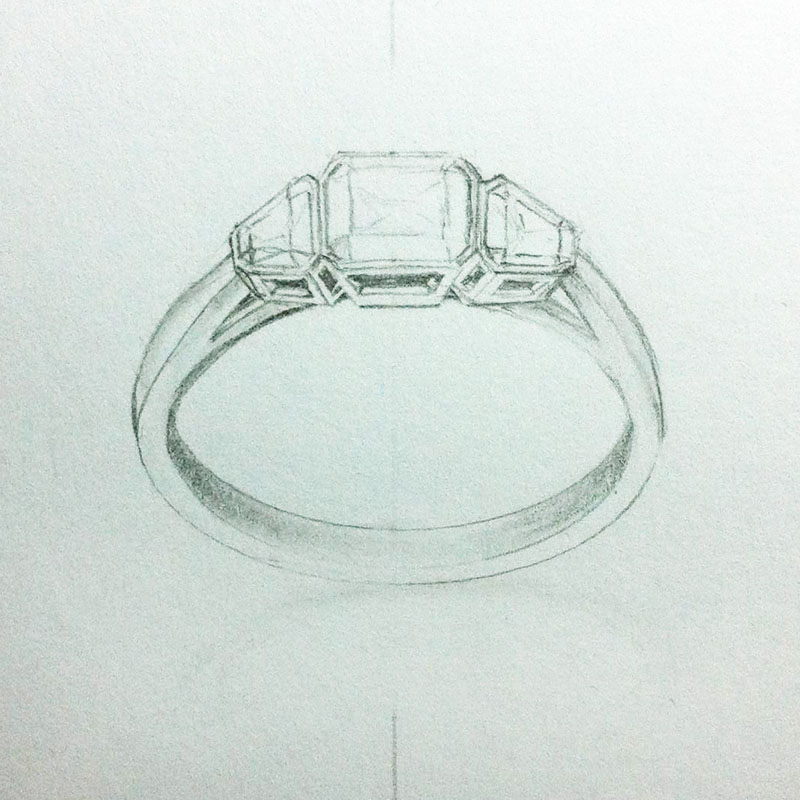
Trapezoid side stones are also an option worth considering. Trapezoid diamonds are almost always created for side stones, and they are often next to an asscher or emerald centre stone. The trapezoid shape is a four-sided one that has parallel sides at the bottom and the top, yet the other sides slant inwards. Imagine a triangle with the ends cut off.
Side-stone settings: frequently asked questions
What is a side-stone setting?
Smaller diamonds are set along the band on either side of the centre stone, adding sparkle and framing the main diamond.
Do side stones make the ring look bigger?
Yes. They add width and brilliance around the centre, so the whole ring reads as larger and more elaborate.
What shapes work well as side stones?
Tapered baguettes, small rounds and pears are the usual choices. Baguettes give a clean, classic frame; rounds add extra sparkle.
Do side stones need extra care?
There are a few more stones to keep an eye on, so a yearly check keeps them secure — a small trade-off for the added brilliance.
